

A Star That Isn't a Star
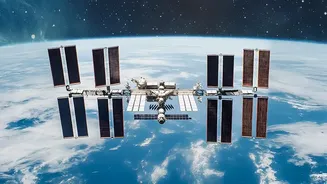
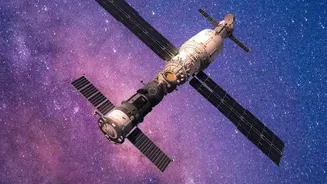
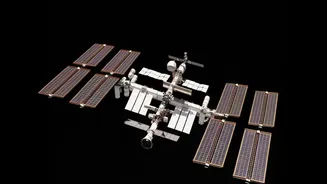
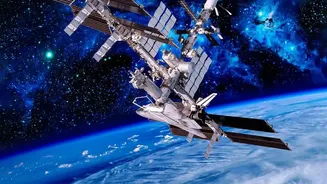
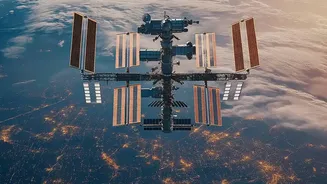
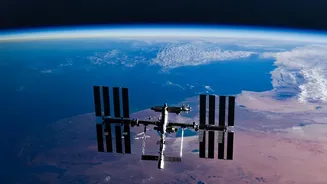
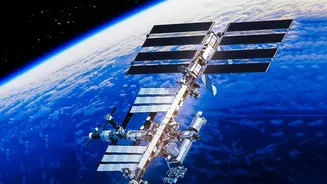
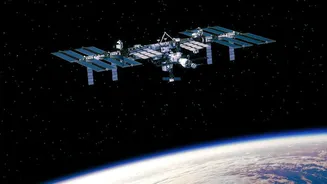
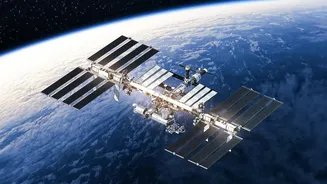
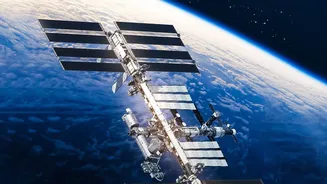
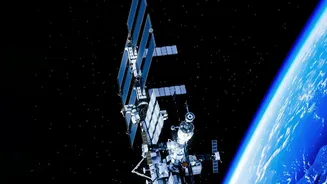
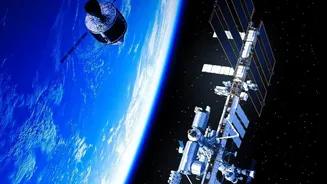
The International Space Station is a massive orbiting laboratory, about the size of a football field, flying 400 kilometres above Earth at a blistering 28,000 kilometres per hour. It has been continuously occupied by astronauts since the year 2000, serving
as a hub for science and human innovation. From the ground, it appears as a very bright, steady, white point of light moving across the sky. Unlike an airplane, it doesn’t have flashing lights and it moves much faster, typically crossing from one horizon to the other in just a few minutes.
The Perfect Time to Look Up
You can't see the station just anytime. The magic moments for spotting the ISS are during dawn and dusk. This is because the station needs to be illuminated by the sun, while it's dark enough on the ground for it to stand out against the night sky. If you are looking up in the middle of the night, the station is in Earth's shadow and won't be reflecting sunlight. During the day, the sky is simply too bright to see it. For most people on Earth, these perfect viewing conditions can happen anywhere from once a month to several times a week.
NASA's Official ISS Tracker
The easiest way to get started is with NASA's official Spot The Station app, available for free on both iOS and Android. The app uses your phone's location to provide a precise schedule of upcoming flyovers, including how long the pass will last, the maximum height it will reach, and the direction it will travel. A key feature is its alert system, which can send you a notification minutes before the ISS is about to appear, so you don't miss it. It even has an augmented reality (AR) view that uses your camera to show you the station's exact path across the sky.
For the All-in-One Stargazer: SkyView Lite
If you want an app that does more than just track the ISS, SkyView Lite is a fantastic choice. By simply pointing your phone at the sky, this app identifies stars, constellations, planets, and satellites in real-time using augmented reality. It’s incredibly intuitive for beginners. You can easily find the ISS during a pass, but also discover galaxies and learn the names of the constellations you're looking at. The app also lets you set reminders for specific celestial events.
For the Dedicated Satellite Spotter: ISS Detector
As its name suggests, ISS Detector is purpose-built for tracking the space station. The free version provides detailed predictions for ISS passes and is known for its user-friendly interface. It shows a list of upcoming opportunities and uses a simple icon to tell you how good the viewing will be. For a small fee, you can expand its capabilities to track thousands of other satellites, including the Hubble Space Telescope and Starlink trains. It’s a great option if you find yourself hooked on spotting man-made objects in orbit.
Tips for a Perfect Sighting
Once your app alerts you to a flyover, a few simple steps can make the experience even better. First, try to find a spot with a clear view of the sky, away from tall buildings and bright city lights if possible—though the ISS is often bright enough to be seen from urban areas. Give your eyes a few minutes to adjust to the darkness before the pass is scheduled to begin. You don't need any special equipment like a telescope, as the ISS is easily visible to the naked eye. Just know which direction to look, be patient, and enjoy the show.