


The Dairy-Free Dilemma
For years, dairy-free ice cream was a compromise. Without the butterfat and milk proteins that give traditional gelato its signature smooth, dense structure, plant-based versions were often icy, hard, or thin. The main challenge for gelato makers is preventing
the formation of large ice crystals, which leads to a gritty or slushy texture. Dairy fat physically gets in the way of water molecules, keeping those crystals small and the texture luxurious. Milk proteins also contribute by helping to stabilize the mixture. Replicating this effect without dairy requires a deep understanding of alternative ingredients.
The Cashew Solution: Neutral and Creamy
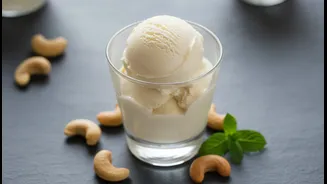
Enter the cashew. When raw cashews are soaked and blended with water, they create an exceptionally smooth and creamy emulsion. The magic lies in their high fat content and relatively neutral flavour profile. Unlike some other nuts or plant milks, cashews don't have a strong taste that competes with delicate flavours like vanilla or fruit. This allows gelato artisans to use the cashew cream as a blank canvas. Furthermore, the specific starches and fats in cashews contribute a desirable 'chew' and thickness, mimicking the mouthfeel that dairy proteins traditionally provide.
The Coconut Contribution: Unmatched Richness
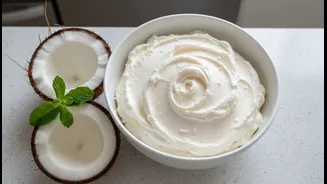
While cashews provide a neutral base, full-fat coconut cream or coconut oil delivers unparalleled richness. Coconut is high in saturated fats, which behave similarly to dairy fat when frozen. These fats solidify at low temperatures, contributing to a dense, velvety structure that melts slowly and luxuriously on the tongue. The main consideration with coconut is its distinct flavour. While it pairs beautifully with chocolate, caramel, and tropical fruits, it can sometimes overpower more subtle additions. This is why many of the best gelaterias don't choose one or the other, but instead use a carefully balanced blend.
The Art of the Blend
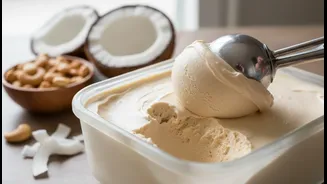
The true genius of modern vegan gelato lies in the combination of these powerhouse ingredients. Many of the most successful urban gelaterias use a base that blends both cashew and coconut. This strategic approach leverages the strengths of each: the cashew provides a neutral, creamy body and chew, while the coconut lends the high-fat richness needed for a premium texture. By adjusting the ratio, chefs can create a base that is perfectly suited for any flavour, from a strong coffee to a delicate floral infusion, without the coconut flavour becoming overpowering. This multi-ingredient method creates a complexity of texture that is often impossible to achieve with a single plant-based source.
Technique Is Everything
Beyond the ingredients, technique plays a crucial role. Professional gelaterias use high-speed homogenizers or powerful blenders to break down fat globules into microscopic particles, ensuring the mixture is perfectly uniform and stable. This prevents separation and is key to a smooth final product. Furthermore, the churning process is vital. Professional gelato machines freeze the base quickly while incorporating very little air. This rapid freezing keeps ice crystals tiny, resulting in the dense, silky texture gelato is famous for. Some artisans also employ natural stabilizers, like guar gum or carob bean gum, to further prevent ice crystal growth and ensure the gelato remains perfectly scoopable.