


The aroma of freshly fried gujiya is the scent of celebration. This guide demystifies the process of making these crescent-shaped sweet dumplings, focusing on simple techniques for shaping and cooking using ingredients you already know and love.
The Foundation: A Crisp, Flaky Dough
The secret
to a perfect gujiya lies in its casing. A great gujiya is not just about the sweet filling, but also the delightfully crisp and flaky pastry that holds it. Achieving this texture is simpler than it seems and relies on one key technique: 'moyan'. This involves rubbing fat into the all-purpose flour (maida) before adding water. For about two cups of maida, use a generous quarter cup of melted ghee or a neutral oil. Work the fat into the flour with your fingertips until the mixture resembles coarse breadcrumbs. When you take a portion in your fist, it should hold its shape. This step is non-negotiable for that signature crispness. Once the moyan is done, add water little by little to knead a firm, stiff dough. A soft dough will not yield a crisp gujiya. Cover the dough with a damp cloth and let it rest for at least 30 minutes. This resting period allows the gluten to relax, making the dough easier to roll out.
The Heart of the Matter: A Flavourful Filling
While the dough rests, you can prepare the delicious filling. The most traditional filling features khoya (milk solids), which provides a rich, creamy base. To start, lightly roast some semolina (sooji) in a pan with a little ghee until fragrant. This prevents the filling from becoming moist. Add grated or crumbled khoya and cook on low heat until it comes together. Turn off the heat and let this mixture cool down completely. This is a crucial step; adding sugar or nuts to a hot mixture will cause it to release moisture, resulting in soggy gujiyas that can break while frying. Once cool, mix in powdered sugar, finely chopped nuts like almonds, cashews, and pistachios, some desiccated coconut, and a pinch of cardamom powder for that warm, festive aroma. You can also add raisins or chirongi (charoli seeds). Ensure the final filling mixture is dry and crumbly.
The Art of the Fold: Shaping Your Gujiyas
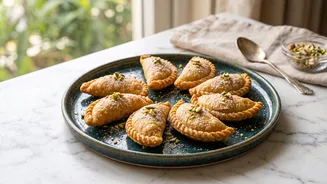
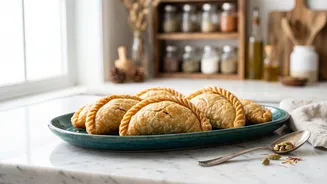
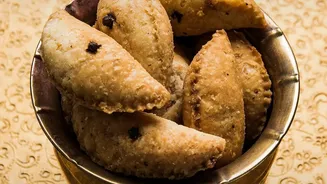
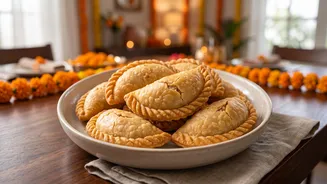
This is where the magic happens. After your dough has rested, knead it for another minute and then divide it into small, equal-sized balls. Roll each ball into a thin, small circle, about 4-5 inches in diameter. Keep the rolled discs and the dough balls covered to prevent them from drying out. Now for the shaping. If you have a gujiya mould, this process is very straightforward. Place a rolled disc over the open mould, place a spoonful of filling on one half, and brush the edges with a little water. Close the mould firmly, press to seal, and remove the excess dough. This gives you a perfectly shaped and sealed gujiya every time. For the traditional, handcrafted approach, place a spoonful of filling on one half of the disc, leaving the edges clear. Apply water to the edges, fold the other half over to create a semi-circle, and press the edges firmly to seal. To create the classic braided edge ('gothna'), you pinch and twist the sealed edge inwards, creating a beautiful pattern. This not only looks good but also reinforces the seal, preventing the gujiya from opening in the oil.
The Golden Finish: Frying to Perfection
How you cook the gujiya is just as important as how you make it. The goal is a uniform, golden brown colour and a pastry that is cooked through and crisp, not just browned on the outside. The key is to fry them low and slow. Heat ghee or a neutral oil in a kadai or a deep pan on low flame. The oil should not be very hot. To check, drop a small piece of dough into the oil; it should sink and then rise to the surface slowly with gentle bubbles. If it rises immediately, the oil is too hot. Carefully slide a few gujiyas into the oil, ensuring not to overcrowd the pan. Fry them on a consistent low heat, turning them occasionally, for about 10–12 minutes. This slow process cooks the pastry from inside out, preventing bubbles from forming on surface and ensuring maximum crispness once they are beautiful light golden brown on all sides remove them with slotted spoon and place them on paper towel to absorb any excess oil let them cool down completely before storing.