




There’s nothing worse than watching your phone battery die halfway through a long train journey, cutting you off from music, books, and contact. A portable power bank is the essential travel companion that ensures this never happens.
The Modern Traveller’s Dilemma
Long train journeys
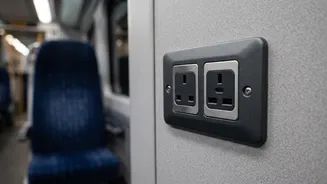
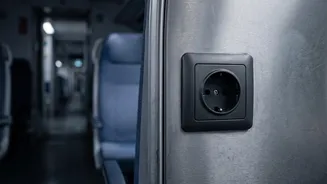
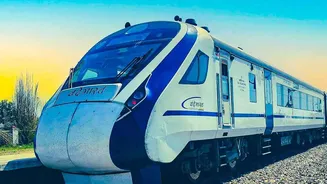
are a quintessential part of travel in India, but they present a modern challenge: keeping our devices alive. From navigating with maps and making UPI payments to staying entertained with movies or keeping in touch with family, our smartphones are indispensable. While many coaches are equipped with charging points, they can be unreliable, frequently occupied, or switched off entirely. Indian Railways, as a safety measure, mandates that charging points in coaches be turned off between 11 p.m. and 5 a.m. This is precisely when many overnight travellers hope to recharge their devices, making a personal power source not just a luxury, but a necessity.
Choosing Your Power Companion: Capacity (mAh)
The most important feature of a power bank is its capacity, measured in milliampere-hours (mAh). This number tells you how much energy it can store. For a long train journey, you need enough power to get you through at least a full day and night. A 10,000mAh power bank is often considered the sweet spot for most travellers, providing enough juice to charge a typical smartphone two to three times. If you're a heavy user or carrying multiple devices like a tablet and wireless earbuds, stepping up to a 15,000mAh or 20,000mAh model is a wise choice. These higher-capacity units can offer four to six phone charges, ensuring you and even a travel companion stay powered up.
More Than Just Capacity: Ports and Speed
A large capacity is useless if it takes forever to charge your devices. Look for power banks with fast-charging capabilities, often labelled as Power Delivery (PD) or Quick Charge. An output of 18W or higher will significantly reduce charging time for compatible phones. The number and type of ports are also crucial. A good travel power bank should have at least two ports, allowing you to charge multiple devices at once. A combination of USB-A and the more modern USB-C ports offers the best compatibility for various cables and gadgets. Some models even come with built-in cables, which means one less thing to forget.
The Portability Factor: Size and Weight
While a high capacity power bank is tempting, remember that you have to carry it. As capacity increases, so do size and weight. The goal is to find a balance between power and portability. A heavy, bulky charger can become a burden in your luggage. A 10,000mAh model is often slim and pocket_sized, weighing around 150–250 grams. A 20,000mAh unit will be noticeably heavier and is better suited for a backpack than a pocket. Before buying, consider where you'll be storing the power bank during your journey and choose a size that fits your travel style.
Safety and Maintenance on the Go
Safety is paramount, especially in a confined space like a train coach. Recent incidents of power banks overheating have led Indian Railways to reinforce its overnight charging ban. To stay safe, always use certified power banks from reputable brands that include features like overcharge and short circuit protection. Avoid leaving your power bank in direct sunlight or in hot, stuffy areas of your bag. To extend its lifespan, try to keep its charge level between 20% and 80%, as storing it fully charged or completely empty for long periods can degrade the battery. If you don't use it often, charge it at least once every few months to keep the battery healthy.