



A Planetarium in Your Palm
A new generation is discovering the cosmos through powerful and user-friendly mobile applications. Apps like Stellarium Mobile, SkyView Lite, and Star Walk 2 are transforming smartphones into sophisticated pocket planetariums. By using a phone's built-in
GPS and compass, these apps can identify stars, constellations, planets, and even satellites in real-time. A user simply has to point their device at the night sky. The augmented reality (AR) overlay reveals the names and details of celestial objects, turning a dark, dotted canvas into an interactive map of the universe. Many of these apps also include features like a 'time travel' mode, which can show the sky on any given date, past or future, and provide rich details and mythology behind the constellations.
Democratizing the Cosmos
Historically, amateur astronomy was a hobby with a high barrier to entry, often requiring expensive telescopes and a significant level of knowledge just to get started. This often limited its appeal to a niche group of enthusiasts. However, the rise of free or affordable apps has fundamentally changed the equation. They provide a gateway for anyone with a smartphone, making astronomy more accessible than ever before. This democratization of the hobby has been particularly impactful in a country like India, where a large, young, tech-savvy population is eager to explore new fields. The ability to identify a bright 'star' as the planet Jupiter or trace the path of the International Space Station with a simple app has sparked curiosity on a massive scale.
A Growing National Fascination
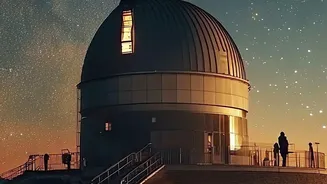
This technological shift is fueling a noticeable trend across the country. In a recent 'Mann Ki Baat' address, Prime Minister Narendra Modi highlighted the rapidly growing popularity of astronomy clubs in India, from big cities to small towns. Organizations like the Bangalore Astronomical Society and Mumbai's Khagol Mandal are seeing increased engagement, conducting observation sessions and educational courses for a public hungry for cosmic knowledge. This interest isn't just a passing fad; it taps into a deep cultural history. As the Prime Minister noted, India has a long and rich astronomical heritage, from ancient observatories to celestial connections in festivals and calendars. The new wave of app-driven interest is a modern chapter in this long story.
From Virtual Viewing to Real-World Passion
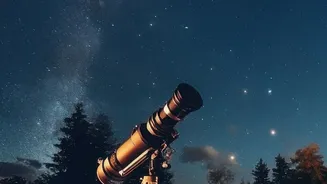
Crucially, this digital exploration is not staying confined to the screen. For many young Indians, these apps are a launchpad into a deeper, real-world passion for science. Astronomy clubs in regions like Kerala have reported a surge in membership, with many young people inspired to move beyond the app. Groups like Aastro Kerala and Astro-CET not only host stargazing events but also run workshops where participants can learn to build their own telescopes. The apps act as a catalyst, sparking an initial interest that then blossoms into a more serious pursuit, encouraging collaborative learning and scientific inquiry. This journey from casual app user to dedicated amateur astronomer is inspiring some to even pursue careers in space science and astrophysics, building on India's impressive strides in space exploration.