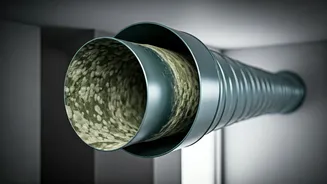









The Hidden Dangers in Your Home
Household fungus, commonly seen as mold or mildew, is a microscopic organism that thrives in damp, warm, and humid conditions. While a few spots on a bathroom tile might seem harmless, these fungi release spores into the air that can cause a host of health
problems. For many, exposure leads to allergy-like symptoms such as nasal congestion, sneezing, coughing, itchy eyes, and skin irritation. However, for individuals with asthma or compromised immune systems, the effects can be far more severe, potentially aggravating respiratory conditions and leading to more serious infections. Studies have shown that a significant number of Indians are affected by serious fungal diseases, many of which can be linked to environmental exposure in homes. Common household fungi like Aspergillus and Penicillium can become a significant threat when allowed to proliferate unchecked.
Why the Monsoon Makes It Worse
The monsoon season dramatically increases the risk of fungal growth in Indian homes. The combination of high humidity and persistent dampness creates the perfect environment for spores to settle and multiply on surfaces like walls, wooden furniture, clothing, and even books. Everyday activities such as cooking, bathing, and drying clothes indoors further add to the moisture content in the air. Without adequate ventilation, this moisture gets trapped, leading to condensation on walls and other cool surfaces, which is a direct invitation for fungus. It’s not just about visible leaks; the very air becomes a vehicle for moisture that can seep into porous materials, making prevention a constant battle during these wet months.
Mastering the Art of Airflow
Improving airflow is the single most effective strategy to combat moisture and prevent fungus. This goes beyond simply opening a window now and then. The goal is to create consistent air circulation that pushes stale, humid air out and brings fresh, dry air in. One of the best methods is cross-ventilation, which involves opening windows or doors on opposite sides of your home to create a natural breeze that sweeps through the space. Using fans is also crucial. Ceiling fans help circulate air within a room, while exhaust fans in kitchens and bathrooms are essential for expelling moisture-laden air directly outside. Even running your air conditioner in fan-only mode can help keep the air moving and reduce stagnation.
A Room-by-Room Defence Strategy
Different areas of the home require different tactics. In the kitchen, always use an exhaust fan when cooking to vent steam and odours outside. In the bathroom, run the exhaust fan during and after a shower, and wipe down wet surfaces to prevent moisture from lingering. Keep the bathroom door open after use to allow damp air to escape. In bedrooms and living areas, avoid pushing furniture flush against walls, especially exterior ones, as this traps air and can lead to hidden mold growth. Leave closet doors slightly ajar to allow air to circulate among your clothes, which are prime targets for fungus during humid weather. Using moisture absorbers like silica gel packets or charcoal can also be very effective in wardrobes and other enclosed spaces.
Know When You Need Help
Early detection is key. Be alert for musty odours, which are often the first sign of a fungus problem even before you see it. Visually inspect for black, green, or white patches, especially in damp areas like bathrooms, around window frames, and in basements. Pay attention to peeling wallpaper or bubbling paint, as these can indicate moisture trapped in the walls. For small, manageable spots on hard surfaces, a cleaning solution of vinegar and water can be effective. However, if you find a large area of growth or if the fungus returns after cleaning, it may signal a deeper issue like a hidden leak. In such cases, it is crucial to call a professional for assessment and remediation to ensure the problem is dealt with safely and completely.