


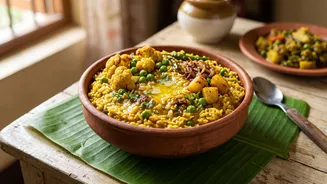
The Soul of the Festive Platter
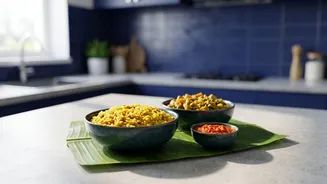
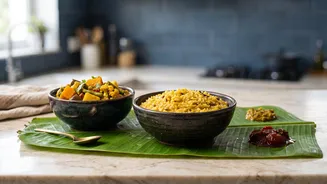
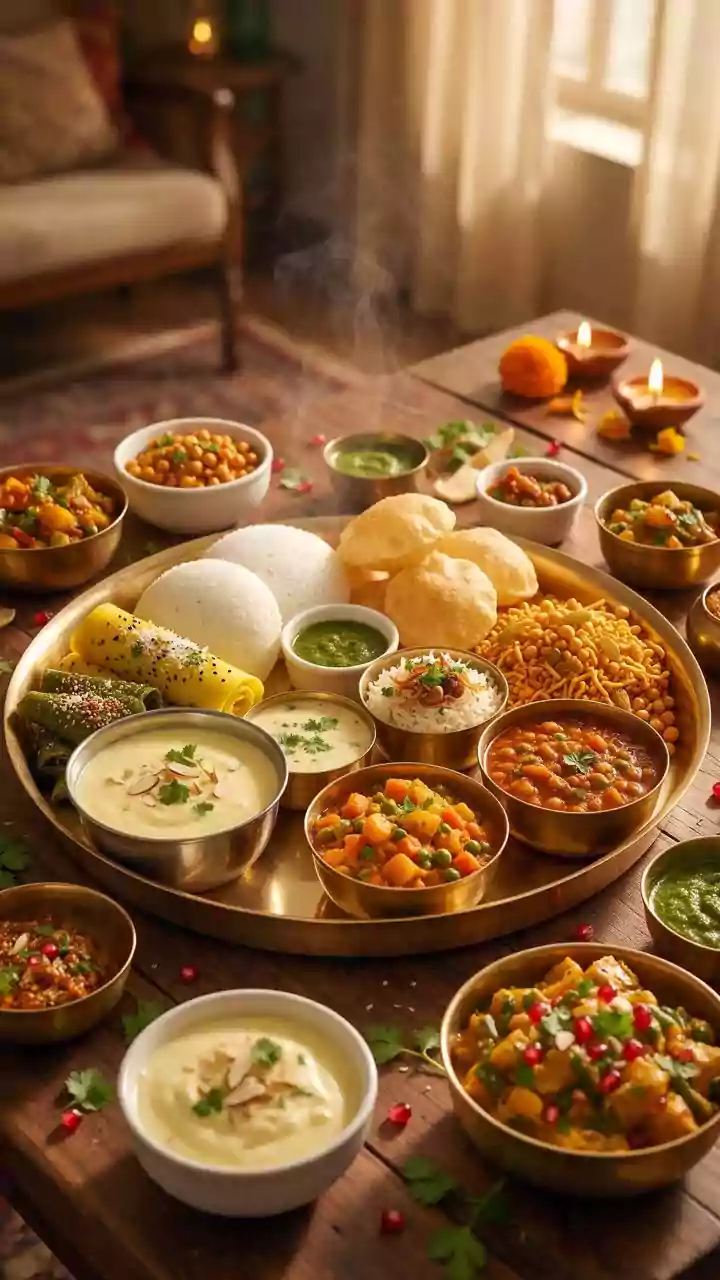
Durga Puja bhog is more than just a meal; it's a sacred offering filled with devotion, tradition, and community spirit. At the heart of this divine platter are two inseparable dishes: Bhoger Khichuri and Labra. Khichuri, a humble yet soul-satisfying mix
of rice and roasted lentils, symbolises purity. Labra, a vibrant medley of seasonal vegetables, represents unity and gratitude for nature's abundance. Both are strictly 'niramish', meaning they are cooked without onion or garlic, making them a pure offering for the Goddess before being shared as prasad. The magic of these dishes lies not just in their taste but in the love and sanctity with which they are prepared.
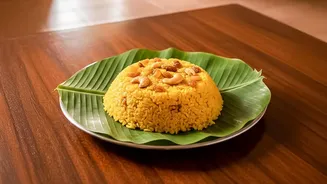
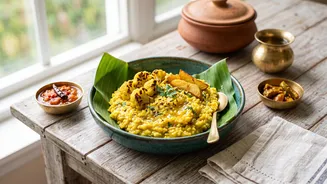
Bhoger Khichuri: The Golden Delight
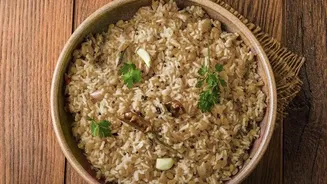
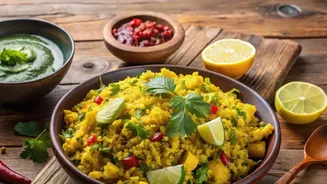
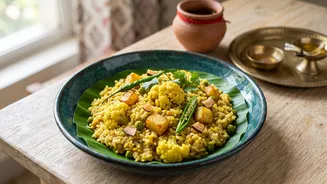
This isn't your everyday khichdi. Bhoger Khichuri has a unique aroma and flavour, achieved by dry-roasting the moong dal and using fragrant Gobindobhog rice. Here’s how to make it. Ingredients: 1 cup Gobindobhog rice (or any short-grain aromatic rice), 1 cup yellow moong dal, 1 potato, 1 small cauliflower, ½ cup green peas, 1 tbsp grated ginger, 2-3 green chillies, 1 chopped tomato, whole spices (2 bay leaves, 2-3 green cardamoms, 2 cloves, 1-inch cinnamon), 1 tsp cumin seeds, 1 tsp turmeric powder, salt and sugar to taste, 3-4 tbsp ghee, 1 tbsp mustard oil. Method: 1. First, dry-roast the moong dal in a heavy-bottomed pan on low heat until it turns light golden and aromatic. Wash the roasted dal and the rice separately and set aside. 2. Heat mustard oil in a pot and lightly fry cubed potatoes and cauliflower florets until they are golden. Remove and keep aside. 3. In the same pot, add ghee and temper with cumin seeds, bay leaves, dried red chillies, and the whole spices (cardamom, cinnamon, cloves). 4. Add the grated ginger and chopped tomato, and sauté for a minute. Add the washed rice and dal, turmeric powder, and stir for two minutes. 5. Pour in about 6-8 cups of hot water, add salt, and bring to a boil. Let it simmer, stirring occasionally. 6. When the rice and dal are half-cooked, add the fried vegetables and green peas. Add slit green chillies and a pinch of sugar to balance the flavours. 7. Cook until the rice and dal are soft and the khichuri reaches a thick, porridge-like consistency. It should be flowing, not dry. Finish with a generous spoonful of ghee before serving.
Labra: A Harmony of Vegetables
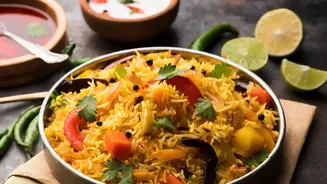
Labra is a beautiful mess, where different vegetables come together yet retain their individual character. The key is the 'paanch phoron', the Bengali five-spice blend. Ingredients: A mix of 4-5 cups of seasonal vegetables like pumpkin, potato, eggplant, sweet potato, and beans, all cut into cubes. For tempering: 2 tbsp mustard oil, 1 tsp paanch phoron, 2 dried red chillies, 1 bay leaf. For the masala: 1 tbsp ginger paste, 1 tsp cumin powder, ½ tsp turmeric powder, salt and sugar to taste, a pinch of bhaja masala (optional roasted spice powder) for garnish. Method: 1. Heat mustard oil in a kadai until it's smoking, then reduce the heat. Fry the vegetable pieces in batches (potatoes and sweet potatoes first, then pumpkin and beans, and finally eggplant) until lightly browned. Set them aside. 2. In the remaining oil, add the bay leaves, dried red chillies, and paanch phoron. Let the spices splutter to release their aroma. 3. Add the ginger paste and powdered spices (cumin, turmeric) with a splash of water and cook for a minute. Add chopped tomatoes if you like. 4. Now, add the hardier fried vegetables like potatoes and pumpkin first. Add salt and a little sugar, cover, and cook for 5-7 minutes. 5. Add the softer vegetables like eggplant and beans. Stir gently to combine everything. Add a splash of hot water if the mixture looks too dry. The vegetables should cook in their own steam. 6. Cover and cook until all vegetables are tender but not completely mashed. The final dish should be moist, with the vegetables coated in spices. 7. For an authentic touch, finish with a pinch of roasted spice powder (bhaja masala) and a drizzle of ghee before taking it off the heat.
Secrets to That Divine 'Bhog' Taste
Recreating the exact taste of a pandal bhog can be tricky, as it’s believed that the community's collective prayers and the divine blessings add a special flavour. However, a few tips can get you very close. Always use good quality ghee, especially for finishing the dishes, as it imparts a rich aroma. Dry roasting the moong dal for the khichuri is non-negotiable; this step gives the dish its signature nutty flavour. Using Gobindobhog rice is traditional for its distinct fragrance, but any short-grained aromatic rice will work. Finally, don't shy away from adding a little sugar. In Bengali vegetarian cooking, sugar is used not for sweetness, but to round out the flavours and create a perfect balance.