

What Am I Looking For?
Forget what you think a satellite looks like. The International Space Station appears as a very bright, steady point of light moving silently and swiftly across the sky. It looks like a fast-moving star and does not blink like an aeroplane. Because it’s
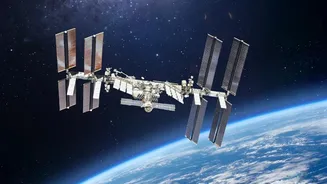
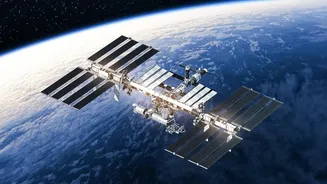
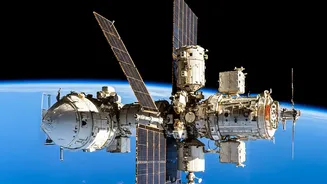
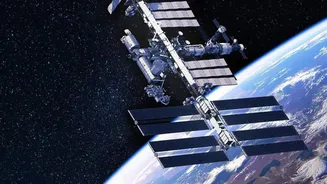
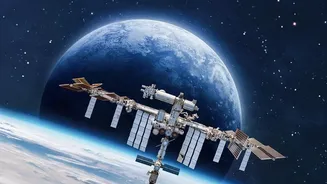
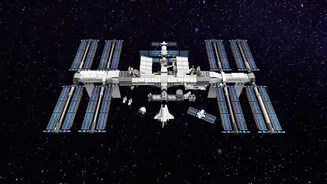
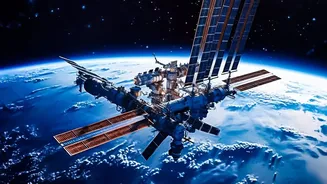
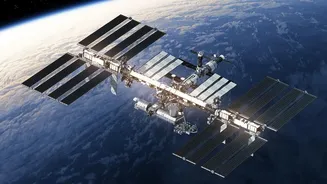
the third brightest object in our sky after the Sun and Moon, it’s surprisingly easy to see with the naked eye. The station is roughly the size of a football field, and what you’re seeing is sunlight reflecting off its large solar panels and modules as it orbits the Earth. A typical pass can last anywhere from two to seven minutes, during which it will glide across the sky in a smooth arc before disappearing over the horizon or into Earth's shadow.
Finding the Right Time and Place
The key to a successful sighting is knowing exactly when and where to look. The ISS is only visible during dawn or dusk, when the sky is dark enough on the ground but the station, at its high altitude, is still illuminated by the sun. The best tool for this is NASA’s official 'Spot The Station' website. Simply visit the site, enter your city in India, and it will generate a list of upcoming viewing opportunities. The schedule will tell you the exact date and time, how long the pass will last ('Duration'), where it will first appear ('Appears'), and its highest point in the sky ('Max Height'). The 'Max Height' is measured in degrees; 90 degrees is directly overhead, so the higher the number, the better and brighter the view will be.
Your Step-by-Step Viewing Guide
Once you have the schedule for your city, the process is simple. First, set an alarm. Plan to be outside at least five minutes before the listed appearance time to allow your eyes to adjust to the darkness. Second, know your directions. The schedule will tell you where the ISS will appear and disappear (e.g., from northwest to southeast), so having a basic sense of your orientation is helpful. A compass app on your phone can assist. Third, just look up in the specified direction at the given time. Scan the sky for a new 'star' that is moving steadily and faster than any plane. The experience is a silent, graceful glide across the heavens.
Do I Need a Telescope?
Absolutely not. The ISS is one of the most accessible celestial objects for beginner stargazers precisely because it requires no special equipment. Its brightness makes it easily visible to the naked eye, even from moderately light-polluted urban areas. However, if you have a pair of binoculars, they can enhance the experience. While you won't be able to make out fine details, binoculars will make the light appear larger and brighter, and you might even be able to discern the station's general T-shape against the sky during a particularly clear and high pass. But for your first time, simply using your eyes is more than enough to appreciate the spectacle.
Helpful Apps and Pro Tips
While NASA's website is excellent, several smartphone apps can make tracking even easier. Apps like ISS Detector, Heavens-Above, and SkyView Lite offer real-time tracking, push notifications for upcoming passes, and even augmented reality guides that show you exactly where to point your phone. For the best possible sighting, try to find a spot with a clear view of the horizon, away from tall buildings and bright streetlights. Check the weather forecast beforehand, as clouds can easily obscure the view. Finally, make it a shared experience. Watching the ISS is a fantastic activity for family and friends, turning a few minutes of stargazing into a memorable event.