





The Spark of Curiosity: AI as a Supercharged Tutor
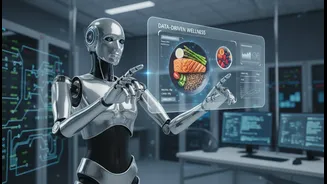
The potential of AI in Indian education is immense, and it begins with fostering curiosity. For millions of students, AI tools can act as personalised tutors, available anytime, anywhere. Imagine a student in a remote village getting tailored maths problems
that adapt to their skill level, or a shy student asking an AI chatbot questions they're afraid to ask in class. The National Education Policy (NEP) 2020 strongly backs this technological integration, seeing AI as a tool to make learning more personalised and engaging. Initiatives by boards like CBSE, which has introduced AI as a subject, are designed to make students not just consumers but creators of technology. AI can automate administrative tasks like grading, freeing up teachers to focus on mentorship and higher-order thinking. This approach isn't about replacing teachers, but augmenting their capabilities to cater to the diverse needs of a large student body.
The Wall of Caution: Navigating the Pitfalls
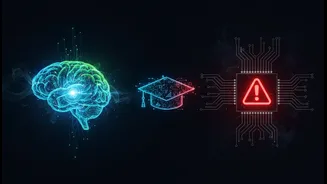
While the promise is great, a healthy dose of caution is crucial. The biggest hurdle is the stark digital divide. In a nation where many students in rural and low-income areas lack basic internet access, an over-reliance on AI could worsen educational inequality rather than solve it. Furthermore, there are significant ethical concerns. AI algorithms can have inherent biases, potentially disadvantaging certain groups of students. Data privacy is another major issue; the vast amount of student data collected by AI platforms must be protected from misuse. Beyond the technical challenges, there's a pedagogical risk. An over-reliance on AI for answers can stunt the development of critical thinking and problem-solving skills. Educators and policymakers must build guardrails to ensure AI is a tool for empowerment, not a crutch that hinders genuine learning.
The Currency of Credits: Redefining Academic Integrity
The third 'C'—credits—tackles the complicated issue of academic honesty in the age of AI. When a student can generate an entire essay with a single prompt, what does authorship mean? This is a new frontier of plagiarism, one that is harder to define and detect. Simply banning AI tools is not a long-term solution. Instead, schools need to redefine what they 'credit' as original work. This means shifting assignments from final products to processes, where students are graded on their brainstorming, drafts, and reflections. It involves teaching AI literacy and ethics, helping students understand how to use these tools responsibly—for research and brainstorming, not for cheating. The conversation has to move from 'Did you use AI?' to 'How did you use AI?'. Students must be taught to properly acknowledge AI's role, just as they would cite a book or a website, giving credit where it's due while taking ownership of their unique contributions.
The Path Forward for India
For India, integrating AI into its education system is a massive undertaking, but one that aligns with the ambitious goals of the NEP 2020 and missions like IndiaAI. The government and educational bodies like CBSE and NCERT are already taking steps, introducing AI in curricula from the middle school level. The goal is to prepare students for a future where AI literacy is as fundamental as reading and writing. However, success will depend on more than just curriculum changes. It requires massive investment in teacher training to help educators move from being instructors to facilitators of learning. It also demands a concerted effort to bridge the digital divide, ensuring that the benefits of AI-powered education reach every child, not just a privileged few. By embracing curiosity, exercising caution, and rethinking academic credit, India can navigate the complexities of AI and build a more equitable and effective education system for the future.