



The Science of a Fading Spectacle
Light pollution is the excessive or misdirected artificial light that floods our nights, primarily in urban and suburban areas. This artificial brightness creates a phenomenon known as 'skyglow', a luminous dome of light that hangs over cities, effectively
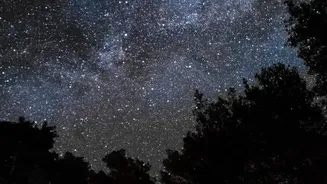
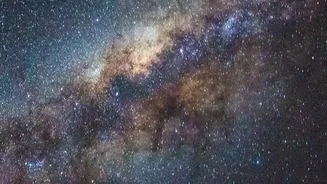
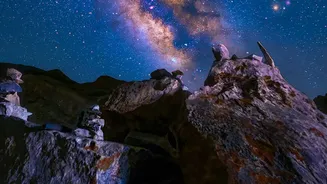
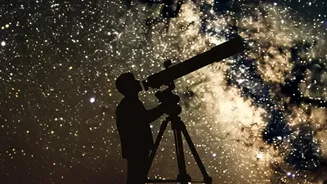
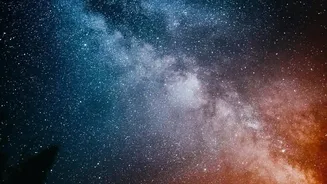
washing out the faint light from distant stars and galaxies. The Milky Way, our home galaxy, is a collection of billions of stars, but its light is subtle and diffuse. To the naked eye, it appears as a soft, glowing band stretching across the sky. In a city where the artificial sky brightness can be 40 to 50 times higher than natural levels, the faint glow of the Milky Way is completely overwhelmed and rendered invisible. Studies show that over 80% of the world's population, and likely a higher percentage in India's rapidly growing cities like Delhi and Mumbai, now live under light-polluted skies, unable to see our galaxy.
Chasing Darkness for Celestial Views
To truly witness the splendour of the cosmos, one must escape the cities and seek out locations with minimal light pollution, high altitudes, and clear, dry air. These conditions reduce atmospheric interference and allow the faintest starlight to reach our eyes. In India, the best time to view the core of the Milky Way is generally from March to October, with peak visibility during the summer months when the galactic centre is high in the night sky. Planning a trip around the new moon is crucial, as the bright light of a full moon can also wash out the stars. Fortunately, India is blessed with several remote, high-altitude regions that offer some of the darkest skies in the world.
Hanle, Ladakh: India's Dark Sky Sanctuary
For the ultimate stargazing experience, Hanle in Ladakh is unparalleled. Situated at an altitude of over 4,500 metres, it was officially designated as India's first Dark Sky Reserve in December 2022. Its remote location within the Changthang Wildlife Sanctuary, combined with dry air and minimal atmospheric disturbance, results in exceptionally clear and dark skies. It is home to the Indian Astronomical Observatory, one of the highest in the world, a testament to its pristine conditions. For travellers, Hanle offers the chance to see the Milky Way in such clarity that it can cast a faint shadow, a sight most people will never experience. The best season to visit is from May to September.
Spiti Valley, Himachal Pradesh: A High-Altitude Desert
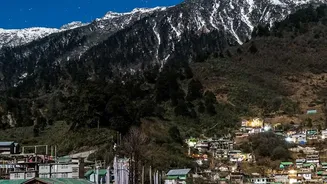
Often called a 'cold desert mountain valley', Spiti is another haven for stargazers. Its high altitude, sparse population, and location in a rain shadow area keep it free from both city lights and monsoon clouds. Villages like Kibber, Langza, and Komic are perched above 4,200 metres and offer breathtaking panoramic views of the star-filled sky. Lying back in the profound silence of Spiti and watching the Milky Way arc across the sky is an unforgettable experience. The ideal time for a stargazing trip to Spiti is between May and October, when the roads are accessible and the nights are clear.
Rann of Kutch, Gujarat: A Universe on Salt Flats
The Great Rann of Kutch offers a completely different, yet equally magical, stargazing environment. This vast salt desert is one of India's darkest spots due to its remoteness and flat, unobstructed terrain that provides a 360-degree view of the sky. Between November and February, during the Rann Utsav, the dry winter air creates perfect viewing conditions. On a new moon night, the experience is profound, with the white salt flats below and a sky brimming with stars above. Some visitors say the reflection of starlight on the salt creates a surreal feeling of being suspended in the cosmos.
Coorg, Karnataka: The Scotland of India's Starry Nights
While the Himalayas offer high-altitude clarity, the Western Ghats provide their own unique charm. Coorg, with its lush hills and coffee plantations, has pockets of darkness perfect for stargazing. Away from the main towns like Madikeri, the skies are dark enough to reveal the Milky Way. The region's high elevation and clean air, especially after the monsoon and during winter, make for excellent viewing. There are even observatories and guided tours available for those new to astronomy. Locations like Tadiandamol Peak, the region's highest point, offer stunning vantage points for a night under the stars.