




The Search for Lunar Real Estate
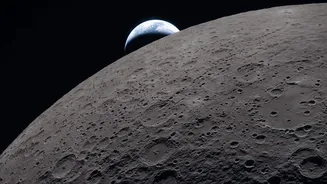
Any future lunar habitat must protect astronauts from a hostile environment. The Moon has no atmosphere to shield it from cosmic radiation, tiny but dangerous micrometeorite impacts, and brutal temperature swings that can range from a scorching 250 degrees
Fahrenheit in the day to a frigid -208 degrees Fahrenheit at night. Building heavy shelters is one option, but a far better one might already exist. Scientists believe the Moon is threaded with lava tubes—vast, empty tunnels left behind by ancient volcanic eruptions. These subterranean caves could provide a game-changing solution: a natural, ready-made shelter offering protection from radiation, impacts, and extreme temperatures, creating a stable environment for a permanent human presence.
GIMLI: A Mission to Find a Cave
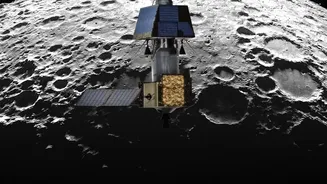
To find these coveted shelters, NASA has selected a specialized investigation with a fitting name: GIMLI (Geophysical Instruments for Marius Lunar pit Investigation). This payload suite is designed to explore the Marius Hills Pit, a large, intriguing hole on the lunar surface discovered in 2009 that scientists believe could be a 'skylight' or entrance to a much larger lava tube. GIMLI will be deployed on the surface to scan beneath the ground to confirm if a cave system is connected to the pit. Using a combination of ground-penetrating radar, seismic sensors, and a gravimeter, the mission aims to create a 3D map of the subsurface and determine the size and shape of any potential void. Confirming a large, stable lava tube would make the Marius Hills region a prime candidate for a future Artemis base camp.
More Than Just a Roof
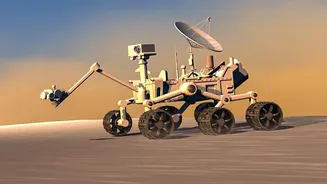
The search for shelters is part of a broader scientific strategy. NASA's recent selections, made through the Payloads and Research Investigations on the Surface of the Moon (PRISM) program, include two other critical investigations. The Lunar Environment Monitoring Station – South Pole (LEMS-SP) will act as a long-term weather and hazard station. It will use seismometers to detect 'moonquakes' and micrometeoroid impacts, providing crucial data for engineering safe and durable structures. Another payload, the Depth Imager with Spectral and Color Optics (DISCO), will hunt for hidden water ice in permanently shadowed regions. Finding accessible water is not only a monumental scientific discovery but also a vital resource that can be converted into drinking water, breathable air, and rocket fuel.
Paving the Way for Artemis
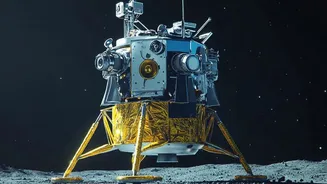
These robotic missions are the essential precursors to sending humans back to the Moon to stay. The data gathered by GIMLI, LEMS-SP, and DISCO will be delivered via commercial landers as part of NASA's Commercial Lunar Payload Services (CLPS) initiative. This program partners with private American companies to send scientific payloads to the lunar surface, accelerating the pace of exploration. The information from these instruments will directly inform NASA's 'interplanetary survival guide', helping mission planners select the safest and most resource-rich locations for the Artemis program's crewed missions. Every piece of data, from the stability of the ground to the composition of volcanic rock, helps minimize risks for future astronauts and maximize the potential of humanity's first lunar outpost.