






Why Is This Happening Now?
The idea of gardening with minimal water, also known as xeriscaping, isn't new. But its recent resurgence across India is directly tied to our changing climate. Cities like Bengaluru, Chennai, and Delhi have faced severe water crises, making citizens
acutely aware of every drop. The monsoon's unpredictability further complicates things. For garden lovers, this has sparked a shift away from thirsty, high-maintenance plants towards a more sustainable and resilient approach. It’s a move from simply having a green space to creating an intelligent ecosystem that works with, not against, our environment. This new wave of water-wise gardening is about being resourceful, responsible, and still creating a lush, beautiful oasis at home.
The Core Idea: Work With Nature
At its heart, water-smart gardening is about designing a garden that thrives with minimal supplemental watering. It doesn’t mean a barren landscape of rocks and cacti. Instead, it’s a holistic approach that involves careful planning, smart plant selection, and efficient techniques. The goal is to create a self-sustaining garden that conserves water, reduces workload, and remains vibrant throughout the year. This involves understanding your local climate, analysing your soil, and grouping plants with similar water needs together—a practice called hydrozoning. For example, keeping thirsty herbs in one container and drought-tolerant succulents in another prevents over or under-watering.
Choose Your Green Warriors
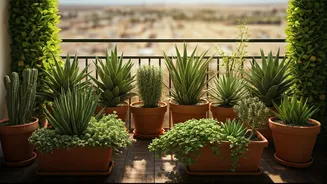
Plant selection is the most crucial step. Instead of exotic species that struggle in our climate, embrace native and drought-tolerant plants that are naturally adapted to local conditions. They require less water, are more resistant to pests, and support local biodiversity. For sunny balconies and terraces, consider succulents like Aloe Vera and Echeveria, or vibrant flowering plants like Bougainvillea, Lantana, and Portulaca (table rose). For larger gardens, indigenous grasses, hardy shrubs like Oleander, and trees such as the Gulmohar can create stunning, low-water landscapes. Before buying a plant, do a quick check on its water requirements. A little research can save you a lot of water and heartache later.
The Magic of Mulch
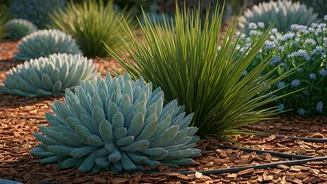
If there's one secret weapon in a water-smart gardener's arsenal, it's mulch. Mulch is a layer of material applied to the surface of the soil. It can be organic, like wood chips, dried leaves, or sugarcane bagasse, or inorganic, like pebbles. This simple layer works wonders. It locks in soil moisture by reducing evaporation, keeps the soil cool in the scorching summer heat, and suppresses weed growth, which means less competition for water for your plants. A 2-3 inch layer of organic mulch also breaks down over time, enriching the soil with valuable nutrients. It’s an easy, low-cost step that has a massive impact on your garden's water efficiency.
Water Smarter, Not Harder
How and when you water is just as important as how much you water. The best practice is to water deeply but infrequently. This encourages plants to develop deep roots, making them more resilient during dry spells. Avoid light, daily sprinkling, which only wets the top layer of soil and encourages shallow roots. The best time to water is early in the morning, before the sun gets too strong, to minimise evaporation. For potted plants, check the soil moisture by sticking your finger an inch or two deep; if it feels dry, it's time to water. For larger gardens, consider installing a drip irrigation system. It delivers water directly to the plant roots with minimal waste and is far more efficient than a sprinkler or hose.