






Your Digital Window to the Cosmos
The biggest hurdle for any urban stargazer is not just the tall buildings, but the overwhelming light pollution that washes out all but the brightest stars. Planets, however, are a different story. Five of them—Mercury, Venus, Mars, Jupiter, and Saturn—are
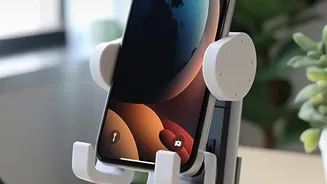
often bright enough to cut through the urban glow. The trick is knowing where and when to look. This is where your smartphone becomes an indispensable tool. Modern stargazing apps use your phone's GPS and compass to create a real-time map of the sky, showing you exactly what’s above you, even on a cloudy day or in broad daylight.
Top Apps for the Urban Astronomer
Choosing an app can be overwhelming, but a few stand out for their user-friendly design and powerful features. Star Walk 2 is often recommended for beginners due to its beautiful graphics and augmented reality (AR) overlay, which lets you point your phone at the sky and see celestial objects labelled in real time. Stellarium Mobile offers a highly realistic and accurate sky map, making it a favourite among more serious hobbyists, and its free version is incredibly robust. For a simple, no-fuss experience, SkyView Lite is excellent; it excels at quickly identifying planets and constellations without clutter. Most of these apps have capable free versions, so you can try them before deciding on a purchase.
Meet Your Planetary Neighbours
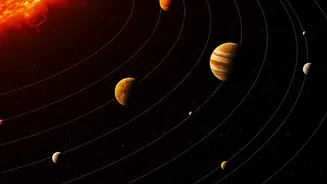
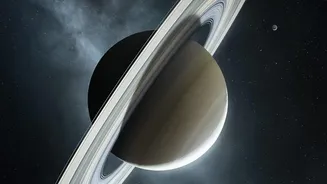
The five planets you can see without a telescope are often called the “naked-eye planets.” Venus is the brightest object in the night sky after the Moon and is often seen as a brilliant “Evening Star” or “Morning Star” near the horizon. Jupiter is the next brightest, appearing as a steady, powerful white light. Mars is distinctly reddish and can be quite bright, especially when it's closest to Earth. Saturn appears as a calmer, yellowish-white point of light. Mercury is the most elusive, always staying close to the Sun, so you can only catch it low in the sky just before sunrise or after sunset.
A Step-by-Step Guide to Finding a Planet
Ready to spot your first planet? First, download your chosen app. Find a window or balcony with the widest possible view of the sky. Open the app and give it a moment to calibrate to your location and orientation. Most apps feature a search function; simply type in “Jupiter” or “Saturn.” An arrow will likely appear on your screen, directing you to pan your phone across the sky. As you move your phone, the app’s display will mirror the real sky. When your phone is pointed at the planet, the app will highlight it. Now, look up from your phone in that exact direction. You should see a bright, star-like object that doesn't twinkle. That’s your planet!
Maximising Your Apartment View
A few simple tricks can dramatically improve your urban stargazing experience. The most important is to let your eyes adapt to the darkness. Turn off all the lights in your room and on your balcony for at least 15 minutes. This allows your pupils to dilate, making it easier to spot fainter objects. Try to observe when targets are highest in the sky, as this reduces the amount of atmosphere and city haze you’re looking through. Observing later at night, after 11 p.m. or even 1 a.m., can also help, as some city lights are turned off and air pollution can settle. Finally, be patient. The planets move slowly across the sky, so once you find one, you can come back to it night after night.