





The Architect Who Fled
Lalit Modi is widely credited as the visionary who transformed cricket into a multi-billion-dollar spectacle with the launch of the IPL in 2008. His tenure, however, was short-lived. In 2010, shortly after the third season of the tournament, he was suspended
by the Board of Control for Cricket in India (BCCI) amid serious allegations of misconduct, financial irregularities, and bid-rigging. Facing investigations from Indian agencies, including the Enforcement Directorate (ED), Modi left for London in 2010 and has not returned since. He has consistently maintained that he left not to evade justice but due to credible threats against his life from the underworld after his security was withdrawn.
A Web of Allegations
The cases against Modi are numerous and complex. The Enforcement Directorate has pursued him for alleged violations of the Foreign Exchange Management Act (FEMA) and under the Prevention of Money Laundering Act (PMLA). One of the most significant cases involves the 2009 IPL season, which was shifted to South Africa. The ED alleged that the transfer of funds to Cricket South Africa involved forex violations. Another major allegation was that Modi manipulated the process for awarding IPL's media rights in 2009, allegedly for a substantial kickback. Over the years, Indian authorities have made several attempts to bring him back, including issuing a non-bailable warrant in 2015 and seeking his deportation, which the UK rejected in 2012.
A New Passport, A New Chapter
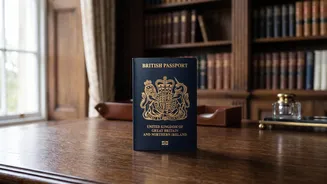
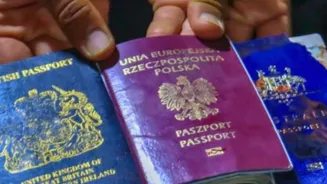
On November 14, 2026, while addressing the Oxford Union, Modi announced that he had officially become a British citizen on September 15. In a social media post, he called the UK his home and described becoming a citizen as a 'privilege and a responsibility'. As Indian law does not permit dual nationality, he automatically ceases to be an Indian citizen. This is not Modi's first attempt to secure foreign citizenship; in 2025, he briefly acquired a passport from Vanuatu, which was later cancelled after India's intervention. He has consistently argued that he is not a 'fugitive' as he has not been convicted of any crime in India. In a recent legal victory in July 2026, an appellate tribunal in India even overturned penalties imposed on him in the case related to the 2009 IPL shift to South Africa.
What Does UK Citizenship Mean for Extradition?
The immediate question is whether his British passport shields him from being brought back to India. According to legal experts, the answer is no, at least not automatically. The India-UK Extradition Treaty, in force since 1993, allows for the extradition of their own nationals. Therefore, India can still pursue its request. However, the process is expected to become more complicated. As a British citizen, Modi is now entitled to the full legal protections afforded by the UK. This means India's sole remaining path is a formal extradition request, as deportation is now off the table. Any such request will likely face a rigorous legal battle, where fugitives often cite poor prison conditions and political vendettas in India to challenge their return. While past examples like the extradition of bookie Sanjeev Chawla show it is possible, the process is long and arduous.