




The Sunlight Bottleneck
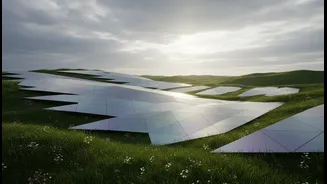
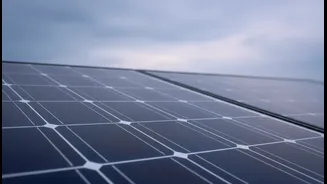
For decades, the promise of solar energy has been tethered to a simple condition: clear, sunny skies. Traditional solar panels perform at their peak when perpendicular to intense, direct sunlight. This has made them a phenomenal success in sun-drenched
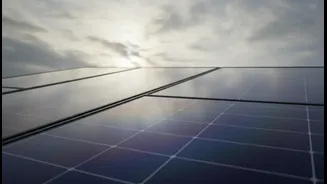
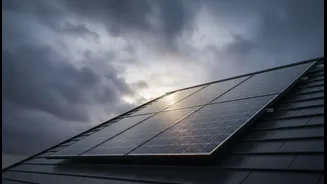
deserts and equatorial regions. However, it also creates a significant bottleneck. In many parts of the world, including large swathes of India during the monsoon season, skies are often overcast. Energy production can dip significantly on cloudy days, with typical panels generating just 10-25% of their rated output under heavy cloud cover. This variability has been a major hurdle, raising questions about solar's reliability as a primary power source in less-than-ideal climates and creating a pressing need for technology that works well in all conditions, not just perfect ones.
Harnessing the Glow: The Power of Diffuse Light
The key to all-weather solar power lies in capturing not just direct sunlight, but also diffuse light—the sunlight that gets scattered by clouds, haze, and the atmosphere. This ambient light is less intense, but it's present even on the gloomiest days. The push for better efficiency is now focused on technologies that are highly sensitive to this scattered light. Two major innovations are leading this charge: Bifacial solar panels and Perovskite solar cells. Each approaches the problem from a different angle, but both are dramatically expanding the potential for solar energy generation by making panels less dependent on direct beams and more attuned to the total light available in the environment.
Bifacial Panels: Capturing Light from Both Sides
As the name suggests, bifacial solar panels can capture light on both their front and back surfaces. While the front side operates like a traditional panel by absorbing direct sunlight, the rear side absorbs light that is reflected off the ground or other surfaces—a phenomenon known as 'albedo'. This design is particularly effective at capturing diffuse light. On an overcast day, when light is coming from all directions, the rear side of a bifacial panel can contribute significantly to the total power output. By using a transparent backsheet or a dual-glass construction, these panels can boost energy yield by anywhere from 5% to 30% compared to their single-sided counterparts, depending on the reflectivity of the surface beneath them. This makes them ideal not only for cloudy climates but also for installations over reflective surfaces like white rooftops or even water.
Perovskites: The Material of the Future
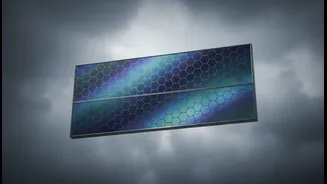
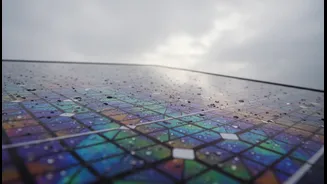
Perhaps the most exciting breakthrough comes from a class of materials called perovskites. Unlike conventional silicon cells, perovskite solar cells can be 'tuned' to absorb different wavelengths of light, making them exceptionally good at converting low-intensity indoor light and diffuse outdoor light into electricity. Some studies have shown perovskite cells to be twice as efficient as silicon in low-light conditions. Another game-changing innovation is the tandem solar cell, which layers a perovskite cell on top of a traditional silicon cell. The top perovskite layer captures high-energy light, while the bottom silicon layer captures the lower-energy light that passes through. This combination shatters previous efficiency records, with some lab prototypes exceeding 34% efficiency—a significant jump from the 22% typical of high-end residential panels.
From Niche to Necessity
Improving low-light performance isn't just an incremental upgrade; it fundamentally changes the economic and geographic viability of solar power. For a country like India, it means solar can become a more reliable power source during the crucial monsoon months, when energy demand is high but sunshine is inconsistent. It allows for effective solar installations in hazy, polluted cities where direct sunlight is often obscured. These technologies also make solar more productive during the early morning and late afternoon, extending the power-generating hours of each day. While challenges like the long-term durability and manufacturing cost of perovskites are still being addressed, the direction is clear. The focus has shifted from panels that work perfectly in perfect conditions to panels that work reliably everywhere, all the time.