





A National Address in Orbit
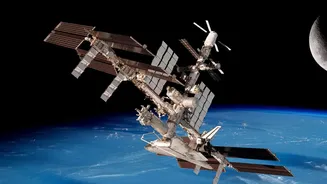
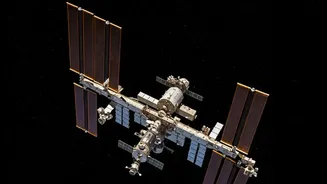
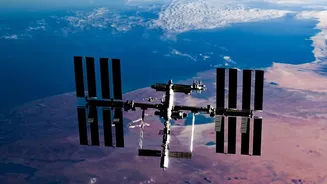
The Bharatiya Antariksh Station (BAS), or Indian Space Station, is envisioned as a modular outpost orbiting about 400 kilometres above Earth. With a planned weight of around 52 tonnes, it will be significantly smaller than the International Space Station (ISS)
but will provide a crucial platform for Indian astronauts, or 'Gaganyatris', to conduct long-duration missions. The station is designed to be assembled in space, module by module. The first component, BAS-01, is slated for launch by 2028, with the full five-module station expected to be completed by 2035. Once fully operational, it will be able to host three to four astronauts for periods of three to six months.
The Gaganyaan Foundation
Before India can build a space station, it must first master the art of sending humans into orbit and bringing them back safely. This is the primary objective of the Gaganyaan programme. The success of Gaganyaan, which aims to launch a crew of astronauts into a low-Earth orbit, is the critical stepping stone for the BAS. Technologies developed for Gaganyaan—including life support systems, crew modules, and human-rated launch vehicles—are fundamental to the space station project. The government has extended the scope and funding of the Gaganyaan program to include the development and validation of technologies essential for the space station, such as space docking experiments that allow spacecraft to connect in orbit.
A Hub for Science and Research
The primary purpose of the Bharatiya Antariksh Station is to serve as a dedicated laboratory in space. The microgravity environment of the station offers a unique setting for research that is impossible on Earth. Scientists will be able to conduct experiments in diverse fields like medicine, material science, biotechnology, and fluid dynamics. This research could lead to breakthroughs in understanding the effects of long-term spaceflight on the human body, which is vital for future interplanetary missions. It will also serve as a platform for advanced Earth observation, aiding in climate studies, disaster management, and resource monitoring.
Strategic and Geopolitical Significance
Owning and operating a space station is about more than just science; it is a powerful statement of a nation's technological prowess and strategic autonomy. By establishing its own orbital outpost, India joins an elite club of nations with a permanent human presence in space. This enhances its standing as a major global space power and opens new avenues for international collaboration on its own terms. With the International Space Station expected to be decommissioned around 2030, the BAS could position India as a key player in future space exploration partnerships. The station is a cornerstone of India's long-term 'Space Vision 2047,' which includes goals like landing an Indian astronaut on the Moon by 2040.
The Road Ahead
The timeline is ambitious. ISRO plans to begin developmental tests for the station starting in 2025, with the first robotic module launching in 2028. This initial module will act as a testbed for crucial technologies like docking mechanisms and life support systems. The entire project will be built upon the powerful LVM3 rocket, which is being human-rated for the Gaganyaan missions, and the future Next Generation Launch Vehicle. As ISRO Chairman Dr. V. Narayanan recently confirmed, the government has approved the first module, signaling a firm commitment to this monumental undertaking. The journey from transporting rocket parts on bicycles to building a home in orbit represents a remarkable leap for India.