






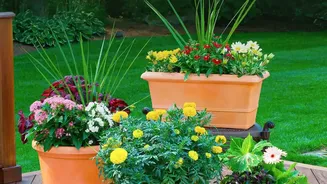

The Festive Favourite: Marigolds (Genda)
Marigolds are synonymous with Indian festivals, and growing them at home is surprisingly simple. These sun-loving flowers bring a burst of cheerful orange and yellow to any space. For best results, choose a spot that receives at least six to eight hours
of direct sunlight daily. October is an ideal time for sowing seeds across most of India. Use a well-draining potting mix; a combination of garden soil, compost, and cocopeat works wonders. You can sow the seeds about half a centimetre deep directly into your pots or garden bed. Keep the soil moist until the seeds germinate, which usually takes about a week. A key hack for bushier plants with more flowers is to 'pinch' the tips of young plants. Once they are a few inches tall, simply snip off the top-most growth. This encourages the plant to grow more branches from the sides. Also, remember to regularly remove spent or faded flowers to promote continuous blooming through the winter months.
The Autumn Queen: Chrysanthemums (Guldaudi)
Chrysanthemums, with their intricate petals and rich colours, are the stars of the winter garden. They thrive in the cooler temperatures of October, which is a great time to plant small saplings from a local nursery. These plants prefer a spot with plenty of sunlight but can benefit from some afternoon shade in warmer regions. The biggest challenge with chrysanthemums is watering. They dislike having 'wet feet', so well-drained soil is crucial. Water them deeply, but only when the top layer of soil feels dry. Overwatering can lead to root rot. For soil, a fertile mix of compost and garden soil is effective. To get a fuller plant, you can prune the stems when they are young. Similar to marigolds, deadheading, or removing old blooms, will encourage the plant to produce more flowers and extend its blooming season well into the winter.
The Fresh Green: Spinach (Palak)
There's nothing quite like cooking with spinach plucked straight from your own garden. October is the perfect month to start growing this nutritious leafy green, as it loves cooler weather. Spinach grows wonderfully in containers and doesn't need a very deep pot; a container that is six to eight inches deep and has a wide surface area is perfect. Use a nutrient-rich soil mix containing compost to feed the plants. You can soak the seeds for a few hours before sowing to speed up germination. Plant the seeds about half an inch deep. Keep the soil consistently moist, and you should see seedlings emerge in about a week. Spinach needs about four to six hours of sunlight. The best part about growing spinach is the continuous harvest. You can start picking the outer leaves in just four to five weeks, leaving the inner leaves to grow. This 'cut-and-come-again' method will ensure you have a steady supply of fresh palak for your kitchen.
Essential Hacks for a Thriving Garden
A few universal tips can make all the difference. First, prepare your soil well by mixing in organic compost, which provides essential nutrients. For containers, ensure they have drainage holes to prevent waterlogging. Second, manage pests naturally. A simple spray made by mixing a few millilitres of neem oil with a litre of water and a drop of liquid soap can help keep common pests like aphids and whiteflies at bay. Spray this solution every ten to fifteen days as a preventative measure. Finally, water wisely. The cooling weather means plants need less water than in the summer. Always check the soil before watering; if the top inch feels dry, it's time to water. It is best to water plants in the morning so the leaves have time to dry during the day, which helps prevent fungal diseases.