







Artemis III: A Crucial Earth-Orbit Dress Rehearsal
The next major mission, Artemis III, is scheduled for mid-2027, but its objectives have been significantly revised. Originally slated to be the historic return to the lunar surface, NASA announced in February 2026 that this mission will now serve as a critical
full-scale test in low Earth orbit. Instead of heading to the Moon, the four-person crew will conduct complex rendezvous and docking procedures with test versions of the Human Landing Systems (HLS) being developed by SpaceX and Blue Origin. The mission will test the intricate maneuvers required for future lunar missions, but in the relative safety of an orbit close to home. This change de-risks the eventual lunar landing by ensuring all systems, including new spacesuits, work together flawlessly before attempting them nearly 400,000 kilometres from Earth.
The Landing Systems: A High-Stakes Commercial Race
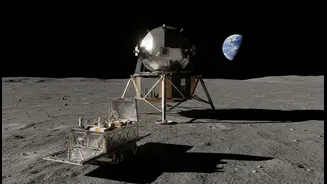
The success of future lunar landings hinges on two commercial partners: SpaceX with its Starship HLS and Blue Origin with its Blue Moon lander. Artemis III is designed to be the ultimate shakedown for one or both of these vehicles. The mission plan involves a multi-launch campaign where the landers are launched separately and meet the Orion capsule in orbit for docking tests. This puts immense pressure on the companies to have their hardware ready for the 2027 flight, as any delay would have a cascading effect on the entire Artemis timeline. For engineering students and industry followers, this represents a fascinating case study in a new era of public-private space collaboration, where NASA sets the goal and commercial partners innovate on the hardware to get there. The readiness of these landers is now one of the most critical variables in the program.
Artemis IV: The New Target for Lunar Landing
With the revision of Artemis III, the first crewed lunar landing in over 50 years is now targeted for Artemis IV, scheduled for no earlier than early 2028. This mission will see four astronauts fly to lunar orbit aboard Orion. Two crew members will then transfer to a waiting HLS for the historic descent to the Moon's south pole. They will spend approximately a week on the surface, conducting science experiments, collecting samples, and exploring a region of the Moon that is rich in scientific interest due to the potential presence of water ice in permanently shadowed craters. This mission also marks a significant hardware upgrade, using a more powerful version of the Space Launch System (SLS) rocket, known as Block 1B, which can carry heavier payloads to the Moon.
Beyond the Landing: A Permanent Moon Base
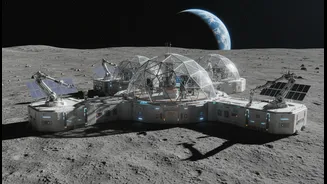
Artemis is about more than just flags and footprints; it’s about establishing a sustained human presence on the Moon. In a major strategic shift, NASA has paused development of the Lunar Gateway space station and is instead focusing resources on building a lunar surface base. This multi-phase plan begins with a series of robotic and commercial payload deliveries (CLPS) to prepare the ground. Artemis V, scheduled for late 2028, is expected to begin the initial construction of this base. The long-term vision, stretching into the 2030s, involves deploying large habitats, power systems like solar arrays and radioisotope generators, and a new generation of Lunar Terrain Vehicles (LTVs) to support long-duration stays and scientific research. The goal is to create a hub for routine crew rotations and to live off the land by extracting resources like oxygen from the lunar regolith, paving the way for eventual missions to Mars.