







The Limits of a Paper Trail
For years, the resume has been a flawed but necessary tool. It's a static, one-dimensional summary that often forces candidates to condense years of experience into keyword-optimized bullet points just to pass through initial screens. Traditional Applicant
Tracking Systems (ATS) were built to scan for these keywords, not to understand context, potential, or transferable skills. This process was notoriously inefficient, with recruiters spending hours manually sifting through applications that looked largely the same. This system rewards candidates who are good at writing resumes, not necessarily those who are best for the job, and often filters out qualified people whose experience doesn't match a rigid keyword profile.
Enter EzRecruit.ai: The New Gatekeeper
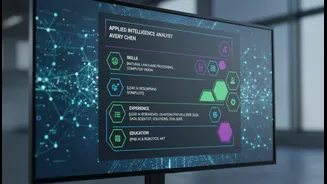
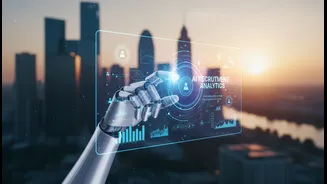
Platforms like the fictional EzRecruit.ai represent a new class of AI hiring tools that go far beyond simple keyword matching. Instead of just storing and sorting applications, these intelligent systems are designed to actively evaluate, score, and rank candidates based on a much deeper understanding of their capabilities. Using advanced natural language processing and machine learning, they analyze a candidate's entire digital footprint—not just a PDF. They parse project portfolios, validate technical assessments, and can even conduct automated, structured interviews to build a comprehensive profile. This shift from a passive filing cabinet (the ATS) to an active evaluation engine (the AI platform) is the core reason the old resume format is failing.
A Shift to Verifiable Skills
The biggest change driven by AI recruitment is the pivot from credentials to capabilities. A traditional resume says where you worked and what your title was; an AI-driven profile proves what you can actually do. Platforms emerging in the Indian market, such as Parikshak.ai and TurboHire, are built on this premise. They prioritize skills-based hiring by integrating technical assessments, coding challenges, and job simulations directly into the application process. Your resume might say you're proficient in Python, but these platforms will ask you to demonstrate it with a real-world problem. This focus on verifiable skills provides employers with a much more reliable signal of a candidate's potential performance. It also levels the playing field for candidates who have strong practical abilities but may lack a conventional career path or a degree from a top-tier university.
Your New Resume Is a Dynamic Profile
In the age of EzRecruit.ai, your resume is no longer a document you create once and email out. It is a living, dynamic professional profile. This means keeping online platforms like LinkedIn and other professional networking sites meticulously updated with specific skills, project outcomes, and certifications. AI tools consolidate this data to build a holistic picture of a candidate. Job seekers must now think like data analysts, constantly curating the information they put online. Instead of a bullet point that says “Managed marketing campaigns,” the new standard is to provide quantifiable results: “Managed a digital marketing campaign that increased lead generation by 40% in six months with a budget of X.” This specific, data-rich evidence is what AI algorithms are designed to find and reward.
How to Adapt and Win the Job
So, how can a job seeker in India adapt to this new reality? The first step is to stop thinking about your resume as a historical document and start treating it as an evidence-based marketing tool. First, meticulously analyze job descriptions to identify core skills and keywords, and ensure those exact terms appear in your profile. Second, focus on quantifying every achievement. Use numbers, percentages, and specific outcomes to prove your impact. Third, build a portfolio of your work. For tech roles, this means a public GitHub repository; for designers, a Behance profile; for writers, a personal blog with articles. Finally, embrace skills assessments and online certifications. These provide the verifiable proof of competence that AI-driven platforms are looking for. The goal is to create a rich, data-driven professional identity that an algorithm can easily parse and score highly.