

What Are Solar Storms?
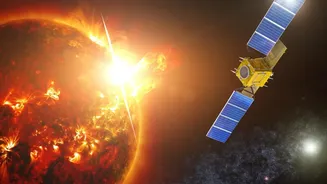
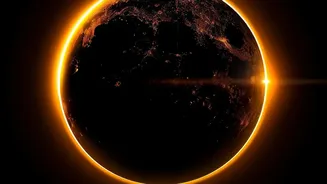
The sun isn't just a steady ball of light; it's a turbulent, magnetically active star. It has an 11-year cycle of activity, moving from a quiet minimum to a stormy maximum. During active periods, the sun can unleash powerful solar flares—immense bursts
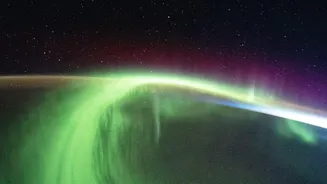
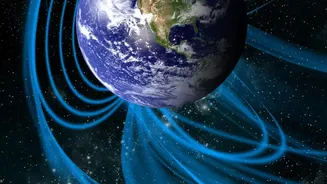
of radiation—and coronal mass ejections (CMEs), which are giant clouds of charged particles and magnetic fields hurled into space. When these eruptions are aimed at Earth, they can trigger geomagnetic storms, which are major disturbances in our planet's magnetic field and upper atmosphere.
The Journey to Your GPS
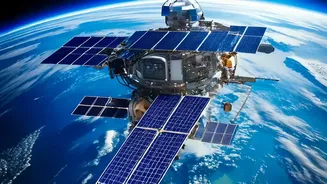
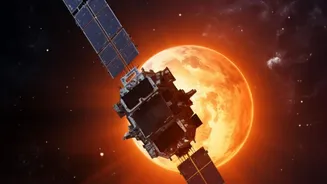
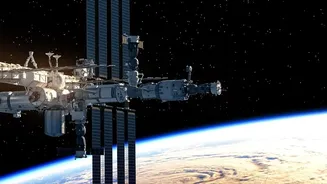
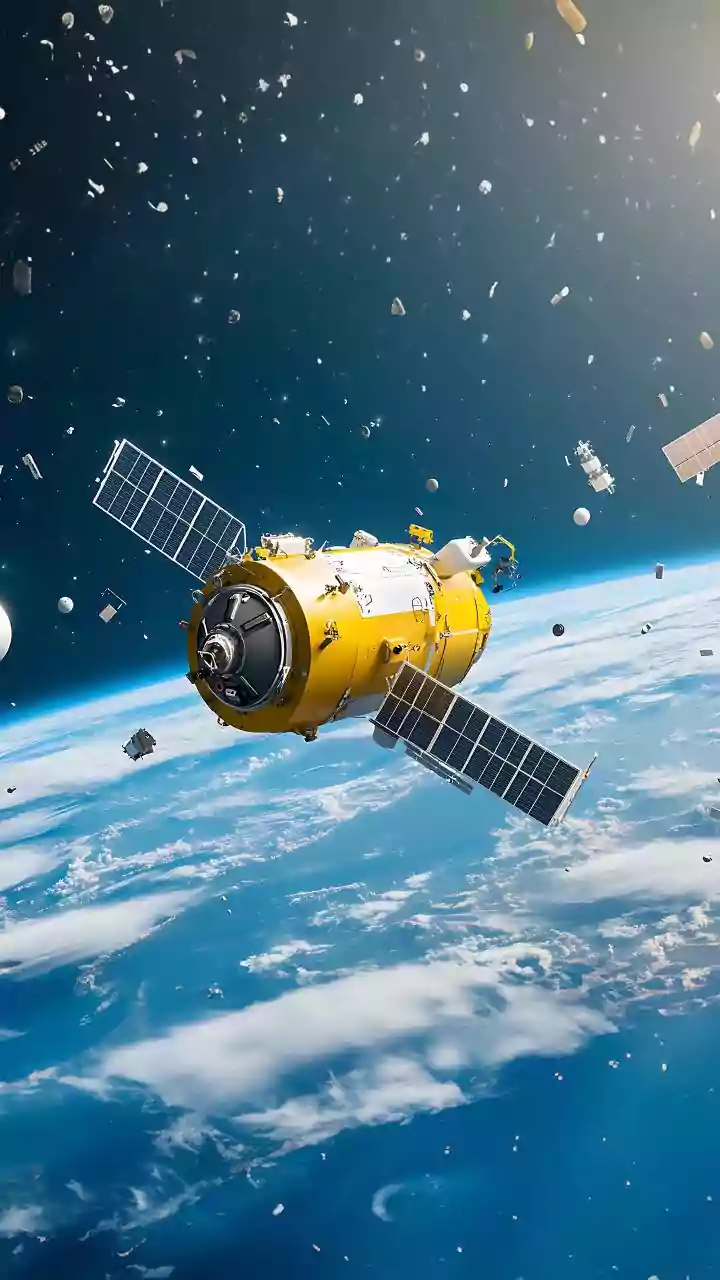
To understand the impact, we need to know how GPS works. A constellation of satellites orbits Earth, each broadcasting a precise time signal. Your phone or car's receiver picks up signals from multiple satellites and calculates your position based on the tiny differences in the time it takes for each signal to arrive. For this to work, the signal's path must be predictable. But that's where solar storms come in. The radio signals from GPS satellites must travel through the ionosphere, a layer of Earth's atmosphere filled with charged particles (ions and electrons). Normally, GPS systems can model and correct for the standard signal delay this layer causes.
How Storms Scramble the Signal
A solar storm supercharges the ionosphere, dramatically altering its density and structure. This creates irregularities that can bend, delay, or scatter the GPS signal in an unpredictable phenomenon known as 'ionospheric scintillation'. These rapid fluctuations in the signal's amplitude and phase can confuse a GPS receiver. In less severe cases, this can reduce positioning accuracy from a few metres to tens of metres. Instead of showing your car on the correct road, it might place you in a nearby building or field. For high-precision users in farming or construction, this can be a significant problem. In extreme cases, the signal can be lost entirely, making it impossible for a receiver to lock on and calculate a position at all.
The Spectrum of Risk
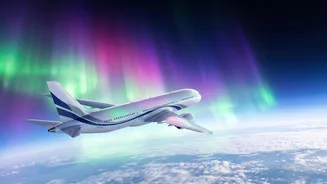
The threat from solar weather isn't just a minor inconvenience. Our modern world is deeply reliant on the precise positioning and timing signals from GPS. Aviation is a key example; planes on polar routes, where Earth's magnetic field offers less protection, can lose communication and navigation capabilities during a storm, forcing them to reroute. Shipping, logistics, financial markets (which use GPS for precise time-stamping transactions), and even power grids are all vulnerable. A repeat of the 1859 Carrington Event, the most powerful geomagnetic storm on record, could be catastrophic. That storm caused telegraph systems to spark and fail. A similar event today could potentially cripple satellite fleets, trigger widespread blackouts, and disrupt global communications.
Watching the Sun, Protecting the Planet
Fortunately, we aren't flying blind. Agencies like the US National Oceanic and Atmospheric Administration's (NOAA) Space Weather Prediction Center (SWPC) monitor the sun 24/7. Using a combination of ground-based telescopes and satellites like the Deep Space Climate Observatory (DSCOVR), they provide forecasts and alerts about incoming solar storms. These warnings give industries time to take protective measures. For example, satellite operators can put their spacecraft into a safe mode to protect sensitive electronics, and power grid managers can prepare for potentially damaging induced currents.
Building More Resilient Systems
Beyond forecasting, work is underway to make our technology more robust. This includes developing advanced GPS receivers that use multiple frequencies to better correct for ionospheric disturbances. Many critical systems also maintain backup navigation methods that don't rely on space-based signals. As our dependence on satellite navigation grows, so does the investment in understanding and mitigating the effects of space weather. This ensures that even when the sun acts up, our vital systems on Earth can continue to function safely and reliably.