





Pioneering Passages
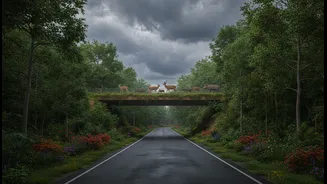
In recent years, India has emerged as a global leader in designing infrastructure that accommodates wildlife. Ambitious projects, like the series of underpasses on National Highway 44 cutting through the Pench Tiger Reserve, have been celebrated as pioneering
successes. Similarly, the Delhi-Dehradun Economic Corridor features one of Asia's longest elevated wildlife corridors, designed to allow species from tigers to elephants to move freely. Studies by the Wildlife Institute of India have shown that animals, including elephants and leopards, are actively using these underpasses, reducing human-wildlife conflict and allowing genetic exchange between fragmented populations. These structures represent a monumental shift, treating wildlife connectivity not as an afterthought, but as an integral part of national development.
When the Rains Come
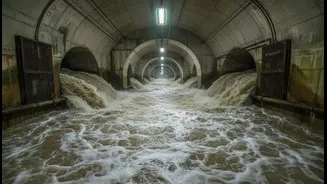
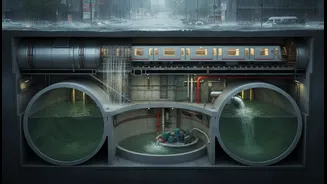
However, a new threat is emerging that tests the limits of this engineering: water. Climate change is making India's monsoons more intense and unpredictable. Heavy downpours are causing flash floods that can turn wildlife underpasses into death traps. In regions like Assam's Kaziranga National Park, annual floods are a natural part of the ecosystem, pushing animals to seek higher ground. But when their traditional migratory routes are bisected by roads, the situation becomes perilous. An underpass designed for a dry passage becomes a submerged, impassable barrier, forcing animals back onto dangerous highways where the risk of vehicle collisions skyrockets. The very infrastructure built to protect them can, under the stress of extreme weather, amplify the danger they face.
A Flawed Blueprint?
The core of the issue lies in planning. Road infrastructure built for stable, predictable weather patterns is now facing pressures it was never designed to handle. The focus has often been on the physical structure of the crossing—its size, shape, and location relative to animal movement. While crucial, this can overlook the equally important hydrological context. Are drainage systems adequate to handle a once-in-a-century flood event that now seems to happen every few years? In the Himalayan states, unscientific road cutting and poor construction have already led to catastrophic landslides and bridge collapses during periods of intense rain. Experts argue that without integrating robust climate resilience and hydrological modeling into the initial design phase, we are simply building future failures. We cannot treat a wildlife crossing as a static object; it must function within a dynamic and changing environment.
Designing for Deluge
The solution requires a fundamental shift in how we design and build. The concept of a "rain check" for these routes means incorporating climate resilience from day one. This involves more than just standard drainage. It means building elevated structures or viaducts in known floodplains, rather than just culverts that can clog or overflow. It requires using permeable materials, vegetated swales, and better slope stabilization techniques to manage water runoff and prevent erosion. Furthermore, guidelines need to be dynamic, moving beyond a one-size-fits-all approach to consider local topography, soil, and projected rainfall patterns. In some cases, a raised shelf within a larger bridge structure can provide a dry passage for wildlife even when water levels are high. This forward-looking engineering costs more upfront but prevents much larger costs—both economic and ecological—down the line.