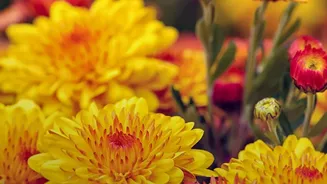


As winter approaches, many gardens begin to lose their vibrancy. But the colder months don't have to mean a colourless landscape. Enter the chrysanthemum, a resilient and beautiful flower that thrives in cool weather, ready to fill your space with life.
The Autumn Queen's Appeal
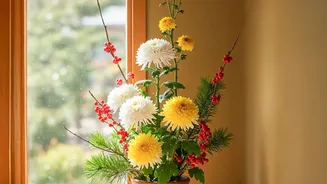
Commonly known as Guldaudi or Sevanthi in India, the chrysanthemum is celebrated as the 'Queen of the East' for good reason. Native to Asia, these hardy perennials are naturally short-day plants. This means they initiate their blooming cycle when the days get shorter and nights get longer, making them perfect candidates for providing a burst of colour from late autumn through winter, typically from October to February in many parts of India. With a vast array of colours, sizes, and shapes—from small button-like blooms to large, showy pom-poms—there is a chrysanthemum for every type of garden, be it a spacious lawn, a terrace, or a small apartment balcony.
Choosing Your Winter Blooms
Success starts with selecting the right variety for your region. In India, chrysanthemums are broadly grown as loose flower types for garlands and offerings, or as cut-flower types with large heads. Varieties like Arka Swarna, Poornima, and local 'Shevanti' selections are popular for their vibrant colours and adaptability to Indian climates. When purchasing a plant from a nursery, look for one with plenty of healthy, unopened buds rather than one already in full bloom. This ensures you'll enjoy a longer flowering season at home. For those looking to grow them year after year, it's best to source planting material like suckers or cuttings from a reliable source to avoid diseases.
Planting for a Strong Start
The ideal time to plant chrysanthemums for winter flowering is during the monsoon, around June and July. This gives the plants enough time to establish a strong root system before the blooming season begins. Propagation is most commonly done through terminal cuttings (5-7 cm long) or by separating suckers from a healthy mother plant. Chrysanthemums thrive in well-drained red loamy soil with a pH between 6 and 7. For pots, a mixture of regular potting soil with organic compost or vermicompost works wonders. Ensure your pots have adequate drainage holes, as waterlogged soil is the primary enemy of these plants, often leading to root rot.
Sunlight, Water, and Food
Chrysanthemums are sun-loving plants and require at least five to six hours of direct sunlight daily for robust growth and flowering. The optimal temperature for growth is between 20-28°C during the day and a cooler 15-20°C at night. Water your plants deeply but allow the top inch of soil to dry out between waterings. During the initial month after planting, they may need watering twice a week, which can be reduced to weekly intervals later. A balanced fertiliser can be used during the vegetative growth stage. Once buds start to form, switch to a fertiliser lower in nitrogen and higher in potassium to encourage more flowers instead of just leafy growth.
Pinching for Fuller Blooms
One of the key techniques for getting a lush, bushy chrysanthemum plant loaded with flowers is 'pinching'. This simply means using your fingers to remove the top 1-2 inches of the main stem and any side branches. Pinching should be done about four weeks after planting. This encourages the plant to produce more lateral branches, and more branches mean more flowers. This simple step can be the difference between a plant with a few sparse flowers and one that is a dense mound of vibrant colour.
Guarding Against Pests
Like any garden plant, chrysanthemums can be susceptible to pests. Aphids are a common issue, often appearing as clusters of tiny brown or black insects on new shoots and under leaves. Thrips and spider mites are other potential troublemakers, especially in dry conditions. Regularly inspect your plants, and if you spot an infestation, a strong spray of water can dislodge many pests. For more persistent problems, washing the plant with soapy water or using neem oil is an effective organic solution that limits harm to beneficial insects. Ensuring good air circulation around the plant and avoiding wetting the leaves can help prevent fungal diseases like leaf spot and powdery mildew.