



More Than a Manual
Passing a health inspection is the bare minimum. A truly safe kitchen operates with a culture where safety is not an afterthought, but the foundation of every action. This culture is built from the ground up, starting with leadership and reinforced by
every team member until safe practices become second nature. It’s the difference between begrudgingly following a checklist and instinctively understanding why each step matters. This mindset transforms the kitchen from a place of potential hazards into a well-oiled machine where everyone looks out for each other. This shared responsibility reduces accidents, prevents foodborne illnesses, and ultimately creates a less stressful, more professional environment. When managers lead by example—always washing their hands, wearing proper attire, and respecting procedures—they signal that safety is a non-negotiable priority.
Cleanliness as a Reflex
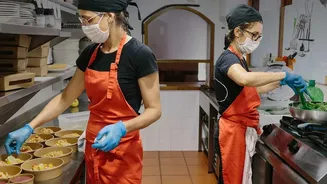
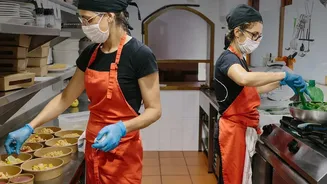
A strong safety culture is most visible in its approach to cleanliness. This goes far beyond wiping down a counter after a spill. It's a constant, proactive state of sanitation. You can see it in a policy of 'clean as you go,' where staff are encouraged to clean their stations and equipment immediately after use. It's evident in the strict separation of raw and cooked foods, often using colour-coded cutting boards to prevent cross-contamination. Handwashing is another critical habit. In a safety-conscious kitchen, staff wash their hands not just at the start of a shift, but between tasks, after handling raw meat, and after touching their face or phone. Proper food storage, with clear labelling and adherence to the 'First In, First Out' (FIFO) principle, is another non-negotiable habit that prevents spoilage and waste.
The Kitchen's Silent Language
In the tight, fast-paced quarters of a professional kitchen, movement is a carefully choreographed dance. Effective communication is critical to preventing collisions, burns, and cuts. A key sign of a mature safety culture is the use of a simple, verbal shorthand. You'll hear calls of “behind you” when someone is passing, “corner” when rounding a blind spot, and “hot pan” when moving with something dangerous. These brief announcements are crucial for maintaining spatial awareness and preventing accidents when visibility is low or staff are focused on their tasks. This verbal ballet demonstrates mutual respect and a collective commitment to keeping everyone safe. It shows that the team is trained not just to cook, but to move and communicate as a single, aware unit. Acknowledging these calls with a simple "heard" completes the communication loop, ensuring every warning is received.
Respect for the Tools
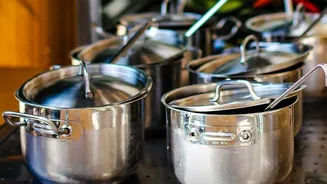
The way a kitchen staff treats its equipment speaks volumes about its safety culture. In a well-run kitchen, tools are respected, not feared. This means knives are always kept sharp, as a dull knife is more likely to slip and cause injury. They are handled with care, never left in a sink full of water, and passed to others safely, handle-first. Another key habit is ensuring that staff only operate equipment they have been properly trained to use, whether it's a meat slicer, a deep fryer, or a commercial mixer. Regular equipment maintenance is also prioritised, with staff encouraged to report any malfunctions immediately instead of trying to work around a problem. Guards and safety covers on machines are always kept in place, not removed for the sake of speed. This respect for the tools is a habit that protects against some of the most severe kitchen injuries.
Safety from the Top Down
Daily habits don't form in a vacuum. They are cultivated by management that actively fosters a positive safety culture. This starts with providing comprehensive training that explains the 'why' behind the rules, not just the 'what'. Leaders in great kitchens empower their staff to speak up about safety concerns without fear of reprisal. They schedule regular deep-cleanings, ensure safety equipment is readily available, and invest in the right tools to make safe practices easier to follow. When an employee sees the head chef meticulously washing their hands or calling out “corner,” it sends a powerful message. A strong safety culture is a team effort, but it must be championed from the top to truly take root in the daily habits of the entire staff.