
Aerospace Engineering: Designing the Vessels
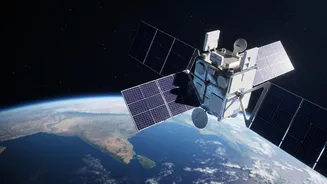
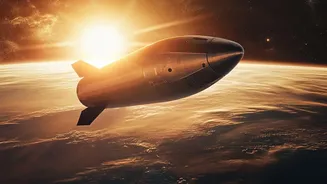
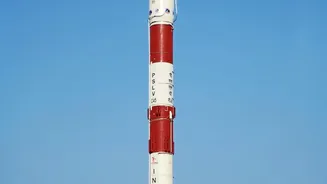
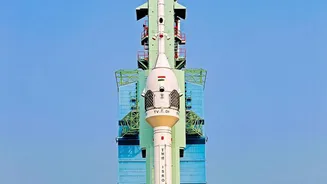
At the heart of any space mission is the hardware that gets us there. Aerospace engineers are the architects of exploration, designing, building, and testing everything from rockets and satellites to spacecraft and propulsion systems. This field is crucial
as India's space sector, spurred by private companies like Skyroot Aerospace and Agnikul Cosmos, continues to expand. A Bachelor's degree in aerospace, mechanical, or a related engineering field is the typical starting point for a career that could see you working on reusable launch vehicles or next-generation satellite constellations. With India's space economy growing rapidly, the demand for skilled engineers to build the future of space travel is soaring.
Planetary Science: Exploring Other Worlds
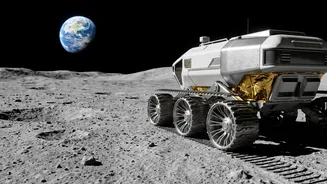
If your fascination lies with the planets, moons, asteroids, and comets themselves, then planetary science could be your calling. This multidisciplinary field blends geology, physics, and chemistry to understand the formation and evolution of celestial bodies. Planetary scientists study everything from the geology of Mars and the atmospheres of distant exoplanets to the composition of meteorites. This career often begins with a degree in physics, geology, or a specialized planetary science program, and it can lead to roles in research, mission analysis for agencies like ISRO or NASA, or in education.
Satellite Data Analysis: Making Sense of the Signals
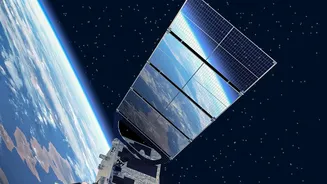
Modern space exploration runs on data. One of the fastest-growing careers in the space industry involves analysing the enormous volumes of information sent back by Earth-observation and deep-space satellites. These professionals, often called remote sensing or GIS experts, interpret satellite imagery and signals for a vast range of applications, including defence, agriculture, climate monitoring, and urban planning. A background in computer science, data science, or geography can be a launchpad into this field. Companies like SatSure are actively hiring analysts who can turn raw satellite data into actionable insights.
Space Law and Policy: Crafting the Rules of the Cosmos
As space becomes more crowded with commercial and governmental activities, the need for a robust legal framework is greater than ever. Space lawyers and policy analysts work on the complex web of treaties, regulations, and ethical guidelines that govern space exploration. They handle issues like satellite launch licensing, orbital debris mitigation, and international cooperation on space missions. This emerging field is perfect for students who have an interest in both space and humanities, often requiring a law degree combined with a specialized interest or certification in space policy.
Space Medicine: Keeping Astronauts Healthy
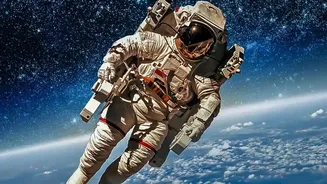
The human body is not designed for the extreme environment of space. Aerospace medicine is a specialized field focused on the health, safety, and performance of astronauts and aircrews. These medical professionals research and manage the physiological effects of microgravity, radiation, and confinement. Becoming a space medicine physician is a long journey, typically requiring a medical degree (MD or DO) followed by a specialized residency in aerospace medicine. It's a challenging but vital role that combines clinical practice with pioneering research into human survival beyond Earth.
Science Communication: Sharing the Wonder
Discoveries made in space don't mean much if they aren't shared effectively with the public. Science communicators bridge the gap between complex research and public understanding. This can involve writing articles, producing podcasts or documentaries, managing social media for space agencies, or working in public outreach at museums and planetariums. A career in this area can start with a degree in science, journalism, or communications. The goal is to translate the technical jargon of space exploration into compelling stories that inspire the next generation.