





Why Is Everyone Talking About Sweeteners?
The push to reduce sugar intake is stronger than ever. With rising concerns about lifestyle diseases like diabetes and obesity in India, many consumers are actively looking for healthier alternatives. Food companies have responded with a flood of products
labelled 'sugar-free', 'low-calorie', or 'diet-friendly'. While this seems like a positive step, it has created a new layer of confusion. These products rely on sugar substitutes, a diverse group of compounds that mimic the sweetness of sugar without the same caloric load. However, not all sweeteners are created equal, and understanding their differences is key to making truly healthy choices.
The Big Three: Artificial, Natural, and Sugar Alcohols
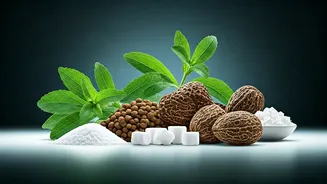
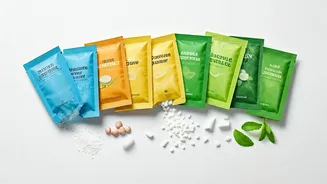
Sweeteners generally fall into three main camps. First are the artificial sweeteners, which are synthetic chemicals many times sweeter than sugar, like Aspartame and Sucralose. Second, you have natural sweeteners, which are derived from plants, with Stevia and Monk Fruit being the most popular. The third category is sugar alcohols, such as Xylitol and Erythritol. These are carbohydrates that are structured in a way that your body doesn't fully absorb them, resulting in fewer calories than regular sugar. Each category has its own set of pros, cons, and specific uses in food products.
Decoding Artificial Sweeteners
These are the lab-created powerhouses of sweetness. The Food Safety and Standards Authority of India (FSSAI) has approved several, including Aspartame, Sucralose, and Acesulfame Potassium (Ace-K). Aspartame is around 200 times sweeter than sugar, but it is not heat-stable and should not be used by individuals with the rare genetic condition phenylketonuria (PKU). Sucralose, on the other hand, is about 600 times sweeter than sugar and can be used in baking. While global health bodies generally consider these sweeteners safe within acceptable daily intake limits, debates about their long-term effects on gut health and metabolism are ongoing.
The Rise of Natural Alternatives
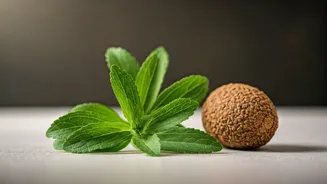
For consumers wary of synthetic ingredients, natural sweeteners have become a go-to. Stevia, extracted from the leaves of the Stevia rebaudiana plant, is a front-runner in India. It offers zero calories and does not raise blood sugar levels, making it popular among people with diabetes. Monk fruit extract is another zero-calorie option gaining traction, known for a taste that many find closer to sugar without a bitter aftertaste. Though marketed as 'natural', it's important to remember that these are still highly processed extracts and are best used in moderation.
Understanding Sugar Alcohols: The '-ol' Family
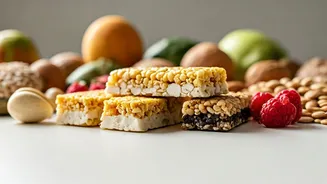
If you see ingredients ending in '-ol'—like Sorbitol, Maltitol, and Erythritol—you're looking at a sugar alcohol. These are often found in 'sugar-free' sweets, chewing gum, and protein bars. They provide a sweet taste with fewer calories because they are not completely absorbed by the body. One major benefit is that they don't contribute to tooth decay. However, this incomplete absorption can have a downside: for some people, consuming sugar alcohols can lead to digestive issues like bloating and gas, especially when eaten in large quantities. Erythritol is often better tolerated as it's mostly absorbed and then excreted unchanged.
How to Read the Label in India
Spotting sweeteners requires a bit of detective work. First, ignore the claims on the front of the package like 'Sugar-Free' or 'Natural' as these can be misleading. Go straight to the ingredients list on the back. Sweeteners must be listed by their name or their INS (International Numbering System) code, for example, Aspartame (INS 951), Sucralose (INS 955), or Stevia (INS 960). Ingredients are listed by weight, so if a sweetener appears high on the list, the product contains a significant amount. FSSAI also mandates specific declarations, such as a warning that products with polyols (sugar alcohols) may have a laxative effect.