



The Sun’s Invisible Breath
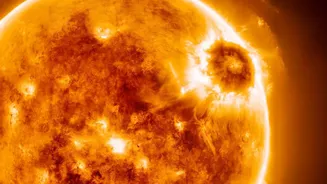
The solar wind is a continuous outflow of charged particles—mostly electrons and protons—from the Sun's incredibly hot outer atmosphere, the corona. This isn't a gentle breeze; it's a supersonic stream that travels throughout the solar system at speeds
around 300 kilometres per second. While Earth's magnetic field acts as a protective shield, deflecting most of this particle onslaught, intense bursts can disrupt this shield, creating what we call space weather. These disturbances can pose a serious threat to our modern, technology-dependent lives, making the study of solar wind a critical task for national security and infrastructure protection.
Aditya-L1’s In-Situ Eyes
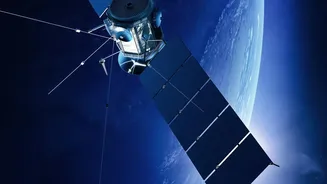
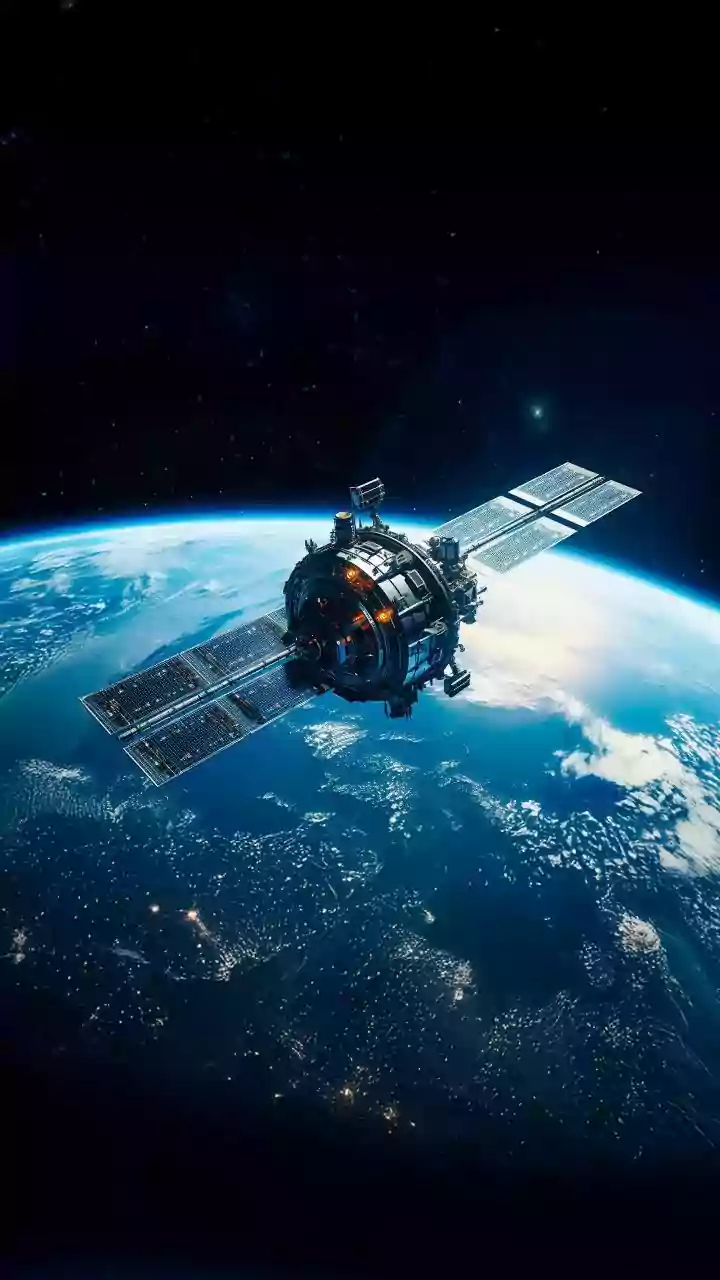
To study this phenomenon, Aditya-L1 carries a suite of in-situ instruments that directly sample the space environment around the L1 point. Two key payloads leading this investigation are the Aditya Solar wind Particle EXperiment (ASPEX) and the Plasma Analyser Package for Aditya (PAPA). ASPEX, developed by the Physical Research Laboratory (PRL), measures the properties and variations of solar wind ions. PAPA, from the Vikram Sarabhai Space Centre, focuses on both electrons and ions, analysing their energy, composition, and direction. Together, these instruments act like a highly advanced weather station in space, providing a constant feed of data on the solar wind's characteristics.
Decoding High-Speed Streams
Not all solar wind is the same. The Sun has regions called 'coronal holes' where the magnetic field opens out into space, allowing particles to escape at much higher speeds. These are known as high-speed solar wind streams. Aditya-L1's continuous, uninterrupted view allows it to monitor these streams in great detail. Earlier this year, for instance, the ASPEX payload registered a significant event involving high-speed solar wind and elevated plasma temperatures. By observing these streams from their origin to their arrival at L1, scientists can build a comprehensive picture of how they evolve and what makes them a potent driver of geomagnetic storms on Earth. Continuous data collection is crucial, as it helps identify patterns and triggers that might be missed with intermittent observations.
Early Success in Storm Tracking
The spacecraft’s instruments have already proven their worth. During powerful geomagnetic storms, the PAPA payload has successfully detected the arrival of Coronal Mass Ejections (CMEs)—massive eruptions of plasma and magnetic fields from the Sun. Its sensors recorded abrupt increases in electron and ion counts that corresponded with major solar events. These observations are vital because CMEs are a primary cause of severe space weather. The data from PAPA and ASPEX allows scientists to confirm the arrival and characteristics of a CME at L1, providing a more accurate and timely warning—roughly an hour—before its impact on Earth's magnetosphere.
Why These Measurements Matter for India
Understanding and forecasting space weather is no longer an abstract scientific pursuit; it's a strategic necessity. Intense solar storms can damage satellites by degrading their solar panels and electronics, and even cause their orbits to decay faster. They can disrupt GPS navigation, trigger radio blackouts, and overload power grids on the ground. For a nation increasingly reliant on space-based assets for communication, navigation, and security, having a dedicated observatory like Aditya-L1 is invaluable. The continuous stream of data on solar wind helps ISRO and scientists across India create better predictive models, safeguard our technological infrastructure, and solidify India's position as a leading space-faring nation.