








The Danger Zone in Your Kitchen
Warm and humid conditions, common during India's rainy season, accelerate the growth of harmful germs. Food spoils much faster when left at room temperature in this weather. The temperature range between 4°C and 60°C is often called the “danger zone,”
where bacteria can multiply rapidly. Leaving cooked food out for even a couple of hours can turn a safe meal into a source of foodborne illness. Common culprits like Salmonella and E. coli thrive in these conditions, but rice and gravies have their own specific risks.
The Special Risk of Cooked Rice
The issue with cooked rice centres on a bacterium called Bacillus cereus. Spores of this bacteria are commonly found on uncooked rice and can survive the cooking process. If cooked rice is left standing at room temperature, these resilient spores can germinate and multiply. As they grow, they produce toxins that are heat-resistant. This means that even if you reheat the rice thoroughly, the toxins remain and can cause illness, often leading to vomiting and diarrhoea within a few hours of consumption. This is sometimes referred to as "fried rice syndrome."
Why Gravies and Curries Are a Trap
Thick, delicious gravies, curries, and stews present a different challenge. These dishes are often made in large batches, which take a long time to cool down. This extended cooling period can create ideal conditions for another type of bacteria, Clostridium perfringens. This organism thrives in low-oxygen environments, such as the middle of a large pot of stew or curry. Like Bacillus cereus, its spores can survive cooking. As the food slowly cools, the bacteria multiply and can produce toxins that cause intense abdominal cramps and diarrhoea.
Rule 1: Cool Food Down Quickly
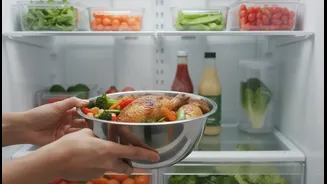
The most critical step to prevent bacterial growth is to cool leftovers rapidly. Never leave food to cool on the counter for more than two hours; if the ambient temperature is very high (over 32°C), this window shrinks to just one hour. To speed up cooling, divide large quantities of food like a pot of curry or a large batch of rice into smaller, shallow containers. This increases the surface area and allows the heat to dissipate much faster. You can even place these shallow containers in an ice or cold water bath before putting them in the refrigerator. It is perfectly safe to put hot food directly into the fridge.
Rule 2: Store It Right
Proper storage is your next line of defence. Always use airtight containers to protect food from moisture and cross-contamination from other items in the fridge. Keep raw and cooked foods separate to prevent the transfer of germs. Make sure your refrigerator is set to 4°C or below to keep food out of the bacterial danger zone. It's also a good habit to clean your fridge regularly to prevent the build-up of bacteria that could contaminate your leftovers. Aim to consume refrigerated leftovers within three days.
Rule 3: Reheat to the Right Temperature
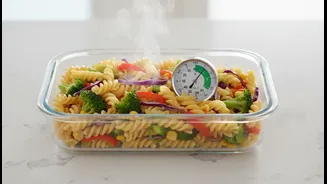
When it's time to eat your leftovers, simply warming them up is not enough. You must reheat food to an internal temperature of at least 74°C (165°F) to kill any bacteria that may have developed. Use a food thermometer to be sure. When reheating sauces, soups, and gravies on the stovetop, bring them to a rolling boil. If using a microwave, ensure the food is heated evenly by stirring it midway through. Remember, while proper reheating kills bacteria, it does not destroy the heat-stable toxins produced by Bacillus cereus in improperly stored rice. This is why cooling and storing correctly from the start is non-negotiable.