








The Anatomy of a Fake Review
Fake reviews are a significant problem in the hospitality industry. They generally fall into two categories: overly positive reviews posted by the hotel itself (or paid writers) to boost its rating, and malicious one-star reviews posted by competitors
to drag others down. Studies have shown that a surprising percentage of online reviews may be fabricated. These reviews are designed to manipulate booking algorithms and mislead potential guests. Hotels, particularly independent ones, may feel pressured to inflate their ratings to compete in crowded markets. These fake testimonials often share common traits: they are filled with generic, superlative language like "world-class" or "state-of-the-art" but lack specific, personal details about the stay. You might also notice a sudden flood of five-star reviews posted in a short period, which can indicate a paid campaign.
The Problem with Outdated Information
A review from two or three years ago might as well be describing a different hotel. Management changes, renovations, or even a simple decline in maintenance can render old feedback useless. A hotel that was spectacular in 2023 could have serious service issues by 2026. Conversely, a property that received poor marks in the past may have since addressed those problems with a full renovation and staff retraining. Relying on old reviews means you risk booking a hotel based on a reputation it no longer deserves—or avoiding a gem that has since improved. Negative reviews about issues like cleanliness or poor WiFi can linger long after they’ve been fixed, costing hotels business and giving travellers an inaccurate impression. For this reason, always prioritize recent feedback to get the most current picture of a hotel's quality.
Read Between the Stars
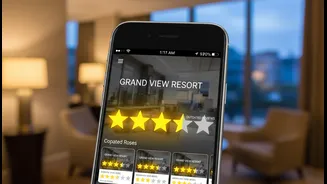
The most reliable information often lies in the middle-of-the-road reviews. Five-star reviews can be vague, and one-star reviews are often emotional outliers. Reviewers who leave two, three, or four-star ratings tend to provide more balanced and specific feedback. They’ll often praise what went right while clearly pointing out what went wrong, such as, "The location was perfect, but the WiFi was unreliable." This is the kind of practical detail that helps you make an informed decision. Look for patterns across these moderate reviews. If multiple people mention the same issue—like a noisy air conditioner or slow service at breakfast—it's likely a persistent problem.
Become a Review Detective
You can protect yourself by adopting a more critical approach. First, check the reviewer's profile. A user who has only ever posted one glowing review, or a dozen negative reviews for competing hotels, is a major red flag. Second, cross-reference reviews across multiple platforms. A hotel's rating can vary significantly from one site to another, and some platforms only allow reviews from guests with verified bookings. Third, look for management's response to negative feedback. A defensive or dismissive owner is often more telling than the initial complaint itself. A thoughtful, professional response that addresses the issue shows the management is engaged and cares about the guest experience. Finally, search for recent photos and videos from guests on social media to get an unfiltered look at the property's current condition.
Beyond the Booking Site
While booking filters for price, location, and amenities are useful starting points, they don’t tell the whole story. In India, the government has taken steps to address the rise of fake and misleading online reviews, highlighting the seriousness of the issue for travellers. The Bureau of Indian Standards has even established guidelines to improve the collection and publication of reviews. To get a more reliable sense of a place, expand your search. Look at travel blogs, forums like Reddit, and even Google Maps photos for more candid traveler content. These sources often provide a rawer, more realistic view than the curated presentation on a booking engine. Combining the convenience of filters with your own diligent research is the best strategy for avoiding disappointment.