

The Astonishing Floating Phumdis
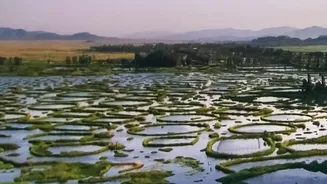
The defining feature of Loktak Lake is its 'phumdis'. These are not islands in the traditional sense, but heterogeneous masses of vegetation, soil, and organic matter that have accumulated over centuries. These buoyant mats are remarkably robust, varying
in thickness from a few centimetres to over two metres. While about 80% of their mass is submerged, the top layer is solid enough to walk on, feeling spongy like a trampoline underfoot. These phumdis drift across the 287-square-kilometre lake, creating an ever-changing landscape that is unlike anywhere else on Earth.
The World's Only Floating National Park
The largest of all the phumdis, covering a staggering 40 square kilometres in the southeastern part of the lake, forms the Keibul Lamjao National Park. Established as a sanctuary in 1966 and designated a national park in 1977, it holds the incredible distinction of being the world's only floating national park. This mosaic of wetland, grassland, and aquatic habitats is an ecological treasure, created to protect the region's unique wildlife. Visitors can take guided boat tours to navigate the channels between the phumdis or climb watchtowers for panoramic views of this extraordinary ecosystem.
Home of the 'Dancing' Sangai Deer
Keibul Lamjao National Park is the last natural refuge for one of the world's most endangered and graceful creatures: the Sangai. This subspecies of brow-antlered deer, which is also the state animal of Manipur, was once thought to be extinct in the 1950s. Thanks to conservation efforts, its population has made a fragile comeback. The Sangai is famously called the 'dancing deer' because of the delicate, balancing way it moves across the spongy phumdis. Spotting this rare animal in its unique habitat is a highlight for any wildlife enthusiast visiting the region.
A Lifeline for Local Communities
Loktak Lake is not just a natural wonder; it is the lifeline for thousands of people. Around 4,000 fishermen and their families live in 'phumsangs', which are traditional huts built on the floating islands. Daily life revolves around the water, with dugout canoes serving as the primary mode of transportation for fishing, visiting neighbours, and even getting children to the floating elementary school. Fishing is the main source of livelihood, with communities employing unique techniques like creating circular fish farms, known as 'athaphum', from sections of phumdi. This symbiotic relationship between humans and the lake ecosystem is a profound cultural experience to witness.
Planning Your Trip to the Lake
The best time to visit Loktak Lake is between October and March, when the weather is cool and pleasant, and the skies are clear, offering beautiful views and comfortable conditions for boating. The nearest airport is in Imphal, the state capital, about 48 kilometres away. From Imphal, it's a 1 to 1.5-hour drive to Moirang, the main town near the lake. Visitors should be aware that Indian citizens from outside Manipur need an Inner Line Permit (ILP) to enter the state, which can be obtained online or upon arrival at the airport. Accommodation options range from guesthouses on the mainland to unique homestays located right on the floating phumdis, offering an immersive experience of life on the lake.
Beyond Loktak: Exploring Manipur
While Loktak Lake is a primary draw, Manipur offers a wealth of other experiences. In the capital city of Imphal, you can explore the historic Kangla Fort, the heart of ancient Manipuri kingdoms, and visit the unique Ima Keithel or 'Mother's Market', one of the largest all-women markets in Asia. For history buffs, Moirang holds significance as the place where the Indian National Army flag was first hoisted on Indian soil in 1944. For more natural beauty, the scenic hill station of Ukhrul is famous for the rare Shirui Lily, while the Dzukou Valley, bordering Nagaland, offers stunning trekking opportunities.