



The Contenders: More Than Just Mithai
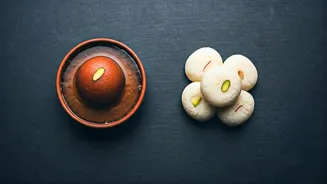
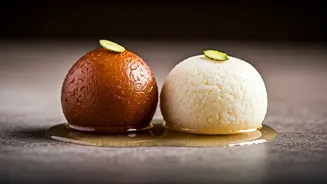
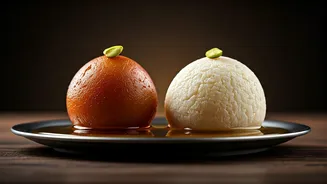
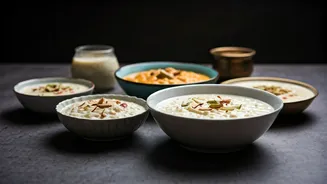
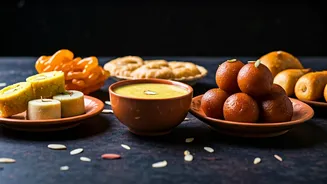
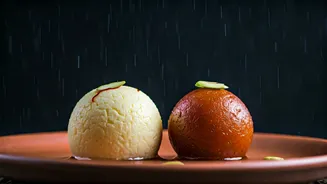
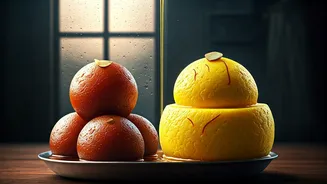
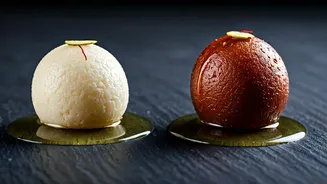
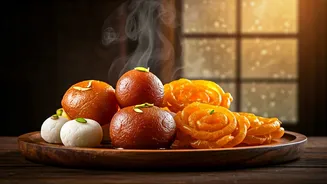
This isn’t just a debate about taste; it’s a clash of culinary philosophies, textures, and even regional pride. On one side, you have the Gulab Jamun, a dense, syrupy sphere of comfort that feels like a warm hug. On the other, the Rasgulla, a pristine
white globe of cheese curd, celebrated for its delicate, bouncy texture. [7] Both are milk-based sweets soaked in sugar syrup, but that’s where the similarities end. [23] Their preparation, history, and the very experience of eating them set them worlds apart, sparking friendly arguments across dinner tables all over the country. [9]
In This Corner: Gulab Jamun, The Rich Indulgence
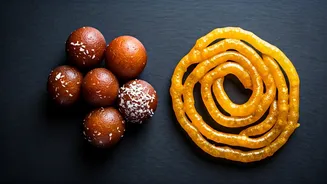
Gulab Jamun’s story is one of rich, historical fusion. Its origins are often traced back to medieval Persia, arriving in India with Turkic invaders and flourishing under the Mughal Empire. [11, 15] The name itself is a blend of Persian and Indian: 'gulab' (rosewater) for its fragrant syrup and 'jamun' for the Indian black plum it resembles. [8, 11] Traditionally made from khoya—milk reduced to a solid fudge-like consistency—the dough is kneaded, shaped into balls, and deep-fried until golden brown. [3, 24] These fried orbs are then soaked in a warm, sweet syrup, often flavoured with cardamom and rose water, creating a dessert that is unapologetically rich, dense, and decadent. [12]
And in the Other: Rasgulla, The Spongy Delight
The Rasgulla tells a different story, one of regional identity and culinary innovation. Its heartland is Eastern India, with both West Bengal and Odisha laying claim to its invention in a famously sweet dispute. [19, 25] Odisha’s claim dates back to the 12th century, where a precursor, 'Kheer Mohana', was offered to deities at the Jagannath Temple in Puri. [13, 18] West Bengal credits the modern, spongy version to Kolkata confectioner Nobin Chandra Das in 1868. [13, 27] Unlike Gulab Jamun's khoya, Rasgulla is born from 'chhena' (or chenna), fresh cheese curds made by curdling milk. [4, 6] These curds are kneaded into a smooth dough, rolled into balls, and then boiled—not fried—in a light sugar syrup. [4, 17] The result is a dessert that is light, airy, and refreshingly sweet. [9]
A Head-to-Head Breakdown
So how do they stack up? The fundamental difference lies in the milk base and cooking method. Gulab Jamun uses khoya (milk solids) and is deep-fried, giving it a brown, slightly caramelised exterior and a dense, cake-like interior. [3, 9] Rasgulla uses fresh chhena (cheese curds) and is boiled, resulting in a white, pristine ball with a spongy, porous texture that soaks up the thin syrup it’s cooked in. [4, 7] This makes the Gulab Jamun significantly richer and heavier, while the Rasgulla is lighter and often considered more refreshing. [7, 26] The flavour profiles also diverge; Gulab Jamun is defined by its deep, warm sweetness with notes of cardamom and rose, while Rasgulla offers a milder, cleaner sweetness that highlights the fresh taste of the chhena. [12, 26]
The Great GI Tag Battle
The rivalry between the two states over Rasgulla became so intense it led to a formal battle for a Geographical Indication (GI) tag. A GI tag identifies a product as originating from a specific geographical location, attributing its quality and reputation to that region. [31] In 2017, West Bengal was awarded a GI tag for 'Banglar Rasogolla', recognizing its unique spongy version. [5] Not to be outdone, Odisha received its own GI tag in 2019 for 'Odisha Rasagola', acknowledging its softer, less chewy variant with deep cultural roots in temple traditions. [5, 30] The resolution wisely concluded that while the names are similar, the products are distinct enough to warrant separate recognition, ending the sweet war in a diplomatic draw. [29]