





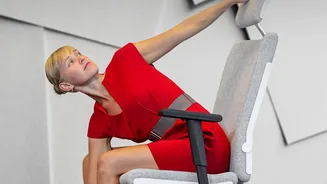
What Happens When You Sit Still
Our joints are designed for motion. Inside each one is a lubricating substance called synovial fluid, which acts like engine oil for our body. When we move, this fluid circulates, delivering nutrients to cartilage—the smooth tissue that cushions our bones—and
keeping everything gliding without friction. However, when you sit for long periods, this circulation slows down. The fluid becomes less effective, and your joints can feel stiff and under-lubricated. This inaction also causes muscles that support your joints, like your hip flexors, to shorten and tighten, while others, like your glutes, can weaken. This combination of poor lubrication and muscle imbalance is a primary cause of the aches and stiffness many desk workers experience.
More Than Just Aches and Pains
While immediate discomfort is the most obvious symptom, a sedentary lifestyle poses longer-term risks. Chronic stiffness can contribute to poor posture, as we naturally slouch to relieve tension, further straining our neck and back. Over time, this can lead to muscle imbalances, weakened bones from lack of weight-bearing activity, and an increased risk of chronic conditions like arthritis. Inactivity accelerates the breakdown of cartilage, the very tissue that movement helps to nourish. Furthermore, a desk-bound routine is linked to broader health concerns, including poor blood circulation, weight gain, and even an increased risk of cardiovascular issues. The pain is a warning sign of these deeper, systemic effects.
The Power of the 'Movement Snack'
The solution isn’t necessarily a full workout session in the middle of the day. The key is to introduce small, frequent 'movement snacks' or 'micro-breaks'. Experts suggest that interrupting sitting every 30 to 60 minutes can make a significant difference. These short breaks, even just for a minute or two, reactivate your muscles and, crucially, get your synovial fluid flowing again. Think of it as restarting your body's natural lubrication system. Studies show that these brief interludes of light activity—like stretching or walking—reduce musculoskeletal discomfort, decrease fatigue, and can even improve focus and mood without harming productivity.
Simple Desk-Friendly Movements
You don't need a gym or special equipment to get your joints moving. These simple exercises can be done right at your desk. 1. Seated Spinal Twist: Sit tall and place your right hand on your left knee. Gently twist your upper body to the left, looking over your shoulder. Hold for a few breaths and repeat on the other side. This helps relieve back stiffness. 2. Neck Tilts: Gently tilt your head, bringing your right ear toward your right shoulder. Hold for 15 seconds, then repeat on the left side. This helps ease neck strain from looking at a screen. 3. Hip Flexor Stretch: Sit on the edge of your chair and extend one leg straight back, feeling a gentle stretch in the front of your hip. Hold for a few seconds before switching legs. 4. Shoulder Rolls and Shrugs: Inhale and lift your shoulders up toward your ears, then exhale and roll them back and down. This releases tension built up in the shoulders and upper back. 5. Standing Up: The simplest move of all. Just standing up from your chair engages your leg and core muscles and resets your posture.
Building a Movement Habit
Integrating movement into your workday is about building sustainable habits. Start by setting a timer on your phone or computer to remind you to get up every hour. Use natural cues in your day as triggers for movement; for example, stand up every time you take a phone call, or choose to walk to a colleague's desk instead of sending an email. When you need to hydrate, walk to the furthest water cooler. If you are working from home, use the time you might have spent commuting for a short walk. Even small changes, like performing a few stretches while waiting for a document to load, add up. The goal is not to disrupt your work but to weave movement into its fabric, breaking the cycle of prolonged stillness.