


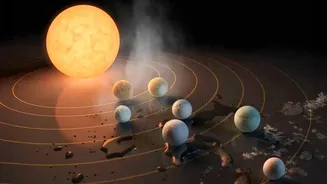
Our Galaxy’s Most Common Planets
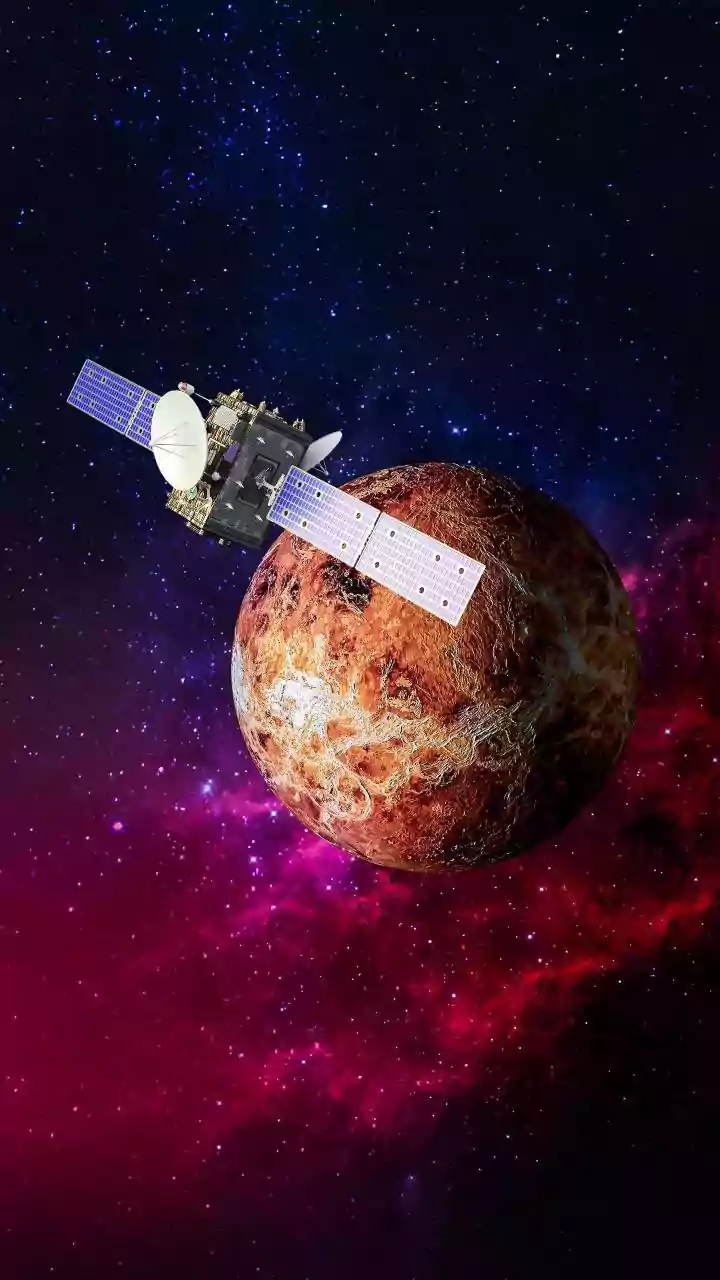
Before we can hunt for water, we need to know where to look. Astronomers are increasingly focused on a class of planets called 'Super-Earths'. These are worlds more massive than Earth but lighter than ice giants like Neptune. They are incredibly common
in our galaxy, but strangely, our own solar system doesn't have one. A Super-Earth is defined by its size, typically having a mass up to ten times that of our home planet. This greater mass and gravity could make them more likely to hold onto a substantial atmosphere, which is the first prerequisite for finding clues like water vapour.
A Telescope That Sees the Invisible
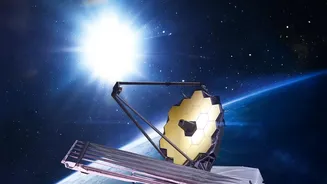
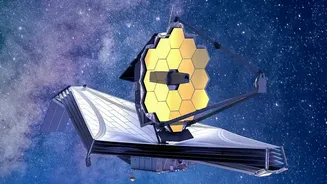
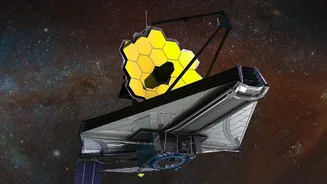
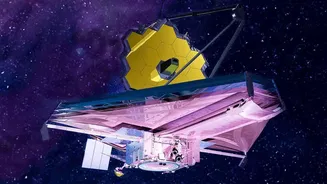
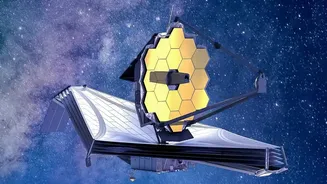
The James Webb Space Telescope is a revolutionary observatory, not just because of its massive mirror, but because of what it can see. It is designed to detect infrared light, which is invisible to the human eye. This capability is crucial for studying distant, cool objects and for peering through cosmic dust. When it comes to exoplanets, this infrared sensitivity allows JWST to pick up the faint heat signatures of planets and, most importantly, the chemical fingerprints left behind in their atmospheres. It’s a game-changer, building on the legacy of previous telescopes like Hubble but with unprecedented power and clarity.
The Science of Starlight and Shadows
The primary method JWST uses is called 'transmission spectroscopy'. It sounds complex, but the idea is quite elegant. Astronomers wait for an exoplanet to pass in front of its host star, an event called a 'transit'. As the planet transits, a tiny fraction of the starlight filters through the planet's atmosphere. Different molecules in that atmosphere absorb specific wavelengths, or colours, of the light. Imagine shining a bright light through a coloured filter; the light that comes out the other side is changed. JWST’s spectrographs act like a super-powered prism, splitting this filtered starlight into a rainbow, revealing which colours are missing.
Decoding a Planet's Chemical Fingerprint
Those missing colours in the light spectrum are the 'chemical fingerprints'. Each molecule, whether it's water vapour, methane, or carbon dioxide, has a unique absorption signature, like a barcode. By analyzing which parts of the light spectrum are dimmed, scientists can determine precisely what gases are present in the exoplanet's atmosphere. The detection of water vapour is a significant milestone because water is essential for life as we know it. When JWST detects the specific signature of H2O, it's a direct confirmation that water exists, in gaseous form, dozens or even hundreds of light-years away.
Putting the Technique to the Test
This isn't just theory. JWST has already successfully used this technique. One prominent example is the study of the super-Earth 55 Cancri e, a rocky world 41 light-years away. This planet is a scorching 'lava world', far too hot to be habitable, with surface temperatures likely reaching over 1,500°C. Despite these hellish conditions, Webb detected the best evidence to date of an atmosphere around a rocky exoplanet, likely rich in carbon dioxide or carbon monoxide and possibly replenished by gases bubbling from its magma ocean. While not water vapour in this case, the discovery proves that even on extreme rocky planets, JWST can successfully detect and characterize atmospheres.
The Search for Biosignatures
Finding water vapour is just the first step. The ultimate goal is to find 'biosignatures'—a combination of gases that strongly suggests the presence of life. On Earth, for instance, the combination of oxygen, methane, and water in our atmosphere is a product of biological processes. While JWST has detected individual gases like water vapour and methane on various planets, finding a compelling mix on a rocky, temperate world remains the holy grail. The telescope's ability to inventory these key molecules is transforming the search for habitability from a theoretical exercise into an observational science.