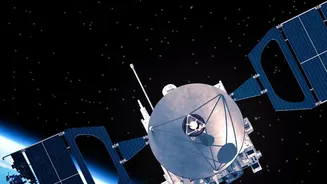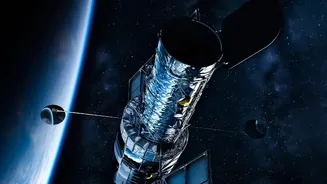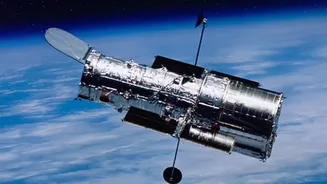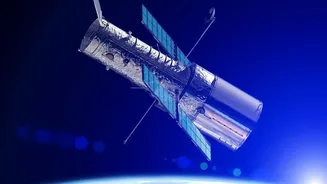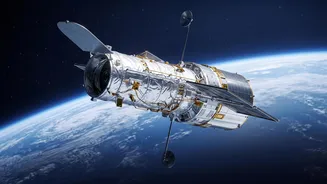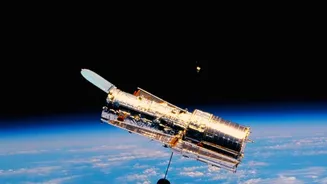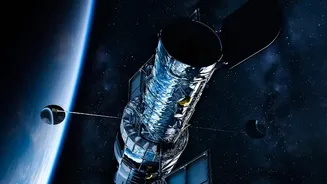







For over three decades, the Hubble Space Telescope has been humanity's eye on the universe, delivering iconic images and groundbreaking science. But its time may be running out as its orbit decays, prompting NASA to call for help.
A Slow But Steady Descent
Like all objects in low
Earth orbit, the Hubble Space Telescope is subject to atmospheric drag. Though the atmosphere at its altitude is incredibly thin, the constant friction gradually slows the telescope, causing it to lose altitude. Launched in 1990 to an orbit of about 612 kilometers, it now sits well below 500 kilometers. The last time it received a boost was during a Space Shuttle servicing mission in 2002. Without another push, orbital dynamicists predict it will make an uncontrolled reentry into Earth's atmosphere sometime in the mid-2030s. Increased solar activity can heat and expand the atmosphere, accelerating this decay and potentially moving the reentry date even earlier.
NASA's Call for Commercial Partners
With its own Space Shuttle fleet retired, NASA no longer has a vehicle to service Hubble. In late October 2026, the agency issued a formal Request for Information (RFI), asking the commercial space industry for innovative and cost-effective solutions. The request outlines three potential paths: boost Hubble to a higher, more stable orbit of at least 600 kilometers; perform a servicing mission to enhance its capabilities; or guide the telescope to a safe, controlled deorbit over an unpopulated area of the ocean. Companies have until November 30, 2026, to submit their concepts, which must be executable by 2032. The RFI is an exploratory step, not a contract, designed to gauge industry capabilities and potential costs.
The Potential Rescuers
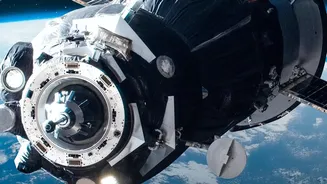
This isn't the first time a private rescue has been floated. In 2022, NASA and SpaceX signed an unfunded agreement to study the feasibility of using a Crew Dragon spacecraft, as part of the privately funded Polaris Program, to reboost the telescope. While that specific crewed concept was not pursued at the time, the new RFI opens the door to a wider range of possibilities from a rapidly maturing commercial sector. Potential bidders could include established players like SpaceX, or companies specializing in robotic servicing, such as Northrop Grumman and Astroscale, which have been developing technologies for in-orbit satellite maintenance. A commercial partner would be responsible for providing the launch vehicle, spacecraft, and all mission operations.
Why Saving Hubble Matters
Extending Hubble's life is about more than just preserving a beloved icon. The telescope remains a vital scientific instrument. Its unique ability to observe in visible and ultraviolet light is a capability not replicated by its successor, the primarily infrared-focused James Webb Space Telescope. A successful reboost could add more than two decades to Hubble's operational lifespan, allowing it to continue making discoveries and serving as a bridge to a future flagship observatory. As NASA Administrator Jared Isaacman stated, the agency has a duty to the scientific community and taxpayers to explore every reasonable opportunity to keep the telescope delivering world-class science for as long as possible.