


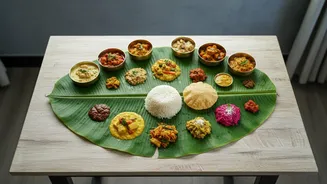
What is an Onam Sadhya?
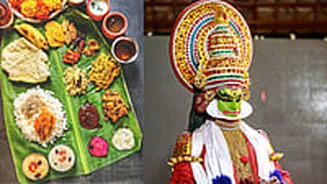
Sadhya, meaning 'banquet' in Malayalam, is a lavish vegetarian feast that is central to the festival of Onam, Kerala's annual harvest celebration. It commemorates the homecoming of the mythical King Mahabali, whose reign was considered a golden era of prosperity
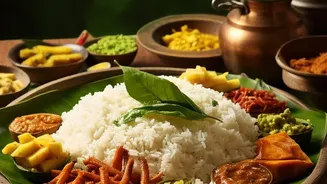
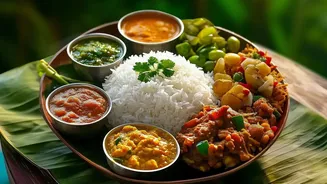
and happiness. Served on a large banana leaf, the Sadhya can feature more than 26 different dishes, showcasing the bounty of the harvest. It’s more than just a meal; it's a cultural experience that brings families and communities together in a gesture of love, unity, and abundance.
The Foundation: The Banana Leaf
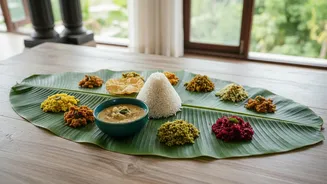
Before any food is served, a fresh banana leaf, or vaazhayila, is placed before you. Tradition dictates that the narrow, tapering end of the leaf should point to your left. This isn't just for aesthetics; it organises the meal. The upper half of the leaf is for all the side dishes and accompaniments, while the larger bottom half is reserved for the rice and main curries. The leaf itself imparts a subtle, earthy aroma and flavour to the hot food served on it.
A Tour of the Essential Dishes
While a full Sadhya is vast, a few key players define the experience. Things start on the left with small helpings of pickles like inji puli (ginger-tamarind chutney), crunchy banana chips (upperi), and jaggery-coated chips (sharkara varatti). You will then find an array of side dishes, including thoran (a dry vegetable stir-fry with coconut), olan (a delicate gourd and bean curry in coconut milk), and pachadi (a yogurt-based side, often sweet and sour with pineapple). The star is often the avial, a thick mixture of various vegetables cooked in a coconut and yogurt gravy.
The Main Event: Rice and Curries
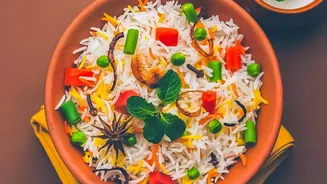
Once the side dishes are served, a mound of steaming matta rice (a robust red rice) is placed on the bottom half of the leaf. The meal begins officially with a ladle of parippu curry (a simple moong dal) topped with a spoonful of ghee. This is followed by sambar, a flavourful lentil-and-vegetable stew that is a South Indian staple. A tangy, peppery soup called rasam often follows, which is said to aid digestion before the final courses.
The Sweet Finale: Payasam
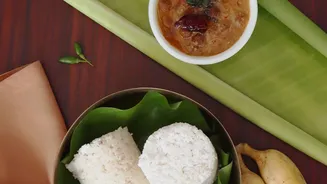
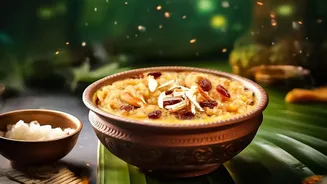
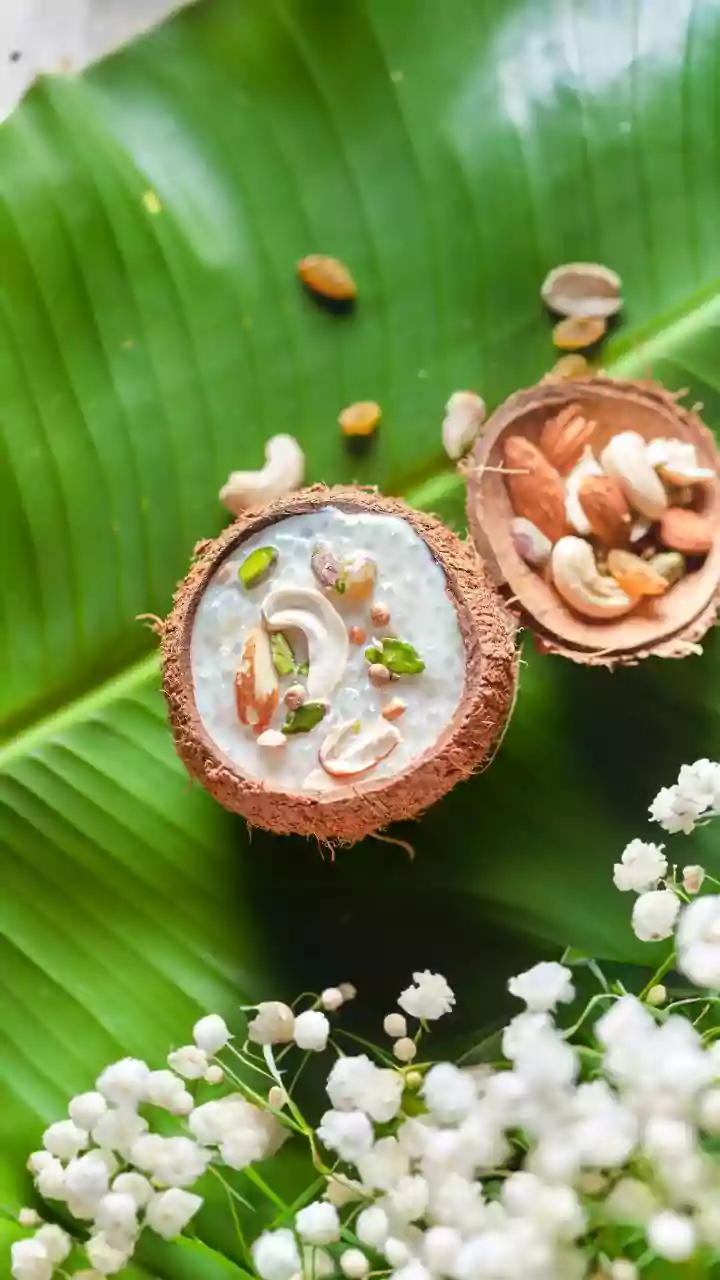
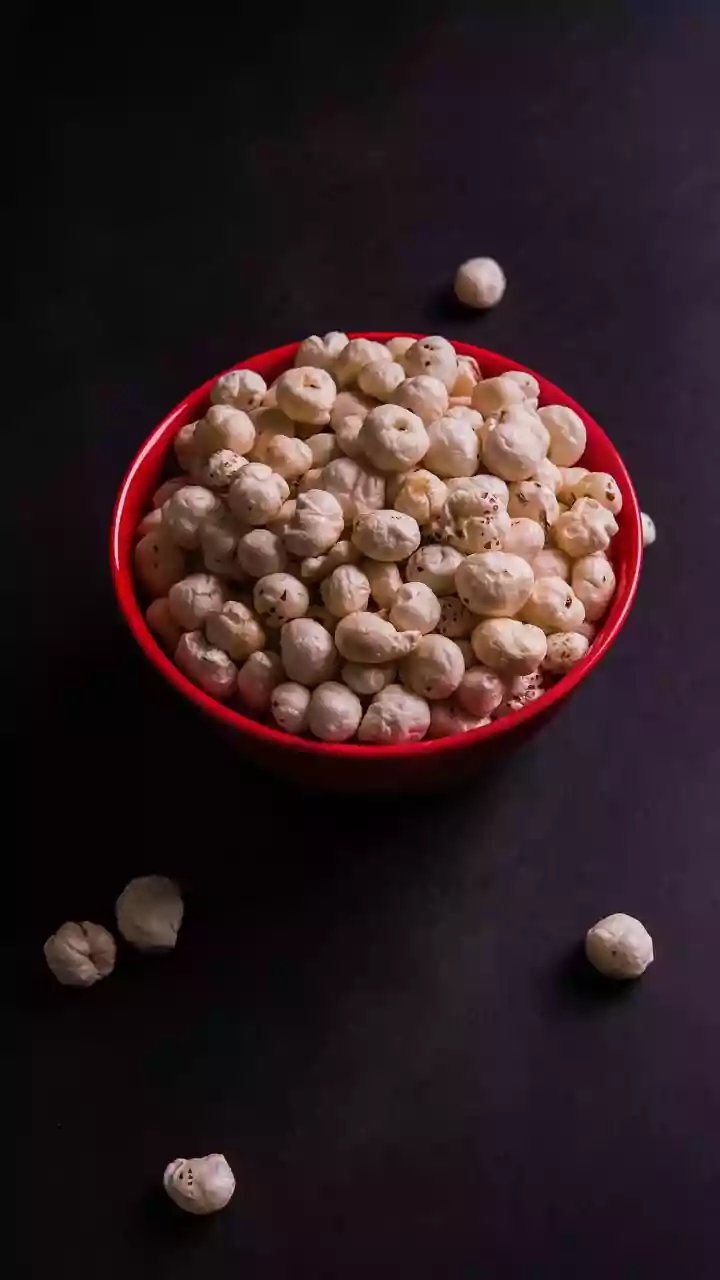
No Sadhya is complete without payasam, the dessert course. There are often two or three varieties. Common types include palada pradhaman, made with rice flakes and milk, and parippu pradhaman, a richer version made with lentils, jaggery, and coconut milk. Traditionally, the sweet, flowing payasam is poured directly onto the banana leaf and eaten by scooping it up, sometimes mixed with a small banana provided with the meal. It’s the perfect sweet note to end the savoury journey.
Essential Sadhya Etiquette
To fully embrace the experience, a few rules of thumb are helpful. The entire meal is traditionally eaten with your right hand; no cutlery is used. It's polite to wait until everyone has been served before you begin. Take small portions at first, as hosts will generously offer second and third helpings. The most important gesture comes at the end. To show your appreciation and satisfaction with the meal, you fold the top half of the banana leaf down, away from you. Folding it towards yourself is reserved for somber occasions.