



A Glimpse into the Cosmic Dust
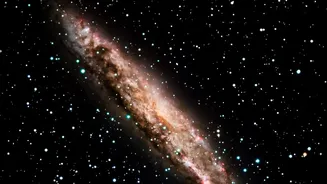
In a remarkable breakthrough, an international team of astronomers has detected a population of previously unknown galaxies teeming with activity. These are not quiet, settled star systems but chaotic environments where new stars are being born at furious
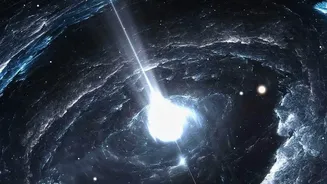
rates or supermassive black holes are feasting on surrounding material. One of the most stunning examples involves what are known as "Hot, Dust-Obscured Galaxies," or Hot DOGs. These are some of the most luminous objects in the universe, yet they are nearly invisible in optical light because they are shrouded in thick layers of dust. This dust absorbs the intense light from the galaxy's core and re-emits it as infrared radiation, which can only be detected by specialized telescopes.
The Technology Piercing the Veil
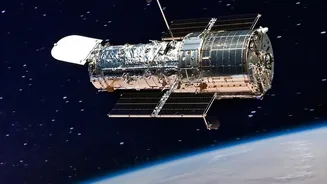
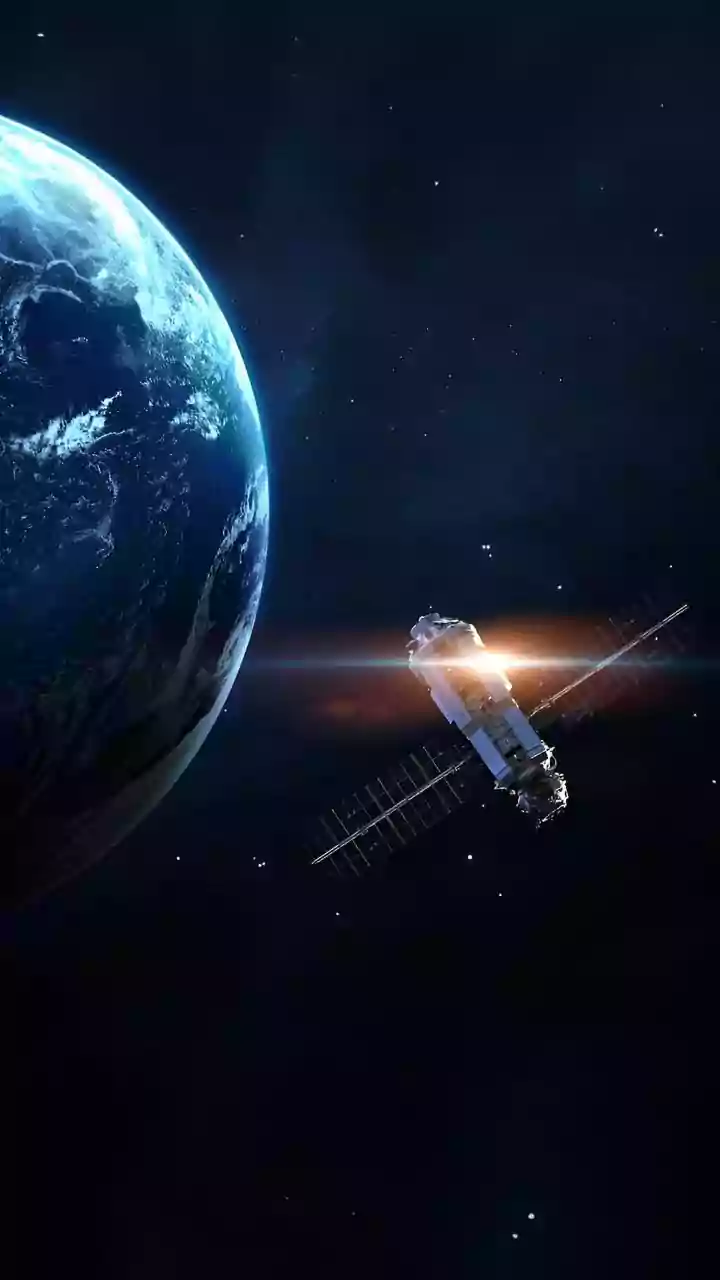
The key to these discoveries is advanced space imaging, particularly from instruments like NASA's James Webb Space Telescope (JWST). Unlike the Hubble Space Telescope, which primarily sees the universe in visible and ultraviolet light, JWST is designed to see in the infrared spectrum. This allows it to peer through the dense dust clouds that would otherwise block our view. Think of it like using thermal imaging to see a person through smoke; the heat signature cuts through the obstruction. Similarly, JWST detects the faint heat glow of dust warmed by hidden stars and black holes, revealing the energetic processes happening within. This capability has opened up a new window into the early universe, allowing scientists to study galaxies as they were forming just a billion years after the Big Bang.
Why Was It Hidden?
The universe is a dusty place. The same elements that form planets and people—carbon, silicon, and oxygen—also form tiny grains of dust that drift in the vast spaces between stars. In young, active galaxies, this dust is incredibly dense. The sheer volume of material can create an almost impenetrable shroud, hiding the galaxy's most energetic events from traditional telescopes. The activity itself, such as the birth of massive stars or the accretion of matter by a supermassive black hole, can kick up even more dust, further obscuring the view. For decades, this meant our picture of the universe was biased; we were primarily seeing the galaxies that were not shrouded in dust, giving us an incomplete census of cosmic evolution.
Rewriting the Galactic Playbook
These new findings are more than just cosmic curiosities; they are forcing a rewrite of long-held theories about how galaxies grow and evolve. For instance, astronomers have found surprisingly mature and massive galaxies in the very early universe, objects that models predicted shouldn't exist yet. The discovery of intensely active, dust-obscured galaxies suggests that the early universe was far more vigorous and capable of building large structures much faster than we thought. Furthermore, locating supermassive black holes actively feeding far from the centers of their galaxies challenges the idea that these giants only grow in the galactic core. Each discovery adds a new piece to the puzzle, suggesting that the life cycle of galaxies is more complex and varied than our previous, clearer views suggested.
A Global Quest for Answers
This research is a testament to global scientific collaboration. Teams comprising dozens of astronomers from countries across the world are working together to analyze the data streaming back from space. Projects like the MAGAZ3NE survey combine data from multiple ground-based and space telescopes to build a complete picture of these distant objects. This collaborative spirit is essential for tackling the biggest questions in science. As India's own space program, through ISRO, continues to achieve new milestones, it is part of this global community seeking to understand our place in the cosmos. The advanced technology being pioneered for astronomy often leads to innovations that benefit society in other areas, from medical imaging to data science.