



The Forest's Unseen Gardeners
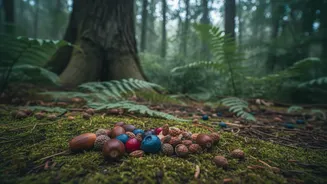
For a forest to thrive, regenerate, and adapt, its seeds must travel. This process, known as seed dispersal, prevents overcrowding, helps plants colonise new areas, and ensures genetic diversity. For decades, we have celebrated the most visible of these
gardeners: birds and mammals. Think of a hornbill carrying a fig or a monkey dropping a mango seed miles from its parent tree. These animals are crucial, and in many tropical forests, over 80% of trees depend on such creatures to move their seeds. This partnership is a cornerstone of ecosystem health, helping forests recover from disturbances like fires and logging. However, a narrow focus on these well-known helpers has obscured the full picture, leaving a host of other contributors unappreciated.
A Groundbreaking Scientific Revelation
Recent scientific analysis, including a significant review of multiple studies, has broadened our understanding dramatically. While the headline mentions a specific '186-species study', this points to a larger body of research consolidating data from hundreds of localised studies. Scientists used advanced modeling and vast datasets, tracking thousands of plant and animal interactions, to map the global state of seed dispersal. The goal was to understand not just who moves seeds, but how the loss of these animals impacts ecosystems. The findings were alarming: the global decline of seed-dispersing animals has already slashed the ability of plants to move and adapt to climate change by a staggering 60%. This highlights a critical link between the biodiversity crisis and the climate crisis.
Meet the Surprise Dispersal Agents
The most compelling finding is the sheer variety of animals involved in this vital work. Beyond the usual suspects, a wider cast of creatures plays a significant role. In Brazil, for example, fish like the pacu and tambaqui consume vast quantities of fruit during flood seasons, spreading seeds along river corridors. Lizards, particularly on islands where other animals are scarce, are essential fruit-eaters and seed dispersers. Even invertebrates get in on the act. Ants are described as masters of short-distance dispersal, moving seeds to nutrient-rich nests that act as perfect germination sites. This newly revealed diversity shows that forest health relies not on a few star players, but on a full ensemble cast, each with a unique role.
Why Diversity in Dispersal Matters
Having a variety of dispersers creates a more resilient ecosystem. Different animals offer different services. A large mammal like a tapir can swallow and transport large seeds that a small bird cannot. A fruit bat might cover vast distances in a single night, helping a plant's genes travel far and wide. Fish move seeds through aquatic environments, connecting forest patches in ways no land animal can. Ants, while moving seeds only short distances, perform 'directed dispersal' by taking them to protected, resource-rich locations. This functional diversity—different body sizes, movement patterns, and behaviours—ensures that seeds of all types can find suitable new homes. When one type of disperser is lost, the whole system weakens, as other animals may not be able to fill the gap.
A Warning for a Quieter World
The research serves as a stark warning. As habitats shrink and human activities intensify, we are losing these crucial animal partners. This isn't just an ecological tragedy; it has direct consequences for us. Studies show that forests with healthy animal populations can store significantly more carbon than those where dispersers have declined. The loss of animals hampers a forest's ability to regenerate naturally, making restoration efforts more difficult and expensive. It's not enough to simply plant trees; we must also protect the animals that maintain the forest for generations to come. Without its unseen gardeners, a forest slowly loses its vitality, its diversity, and its power to fight climate change.