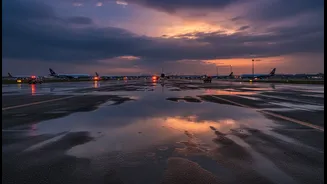









The Anatomy of a Monsoon Travel Nightmare
Every year, the monsoon season highlights the vulnerability of Delhi's road network. Heavy downpours, often delivering a significant portion of a day's rainfall in just a couple of hours, overwhelm the city's drainage systems. This leads to predictable
and severe waterlogging at several critical choke points. Key arterial roads and underpasses on the way to the Indira Gandhi International (IGI) Airport become impassable. Areas around Dwarka, Mahipalpur, and the NH-48 have historically been hotspots for traffic chaos during heavy rain. Underpasses like the one at Palam are particularly notorious for flooding, sometimes trapping vehicles and bringing traffic to a complete standstill for hours. This gridlock isn't just an inconvenience; it's a genuine threat to your travel plans, as a journey that normally takes an hour can easily stretch to three or four.
Know Before You Go: Your Information Toolkit
In this battle against the clock, information is your best weapon. Before you even think about booking a cab, check the latest weather updates. The India Meteorological Department (IMD) frequently issues alerts—ranging from yellow to orange or even red—for Delhi, which can give you a heads-up on the intensity of expected rainfall. Airlines like IndiGo, Air India, and SpiceJet are also proactive, often issuing travel advisories on social media and their websites, warning passengers of potential delays and urging them to allow for extra travel time. Furthermore, the Delhi Traffic Police regularly posts real-time updates on its social media channels, detailing waterlogged areas and suggesting alternative routes. A few minutes spent scrolling through these feeds can save you hours stuck in a jam.
Your Monsoon Airport Strategy
Assuming the worst is the best strategy. If heavy rain is forecast, you need to radically adjust your timeline. The standard advice is to add at least one to two extra hours to your airport commute. If you're travelling during peak traffic hours, consider adding even more time. However, the single most effective way to bypass the uncertainty of road travel is to ditch it altogether. The Delhi Metro, particularly the Airport Express Line (Orange Line), is your most reliable ally during the monsoon. It connects New Delhi Railway Station to Terminal 3 in about 25 minutes, immune to the traffic snarls and waterlogging on the roads above. For Terminal 1, you can take the Magenta Line. Many airlines also offer city check-in facilities at the New Delhi and Shivaji Stadium metro stations, allowing you to drop your baggage and get your boarding pass before you even start for the airport.
Tech to the Rescue: Apps and Alternatives
If taking a cab is unavoidable, use technology to your advantage. Navigation apps like Google Maps and Waze provide real-time traffic data, which can help you navigate around the worst of the congestion. Be prepared for surge pricing on ride-hailing apps like Uber and Ola; high demand and a shortage of drivers willing to venture into waterlogged streets can cause fares to skyrocket. When booking, factor in the possibility of longer wait times and potential cancellations. It’s wise to have a backup plan, which could be a different app-based service or a traditional prepaid taxi. Given the conditions, even these services might be delayed, reinforcing the wisdom of leaving exceptionally early. Airlines have recently advised passengers to plan for additional travel time to the airport due to slow-moving traffic.
If You Get Stuck
Even with the best-laid plans, things can go wrong. If you find yourself stuck in traffic with the minutes ticking away, the first step is not to panic. The next step is to inform your airline. Many airlines have policies for situations like these, especially when weather has caused widespread disruptions. While there's no guarantee, contacting them as soon as you anticipate a delay can be helpful. Keep an eye on your flight status via the airline’s app. Adverse weather doesn't just affect the roads; it can also lead to flight delays or diversions at the airport itself. Knowing that your flight is also delayed might ease some of your anxiety. Stay in communication, explore alternative routes if safely possible, and remember that many other travelers are likely in the same boat.