


The Lofoten Islands: A Dramatic Masterpiece
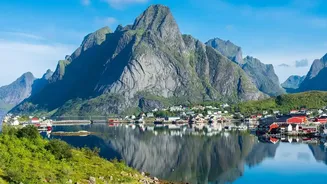
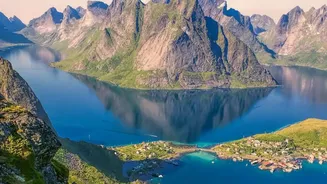
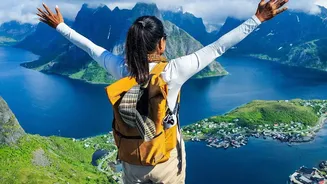
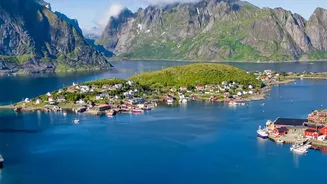
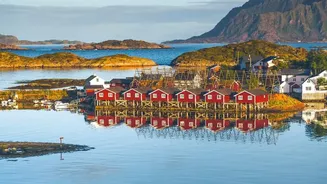
Perhaps the most famous of Norway's archipelagos, Lofoten's reputation is well-deserved. Jagged, tooth-like peaks rise directly from the sea, sheltering picturesque fishing villages with their iconic red 'rorbuer' (fishermen's cabins). The landscape is so
dramatic it feels otherworldly. In summer, the islands are a paradise for hikers, kayakers, and road-trippers enjoying 24 hours of daylight under the Midnight Sun. Winter transforms Lofoten into a snowy wonderland, offering one of the world's most scenic backdrops for chasing the Aurora Borealis. While popular, its raw beauty remains undeniable. A tip for visitors is to explore beyond the main road; small detours often lead to the most memorable, quiet coves.
Senja: Norway in Miniature
Often called 'Norway in miniature', Senja offers a stunning variety of landscapes on a single island. Its outer coast is wild and rugged, with sharp mountains like the famous Segla peak providing breathtaking hikes, while the inner coast is gentler and greener. Senja is considered a quieter, wilder alternative to Lofoten, perfect for those looking to escape the biggest crowds. During summer, the Midnight Sun illuminates hiking trails and scenic drives. Winter brings the deep blue of the polar night, excellent opportunities for viewing the Northern Lights, and whale watching tours as orcas and humpback whales follow herring into the fjords. For a unique experience, drive the National Scenic Route which winds along the island's dramatic western edge.
Vesterålen: The Whale Kingdom
Just north of Lofoten, the Vesterålen archipelago presents a gentler, more rounded landscape of mountains, farmlands, and sprawling moors. While still spectacularly scenic, its main draw is the abundant marine life. The continental shelf is closer to shore here than almost anywhere else in Norway, making it a primary feeding ground for whales. This means whale watching tours, especially for sperm whales, operate year-round from towns like Andenes. Summer is perfect for hiking, cycling, and spotting puffins. In winter, you can combine a thrilling whale safari by day with hunting for the Northern Lights by night, a truly unique Arctic combination.
Sommarøy: The 'Time-Free' Summer Island
An hour from Tromsø lies Sommarøy, or 'Summer Island', a small, tight-knit community living by the rhythm of the sun, not the clock. The island is famous for its campaign to be a 'time-free zone', a concept born from its extreme seasons. From late May to late July, the sun never sets, leading to a lifestyle where locals might mow the lawn or children play outside at 2 a.m. The island is ringed by stunning white-sand beaches and turquoise waters, perfect for midnight kayaking. Conversely, the long polar night from November to January offers a quiet, contemplative atmosphere and a fantastic stage for the Northern Lights to reflect over the sea.
Vega Archipelago: A Cultural Treasure
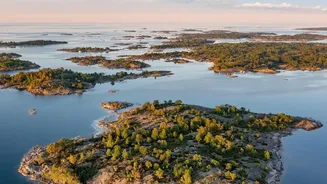
South of the Arctic Circle lies the Vega Archipelago, a UNESCO World Heritage site comprising over 6,500 islands, islets, and skerries. This status wasn't granted just for its natural beauty, but for a unique cultural tradition spanning 1,500 years: the symbiotic relationship between the islanders and wild eider ducks. Locals build small shelters for the ducks to nest in, protect them during breeding season, and then collect the precious, insulating eiderdown after the ducklings have left. The landscape is flatter than its northern counterparts, making it ideal for gentle cycling and kayaking through its maze of islands. The best time to visit is summer, to experience the lush birdlife and the living heritage of the eiderdown harvest.