

A Planet for All Seasons
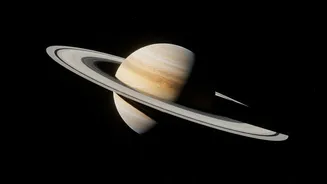
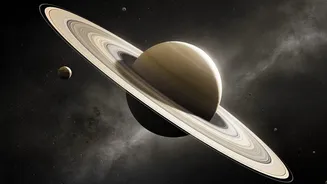
Just like Earth, Saturn is tilted on its axis, which means it experiences seasons. The crucial difference is the scale: a single year on Saturn lasts for 29.5 Earth years, making each season a slow, seven-year-plus affair. For decades, astronomers could
only get snapshots, but long-term monitoring programs are now allowing them to watch these epic seasons unfold. Recent data, captured as part of the Outer Planets Atmospheres Legacy (OPAL) project, shows subtle but fascinating year-to-year changes in the gas giant's northern hemisphere as it transitions from summer toward autumn. These observations are providing an unprecedented look at how a gas giant's atmosphere responds to gradual changes in sunlight.
What Exactly Is Changing?
The changes are subtle, but significant. According to NASA scientists, observations between 2018 and 2020 revealed that Saturn's equator brightened by 5 to 10 percent. There have also been noticeable, if slight, shifts in the colour of the planet's famous atmospheric bands, which may indicate changes in the height of the clouds. Even the wind speeds, which can reach a staggering 1,600 kilometers per hour, have shown variation. They appeared to increase compared to measurements taken by the Cassini spacecraft years earlier, before decreasing again in subsequent observations. These fluctuations suggest that even on a planet as massive as Saturn, the atmosphere is a complex and ever-changing system.
Hubble's Unblinking Eye
These discoveries are a testament to the enduring power of the Hubble Space Telescope. Decades after its launch, the orbiting observatory remains a vital tool for planetary science. Its ability to conduct consistent, long-term observations is key. Projects like OPAL create an invaluable historical record of our solar system's outer planets, allowing scientists to track not just momentary storms but also the slow, grand march of the seasons. More recently, Hubble has been joined by the James Webb Space Telescope. While Hubble observes in visible and ultraviolet light, showing colour variations, Webb's powerful infrared capabilities can peer into different atmospheric depths, revealing details about clouds and chemical composition. Together, they provide a more complete, three-dimensional view of Saturn's atmosphere than ever before.
The Power of Light and Shadow
Studying Saturn's atmosphere is a challenge. To get the clearest view, astronomers use every tool at their disposal, including different wavelengths of light and even the planet's own features. By observing in infrared, scientists can detect information not available in visible light, such as details about cloud composition and haze. This allows them to effectively peel back the atmospheric layers like an onion. In some cases, the immense shadow cast by Saturn's rings can also be used to their advantage. The shadow darkens a vast swath of the planet, providing a unique contrast that can help highlight features in the sunlit portions of the atmosphere, offering another clever way to study this distant world.
Why It Matters for Us
Studying the weather on other planets helps us understand the fundamental physics that governs all atmospheres, including our own. Saturn acts as a giant natural laboratory for fluid dynamics under extreme conditions. By watching how its atmosphere responds to changing solar radiation over its long seasons, scientists can refine their models of planetary climates. These observations help answer questions about how gas giants form and evolve, and they provide a crucial point of comparison for understanding Earth's own complex weather and climate systems. Each new detail from Hubble and Webb adds another piece to the puzzle of our solar system's history and its future.