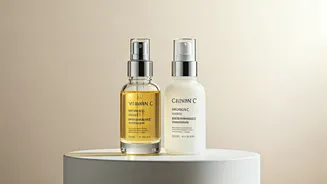









Meet Niacinamide: The Soothing Multitasker
Niacinamide, a form of vitamin B3, is the ultimate skincare diplomat, known for its ability to soothe and strengthen. Its primary role is to support your skin's barrier, the protective outer layer responsible for locking moisture in and keeping irritants
out. By helping your skin produce more ceramides—the lipids that hold the barrier together—niacinamide improves hydration and resilience. This makes it fantastic for calming redness and inflammation associated with conditions like acne and rosacea. Beyond its calming abilities, niacinamide is a true multitasker. It helps regulate oil production, which can lead to fewer breakouts and less visible pores. It's a gentle giant, suitable for nearly all skin types and a reliable player in any skincare routine focused on balance and repair.
Enter Vitamin C: The Protective Brightener
Vitamin C, often found in serums as L-ascorbic acid, is a potent antioxidant. Think of it as your skin’s personal bodyguard against environmental stressors. Its main job is to neutralize free radicals—unstable molecules from UV exposure and pollution that cause oxidative stress and lead to premature aging. This protective quality is why it's a daytime skincare staple. But vitamin C is also a celebrated brightener. It works by inhibiting the production of melanin, the pigment responsible for dark spots, helping to fade hyperpigmentation and even out your skin tone for a more luminous complexion. Furthermore, it plays a critical role in collagen synthesis. Collagen is the protein that keeps skin firm and plump, and by encouraging its production, vitamin C helps reduce the appearance of fine lines and wrinkles.
The Old Myth: A Skincare Rivalry?
For years, a persistent myth suggested that niacinamide and vitamin C couldn't be used together. The concern was based on outdated research where pure forms of both ingredients, when combined at very high temperatures, created nicotinic acid, which can cause redness and irritation. However, these conditions do not reflect how modern skincare products are formulated or used in a typical at-home routine. Today's products are far more stable. Dermatologists and cosmetic chemists agree that when formulated correctly, these two ingredients are safe and effective to use in the same skincare routine. The idea that they cancel each other out or create a harmful reaction under normal circumstances has been thoroughly debunked.
A Power Couple: Better Together
Instead of being rivals, niacinamide and vitamin C are a true power couple. Their benefits are complementary, and using them together can address a wider range of skin concerns more effectively. Vitamin C provides powerful antioxidant protection from daily aggressors, while niacinamide works to strengthen the skin barrier, making it more resilient against that damage. Niacinamide's anti-inflammatory properties can also help calm any potential irritation from more potent forms of vitamin C, making the antioxidant easier for sensitive skin to tolerate. For brightening, they offer a two-pronged attack: vitamin C works to block pigment production, while niacinamide helps prevent that pigment from transferring to the skin's surface. Together, they lead to a brighter, smoother, and healthier-looking complexion.
How to Use Them in Your Routine
Incorporating both into your routine is straightforward. A popular method is to use them at different times of the day: vitamin C in the morning and niacinamide at night. Applying vitamin C in the AM helps you get the most out of its antioxidant protection against UV rays and pollution throughout the day. Niacinamide can then be used in your evening routine to help calm and repair the skin overnight. If you prefer to use them in the same routine, the general rule is to apply products from the thinnest to thickest consistency. Many experts recommend applying your vitamin C serum first, letting it absorb for a minute or two, and then following up with your niacinamide product, which can be in a serum or moisturizer. For beginners or those with very sensitive skin, starting by using them on alternate days is a great way to introduce them.