
What is Nordic Walking?
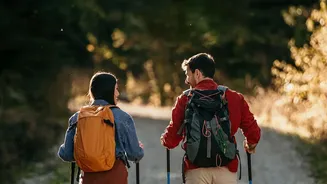
At its simplest, Nordic walking is an enhanced form of walking that uses two specially designed poles to work the upper body as well as the legs. It originated in Finland as a way for cross-country skiers to train during the off-season. Unlike trekking
or hiking where poles are often used for stability, Nordic walking poles are used to propel you forward. This active pushing motion transforms a simple stroll into an efficient, full-body workout that engages an estimated 90% of your body's muscles.
Why The Sudden Comeback?
The renewed interest in Nordic walking is driven by a desire for effective, low-impact, and accessible forms of exercise. It offers a compelling alternative to high-impact activities like running, making it ideal for a wide range of fitness levels and ages. The workout burns significantly more calories than regular walking—some studies suggest up to 46% more—without feeling proportionally harder, as the poles provide support and propulsion. It also boosts cardiovascular health, improves posture, and reduces the load on knees and other lower-body joints, making it a sustainable fitness choice.
Getting the Form Right: A Beginner’s Guide
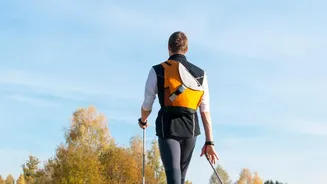
The secret to unlocking Nordic walking's benefits lies in the technique. The core of the movement is the coordination of opposite limbs: as your right leg steps forward, your left arm swings forward, and vice-versa. Maintain an upright posture, with your gaze directed forward, not at your feet. The poles should be held at an angle and planted beside your body, roughly midway through your stride, to push you forward. The arm swing should be a relaxed, fluid motion that originates from the shoulder, not a stiff movement from the elbow. As you push the pole backward, open your hand and release your grip, letting the strap do the work of keeping the pole attached. This completes the propulsive movement and sets you up for the next stride.
Common Mistakes to Avoid
Many beginners make a few common errors that can reduce the workout's effectiveness and cause strain. A primary mistake is using the poles like walking canes, planting them vertically out in front of the body for balance. This halts your momentum instead of creating it. Another frequent issue is using poles that are the wrong length; a pole that is too long can strain the shoulder, while one that's too short can cause you to slouch. Many people also walk with a tense, clenched grip on the poles, which restricts arm movement. Finally, some newcomers fall into an ambling gait, moving the arm and leg on the same side together. The key is to relax and let your body's natural walking rhythm take over.
Choosing Your Equipment
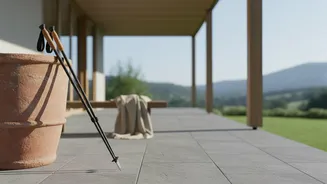
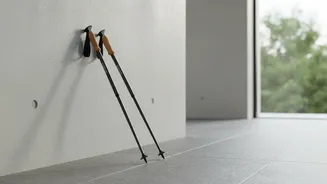
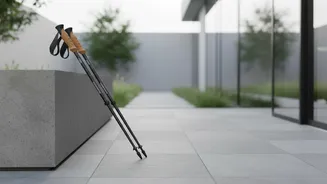
While the technique is crucial, the right gear is also important. The most essential items are proper Nordic walking poles. These are different from hiking or trekking poles. Nordic poles are lighter, have a specific glove-like strap system designed to help you push off, and feature angled rubber tips (or 'paws') for gripping pavement. Using hiking poles won't allow you to perform the technique correctly. Your pole length is also critical, with a common guideline being your height in centimetres multiplied by 0.68 to find the right size. Beyond poles, all you need are comfortable, flexible walking shoes and weather-appropriate clothing that allows for a free range of motion.