





A World Without Sunlight
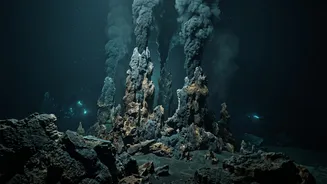
Thousands of metres below the ocean's surface, sunlight is a distant memory. The environment here is one of the most extreme on Earth. Water temperature can swing wildly, from near-freezing to over 300°C as it erupts from geothermal vents on the seafloor.
The pressure is immense, and the water is a cocktail of minerals and chemicals, like hydrogen sulfide, that are toxic to most known organisms. For decades, scientists assumed these depths were largely devoid of life. The discovery of teeming ecosystems around these vents in 1977 completely rewrote our understanding of where life can exist. Instead of photosynthesis, which powers virtually all life on the surface, these communities rely on a different process entirely: chemosynthesis.
The Chemical Recipe for Life
Chemosynthesis is a remarkable process where organisms create energy from chemical reactions rather than from light. The stars of this show are specialised bacteria and another group of microbes called archaea. They harness the energy stored in the chemical-rich fluids gushing from the hydrothermal vents. The key ingredient is often hydrogen sulfide—the same compound that gives rotten eggs their smell. By oxidising this sulfide with oxygen from the surrounding seawater, these microbes generate the energy needed to convert carbon dioxide into organic matter, essentially creating sugars from scratch in total darkness. This process is the foundation of the entire vent ecosystem, making these bacteria the 'primary producers'—the deep-sea equivalent of plants and algae on land.
The Unsung Bacterial Heroes
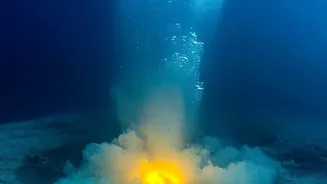
The chemosynthetic bacteria are the base of the food web. They exist in a few different forms. Some float freely in the water, forming wispy, mat-like structures on rocks and the seafloor, which look like a 'snowblower' effect when they erupt from a vent. These bacterial mats become a crucial food source for grazing animals, such as certain species of shrimp and snails. Other animals, like mussels and clams, filter-feed, capturing the free-floating bacteria directly from the water. These microbes are the invisible farmers of the deep, converting the Earth's raw chemical energy into a biological form that can sustain a complex community of life. Without them, the vibrant oases around the vents would simply not exist.
A Symbiotic Feast
One of the most fascinating aspects of this ecosystem is the symbiotic relationship between bacteria and larger animals. The most iconic vent dweller, the giant tube worm (Riftia pachyptila), has no mouth, no stomach, and no digestive system at all. Instead, its body contains a special organ called a trophosome, which is packed with billions of chemosynthetic bacteria. The worm's bright red plume acts like a gill, absorbing both oxygen from the seawater and hydrogen sulfide from the vent fluid. It then delivers these essential ingredients directly to its internal bacterial partners. In return, the bacteria produce all the nutrition the worm needs to survive and grow, sometimes to lengths of over eight feet. It is a perfect partnership: the worm provides shelter and raw materials, and the bacteria provide the food.
The Wider Vent Community
The food web extends far beyond the symbiotic relationships. Mussels and clams cluster in dense beds, housing their own chemosynthetic bacteria within their gills. These shellfish are prey for other animals, like the white vent crabs, which are often the top predators in this environment. Swarms of eyeless shrimp graze on bacterial mats, while vent octopuses hunt crabs and clams amongst the rocks. Even the larval stages of many of these animals drift as zooplankton, feeding on bacteria before settling down to colonise new vents. From the microbial producers to the grazers, filter-feeders, and predators, the entire food chain is built upon the energy that chemosynthetic bacteria unlock from the Earth's interior.