






A Challenge of Colossal Scale
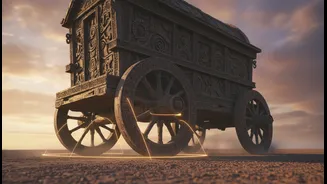
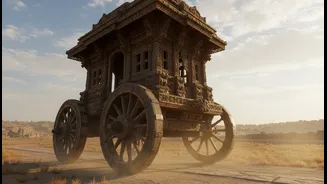
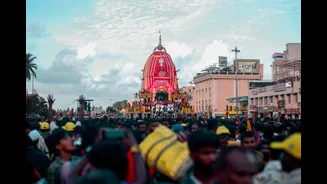
The sheer scale of the Puri Rath Yatra is staggering. The three chariots are not just vehicles; they are towering wooden temples on wheels, built anew each year. Lord Jagannath's chariot, Nandighosha, stands over 44 feet tall, weighs hundreds of tons,
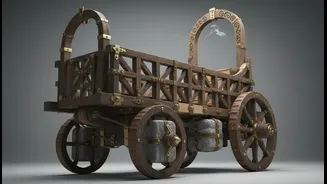
and rolls on 16 solid wooden wheels. Assembled from more than 800 individual wooden pieces, these structures are a testament to traditional craftsmanship. The construction itself is a deeply ritualised 58-day process, starting on the auspicious day of Akshaya Tritiya. Hereditary craftsmen known as Viswakarmas build everything by hand, following knowledge passed down through generations without written blueprints or modern machinery. This immense weight and size present a fundamental physics problem: how do you move, steer, and, most importantly, stop such a massive object safely amidst a sea of devotees?
The Human Engine
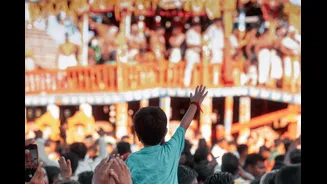
The force that propels the chariots is pure manpower. Lakhs of devotees grasp thick, sacred ropes made from coconut coir, each several hundred feet long. Pulling the chariots is considered an act of immense spiritual merit, and this collective energy is what overcomes the incredible inertia of the stationary structures. However, brute force alone isn't enough. The movement is a coordinated effort. The grand road, or Bada Danda, is not perfectly straight; it has a gentle curve. Guiding the chariots requires constant communication and adjustment. Servitors signal to the pullers, directing them to pull harder on one side or the other, providing the subtle shifts in force needed to steer the massive structures along their three-kilometre journey to the Gundicha Temple.
The Ancient Braking System
Perhaps the most critical piece of engineering is the traditional braking system. There are no hydraulic discs or modern mechanics here. Instead, each chariot is equipped with a simple yet effective device: a 20-foot-long wooden beam, or brake, suspended at the front. This beam is operated by a team of servitors, known as Bhois, who act on the charioteer's signal. When the chariot needs to slow down or stop, the servitors use ropes to lower the massive wooden log to the ground directly in front of the wheels. The wheels then roll up onto this beam, and the friction and upward movement effectively halt the chariot's momentum. This system requires immense skill, timing, and coordination to prevent accidents in the dense crowds.
Innovations in Tradition
While the core principles remain ancient, there have been subtle but important safety enhancements. In recent years, engineers, in consultation with the temple's chief carpenters, have worked to improve the braking system's efficiency without compromising its traditional form. The wooden brake logs are now often reinforced with specially designed nylon-rubber belts and small spikes. This addition, inspired by the studs on football boots, increases the friction with the road surface, allowing the chariots to stop more reliably without damaging the wooden components. This blend of old and new demonstrates a living tradition, one that adapts for safety while preserving its core spiritual and engineering identity. One engineer, Aswini Mishra, has been voluntarily developing and installing these improved systems for years as a form of selfless service.