





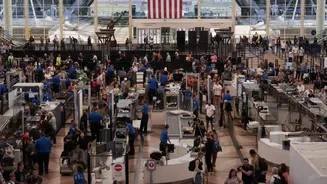

The future of air travel may soon live on your smartphone. As airport queues lengthen and passenger numbers rise, the global aviation industry is turning to digital solutions to streamline the journey from check-in to landing.
What is Digital Immigration?
Imagine breezing through
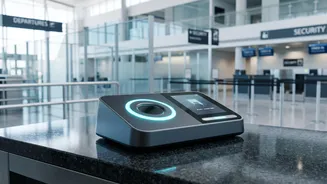
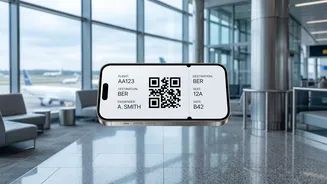
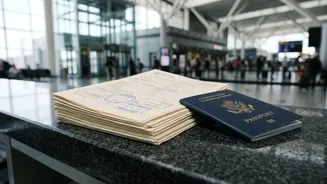
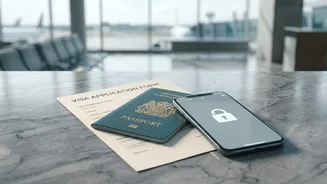
airport security and immigration without ever pulling out your physical passport. That's the core promise of digital immigration processing. The concept revolves around a Digital Travel Credential (DTC), a secure digital version of your passport stored in a wallet on your smartphone. This isn't just a picture of your passport; it's a verifiable, encrypted file containing your personal details and biometric data, such as a facial scan. The International Air Transport Association (IATA) is championing this shift through its 'One ID' initiative, which aims to create a single, reusable digital identity for each traveler. This would allow passengers to verify their identity once, before even leaving for the airport, and then use facial recognition to move seamlessly through checkpoints like bag drop, security, and boarding.
Why the Sudden Push for Contactless Travel?
The momentum behind digital identity is driven by a combination of passenger demand and industry necessity. A recent IATA Global Passenger Survey from late 2026 found that 84% of travelers are interested in using a digital passport for online check-in. Furthermore, 78% of passengers are willing to share their biometric information to avoid repeatedly showing documents at the airport. The COVID-19 pandemic highlighted the need for touchless solutions to enhance health and safety, but the benefits go much further. With international air traffic expected to continue growing, airports and airlines face a critical challenge: they cannot simply build more infrastructure to handle the crowds. Digital processing offers a way to increase efficiency, reduce congestion, and cut down on frustrating queues, which are a major pain point for travelers.
A Glimpse into a Seamless Journey
In a world with widespread digital immigration, your travel day would look quite different. Before your trip, you would use an app to verify your passport and any required visas, sharing this information securely with the airline. The system confirms you are 'ready to fly' before you leave home. At the airport, there's no need to fumble for documents. You would walk up to a self-service bag drop, where a camera verifies your face against your digital credential. The same thing happens at security and the boarding gate—a quick facial scan is all that’s needed to confirm your identity and permission to travel. This 'biometric-enabled journey' transforms your face into your boarding pass and passport, making the process faster and less stressful.
The Hurdles on the Horizon
While the vision is compelling, the transition to a fully digital system faces significant challenges. The most prominent concern among travelers is data security and privacy. In a recent IATA survey, 59% of passengers cited data breaches as their leading concern with biometrics. Creating a system that is safe from hackers and ensuring personal data isn't misused is paramount. Another major hurdle is the need for global standardization. For digital credentials to work everywhere, governments must agree on a common framework for issuing and accepting them. Finally, there's the practical issue of what happens if your phone battery dies or you lose your device, a concern for about 35% of travelers in one survey. Ensuring there are reliable backup systems is crucial for building trust.
When Will This Become Our Reality?
Digital immigration is already moving from theory to practice. Pilot programs and partial implementations are active in airports around the world, from Singapore to Finland. In late 2026, IATA awarded its first ever 'One ID' certifications to Air New Zealand and Hong Kong International Airport, recognizing that their systems meet global standards for biometric handling and passenger privacy. These early successes demonstrate that the technology is ready. However, widespread adoption will be a gradual process, likely unfolding over the next decade. Experts anticipate a hybrid system for the near future, where digital and physical passports coexist. As more governments begin issuing standardized digital credentials, and as passenger comfort with biometrics grows, the dream of a truly seamless airport experience will move closer to reality.