
The Moon’s Invisible Threat
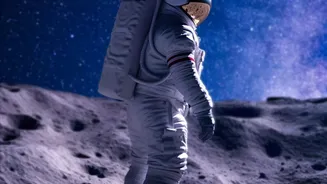
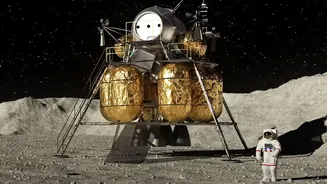
The Moon may look peaceful, but it exists in a shooting gallery of cosmic hazards. Unlike Earth, which is protected by a magnetic field and a thick atmosphere, the Moon is completely exposed. Astronauts on its surface face a continuous barrage of two
main types of dangerous radiation. The first is a constant stream of galactic cosmic rays (GCRs), highly energetic particles from distant supernovae that can slice through DNA. The second is a sudden, violent burst of solar particle events (SPEs), which are thrown off by solar flares and can deliver a lethal dose in a short time. During the Apollo missions, which were very short, astronauts were exposed to radiation levels significantly higher than on Earth. For any long-term lunar base, living on the surface would require incredibly heavy and expensive shielding to avoid severe health risks, including cancer and other degenerative diseases.
Nature's Underground Shelters
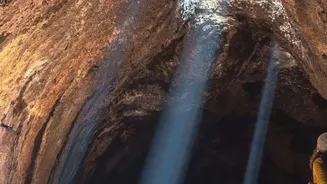
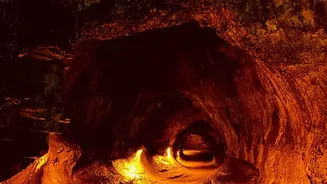
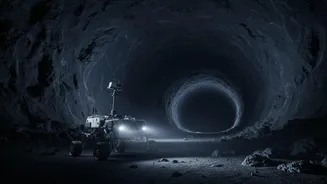
Billions of years ago, the Moon was a hotbed of volcanic activity. Rivers of molten rock flowed across its surface. As the top layer of this lava cooled and hardened, the molten rock below continued to flow, eventually draining away to leave behind vast, hollow tunnels. These are known as lava tubes. For decades, scientists theorized their existence. Recent discoveries have turned theory into fact. Orbiters from space agencies, including Japan's KAGUYA and India's Chandrayaan-1, have spotted tell-tale signs like chains of pits and uncollapsed rilles. NASA's Lunar Reconnaissance Orbiter (LRO) has imaged over 200 pits that are thought to be 'skylights'—collapsed sections of a lava tube's roof that create a natural entrance to the caverns below. Some of these tubes are enormous, potentially measuring hundreds of metres wide and stretching for kilometres.
A Shield Made of Solid Rock
The primary appeal of these lava tubes is the natural protection they offer. The thick roof of solid rock and lunar soil (regolith) would act as a powerful shield. A few metres of this overburden could block the vast majority of harmful radiation. Studies have shown that radiation levels inside a lava tube could drop to just 1-20 millisieverts per year, which is comparable to the background radiation we experience on Earth and well within safe limits for long-term habitation. This is a dramatic reduction from the 100-400 millisieverts per year an astronaut might be exposed to on the surface. This natural shielding eliminates the need to transport tonnes of heavy radiation-blocking material from Earth, a huge saving in cost and complexity for any future lunar colony.
More Than Just a Radiation Shield
The benefits of lava tubes go far beyond radiation. The lunar surface experiences wild temperature swings, from a scorching 120°C in the day to a frigid -170°C at night. Inside a lava tube, however, the temperature is believed to be remarkably stable, possibly around a constant -20°C. While still cold, this stable environment is far easier for life support systems to manage than the extreme fluctuations outside. Furthermore, the solid rock roof provides excellent protection against the constant threat of micrometeoroid impacts, which can travel at incredible speeds and puncture surface habitats and spacesuits. These underground caverns could even be pressurised to create large, breathable-air environments for work and living.
The Challenges of Lunar Caving
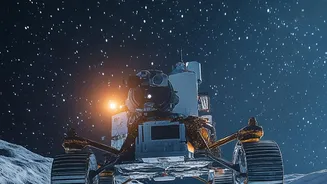
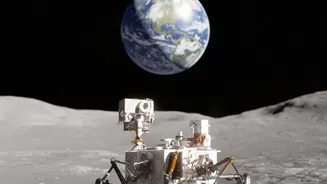
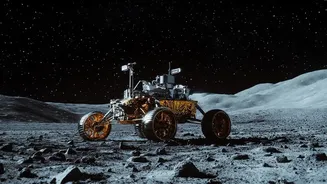
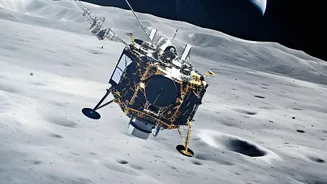
While the potential is huge, living in lunar caves is not without its difficulties. First, we need to get inside. Exploring these deep pits and vast tunnels will require specialised robotic explorers, some of which are already being developed. Once inside, the lack of any natural light means habitats would rely entirely on artificial lighting systems, which impacts both power consumption and the psychological well-being of inhabitants. There are also questions about structural stability—are all tubes safe from collapse, especially from moonquakes? Access and egress could also be a problem; with only a few entry points, an emergency evacuation could be difficult. Finally, the sharp, abrasive lunar dust could pose a health risk if it gets inside habitats and is inhaled by astronauts.