







The Scale of the Ambition
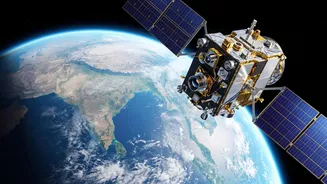
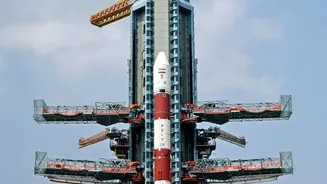
The numbers surrounding India's space economy are staggering. Currently estimated at approximately $9 billion, government and industry projections forecast a massive leap to between $40 and $45 billion within the next decade. This isn't a speculative
dream; it's a strategic goal, underpinned by deliberate policy shifts and a surge in private sector energy. The driving force behind this growth is the move from a government-led model to a collaborative ecosystem where the Indian Space Research Organisation (ISRO) focuses on pioneering research, while private companies build, launch, and commercialise space technology. This expansion is expected to create hundreds of thousands of new jobs, transforming a niche field into a major employment engine.
It's Not Just Rocket Science
The phrase 'space job' often conjures images of astronauts and rocket scientists, but the reality is far broader. The most significant growth is happening in downstream applications and support roles. Satellite data analysts are needed to interpret the vast amounts of information beamed back to Earth, providing insights for agriculture, urban planning, and climate monitoring. Aerospace software engineers are in high demand to develop flight control systems, mission planning algorithms, and autonomous navigation. Beyond the core technology, the industry needs project managers, quality assurance specialists, accountants, and even legal experts to navigate the complexities of space law and international policy. There is also a robust demand for skilled technicians in avionics, electronics, and satellite maintenance who form the backbone of the manufacturing and operations process.
Meet the New Trailblazers
A few years ago, a career in space in India meant a job at ISRO. Today, a dynamic startup ecosystem is leading the charge. The number of private space startups has exploded from just a few before 2020 to over 400 today. Companies like Skyroot Aerospace and Agnikul Cosmos are developing their own launch vehicles, aiming to make space access cheaper and more frequent. Pixxel is building a constellation of hyperspectral imaging satellites to provide detailed earth observation data. Others like Dhruva Space offer end-to-end solutions, from satellite manufacturing to launch services, while SatSure focuses on satellite-based data analytics for sectors like finance and agriculture. These companies are not just innovating; they are hiring aggressively, creating a competitive market for talent.
The Skills to Launch a Career
To join this burgeoning industry, specific skills are becoming non-negotiable. A strong foundation in engineering—aerospace, mechanical, electronics, or computer science—remains critical for most technical roles. However, what companies increasingly seek are interdisciplinary skills. There's a particular shortage of professionals with hands-on experience in complex systems integration, propulsion, and Guidance, Navigation, and Control (GNC). Proficiency in programming languages like Python and C++, along with experience in AI and machine learning for data analysis, is a massive advantage. For those in data-focused roles, familiarity with Geographic Information Systems (GIS) and remote sensing software is key. The industry needs people who can work across hardware, software, and data, solving complex problems at the intersection of different fields.
Government as the Launchpad
This private-sector boom did not happen in a vacuum. It is the direct result of strategic government reforms designed to unlock the sector's commercial potential. The creation of the Indian National Space Promotion and Authorisation Centre (IN-SPACe) in 2020 was a landmark moment. It acts as a single-window agency to promote, authorise, and supervise the activities of private companies, from sharing ISRO facilities to authorising launches. Furthermore, the Indian Space Policy 2023 clearly defined the roles of ISRO, its commercial arm NewSpace India Limited (NSIL), and private players, creating a predictable regulatory environment. Liberalised Foreign Direct Investment (FDI) norms have also been introduced, allowing for greater capital inflow into satellite manufacturing and launch vehicle development, fuelling the industry's growth even further.