







A Change at the Top
Meta's long-serving head of infrastructure and co-head of engineering, Santosh Janardhan, is set to depart in early 2027 after more than 17 years with the company. His tenure saw the social media giant build the global network of data centers that powers
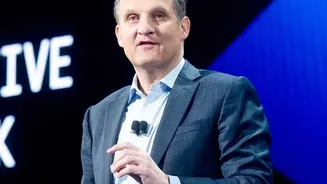
Facebook, Instagram, and WhatsApp. Janardhan announced his departure in an internal memo, framing it as the right time to 'pass the baton' to new leadership. He will be succeeded by David Brown, a former Amazon Web Services (AWS) senior vice president who joined Meta in July 2026. Brown, who spent nearly two decades at Amazon focusing on cloud computing and AI, will also become the Chief Technical Officer of Meta Compute, the initiative overseeing the company's massive AI buildout. Janardhan will remain through the first quarter of 2027 to ensure a smooth transition.
The Billion-Dollar Spending Story
The leadership transition is happening against a backdrop of staggering financial commitment. For 2026, Meta projects capital expenditures (capex) between $135 billion and $145 billion, with the vast majority dedicated to AI infrastructure. This figure has been revised upwards throughout the year; earlier guidance started with a range of $115 billion to $135 billion. The sheer scale of this spending became starkly clear in the third quarter of 2026, when Meta reported capex of $34.91 billion. This figure was greater than the $32.79 billion in cash generated from its operations during the same period, resulting in a negative free cash flow of $2.12 billion. This intense spending has prompted S&P Global Ratings to revise Meta's credit outlook to negative, signaling concern from financial watchdogs.
Connecting Leadership to Capital
While there's no official statement directly linking Janardhan's departure to the spending figures, the timing is significant. The handover places a seasoned cloud infrastructure veteran from AWS—a company known for building profitable, large-scale services—at the helm of Meta’s increasingly costly AI expansion. The move is seen by observers as an effort by CEO Mark Zuckerberg to install new leadership to guide the next, more operational phase of its AI strategy, especially as investor scrutiny over the massive cash burn intensifies. Brown’s appointment signals a potential shift toward greater efficiency and a focus on generating returns from the colossal infrastructure investments, a challenge Amazon has successfully navigated with AWS.
What is AI Infrastructure Anyway?
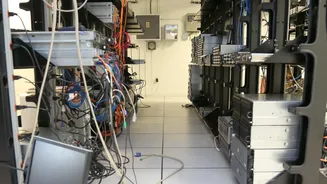
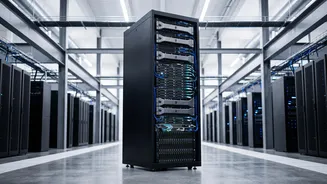
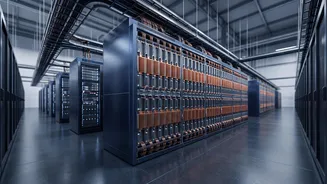
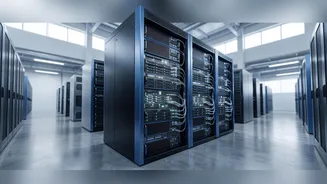
So, where is all this money going? 'AI infrastructure' is the foundational technology required to build and run advanced artificial intelligence models. For Meta, this includes several key components. First are the massive, AI-optimized data centers, which require land, construction, and enormous amounts of power. Second is the specialized hardware inside them: tens of thousands of high-performance chips, including GPUs from partners like Nvidia and Meta’s own custom-designed silicon, known as the Meta Training and Inference Accelerator (MTIA). Finally, it includes the complex software and networking systems that allow these components to work together to train giant models like Llama and Muse and serve billions of user requests, from showing relevant ads to powering conversations with Meta's AI assistant.
The Strategic Gamble Ahead
This leadership and spending nexus represents a critical juncture for Meta. The company is betting its future on becoming a leader in the AI race, believing these investments will strengthen its core advertising business and unlock new revenue streams. AI-powered recommendations are already credited with boosting user engagement and ad revenue. However, the strategy is not without immense risk. The massive cash outlay is a direct drain on profitability, reminiscent for some investors of the costly and thus-far unprofitable pivot to the metaverse. With a new infrastructure chief, Meta is tasked with not only building one of the most powerful computing networks on the planet but also proving it can eventually pay for itself, all while keeping pace with formidable rivals like Google, Microsoft, and Amazon.