




Why Balance and Posture Matter
Balance is not just for gymnasts or yoga practitioners; it’s a fundamental skill we use every day, from walking down a busy street to simply getting out of a chair. Good balance reduces the risk of falls and injuries, while proper posture ensures our
musculoskeletal system is correctly aligned, preventing chronic pain in the neck, shoulders, and back. Together, they form the foundation of efficient, pain-free movement. Improving them can enhance athletic performance, increase flexibility, and even make it easier to breathe and digest food. By consciously working on these areas, you invest in your long-term health and mobility.
How a Mirror Boosts Your Training
Using a mirror provides immediate, real-time visual feedback that your brain can use to make corrections. This process strengthens body awareness, also known as proprioception—your internal sense of your body's position in space. When you perform a balance drill, your brain integrates information from your eyes, inner ear (vestibular system), and body (proprioceptive system) to maintain stability. By watching yourself, you can instantly spot and correct misalignments, like a tilted hip or a slouching shoulder, that you might not otherwise feel. This visual information helps create a stronger mind-body connection, effectively teaching your muscles and nervous system to adopt better alignment automatically.
Setting Up Your Balance Station
You don't need a professional gym setup to get started. Find a spot at home with a full-length mirror. If you don't have one, any large mirror that shows most of your body will work. Ensure the area is well-lit so you can see your reflection clearly. Clear the space around you to prevent tripping over objects. It's also wise to have a sturdy chair or a wall nearby that you can hold onto for support, especially when you're just beginning. This simple setup creates a safe and effective environment to focus on your form without fear of falling.
Your Posture Checklist in the Mirror
As you perform your drills, use the mirror to conduct a quick posture scan. From a side view, your ear, shoulder, hip, knee, and ankle should form a relatively straight line. From the front, check for symmetry. Are your shoulders and hips level? Is your head centred over your shoulders, not tilting to one side? Keep your feet shoulder-width apart, your weight evenly distributed, and your chin parallel to the floor. Gently engage your core by pulling your stomach in slightly to support your spine. Avoid locking your knees or rounding your shoulders forward.
Simple Balance Drills to Try
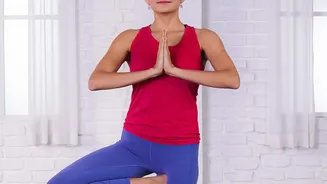
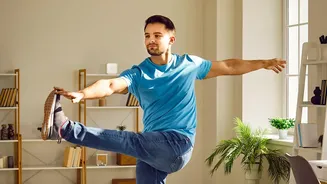
Start with these foundational exercises, holding each for 15-30 seconds. Use the mirror to monitor your form throughout. 1. Single-Leg Stand: Stand straight and lift one foot a few inches off the ground. Watch in the mirror to ensure your hips stay level and your standing knee doesn't collapse inward. Keep your torso upright and your shoulders back. 2. Tandem Stance (Heel-to-Toe): Place one foot directly in front of the other, as if walking on a tightrope. This narrows your base of support and challenges your stability. Check that your body isn't leaning to one side. 3. Heel and Toe Raises: Stand with feet hip-width apart. Slowly rise onto the balls of your feet, hold for a moment, and then slowly lower. Next, rock back onto your heels, lifting your toes. Use the mirror to ensure you're moving straight up and down, not swaying forward or backward.
Common Mistakes to Avoid
The mirror is your best critic for catching common errors. A frequent mistake is looking down at your feet, which can throw you off balance and compromise your neck posture. Instead, keep your gaze straight ahead. Another error is holding your breath; remember to breathe steadily and naturally. Also, watch for the hip of your raised leg dropping or your torso tilting to compensate. The goal is to keep your core engaged and your body as still and aligned as possible. If you find yourself wobbling excessively, reduce the height you lift your leg or hold onto your support for stability.