





Why Spinal Awareness Is a Game-Changer
Before we start twisting, let's talk about why it matters. Your body has a built-in sense called proprioception, which is its ability to understand where it is in space without you having to look. Think about walking on an uneven path; your ankles automatically
adjust to prevent a fall. That’s proprioception at work. When it comes to your spine, this awareness is crucial. A sedentary lifestyle, from long hours at a desk to extended time on the couch, can dull this sense. This leads to poor posture, stiffness, and an increased risk of back pain because the small, stabilizing muscles around your vertebrae forget how to properly engage. Improving spinal awareness helps you naturally carry yourself better, move more efficiently, and reduce strain on your lower back.
The Twist That Teaches
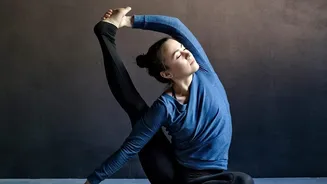
The standing torso twist is more than just a warm-up drill; it's a direct line of communication to your spine. Unlike exercises that focus on raw strength, its primary benefit is re-establishing the mind-muscle connection. By rotating the torso in a controlled manner, you gently mobilize the thoracic spine (your mid and upper back), an area that often becomes rigid. This rotational movement helps to hydrate the spinal discs, which can slow down their natural deterioration. It wakes up the deep core muscles, including the obliques and multifidus, which act as a natural corset to support and protect your back. The goal isn't to see how far you can twist, but to feel the movement originate from your core and travel up your spine.
How to Perform It with Purpose
Executing the standing torso twist correctly is key to unlocking its benefits. Forget speed and momentum; this is about slow, deliberate control. 1. Find Your Stance: Stand with your feet shoulder-width apart and a slight bend in your knees. This stable base helps isolate the movement to your torso. 2. Position Your Arms: You have a few options. You can cross your arms over your chest, extend them straight out in front of you, or bend your elbows at a 90-degree angle as if you're holding a large ball. 3. Engage Your Core: Before you move, gently brace your abdominal muscles, as if you're about to be poked in the stomach. This stabilizes your lower back. 4. Initiate the Twist: Slowly rotate your torso to one side, leading with your chest and shoulders, not your arms. Imagine you are wringing out a towel at your waistline. It is critical to keep your hips facing forward as much as possible to ensure the rotation happens in your spine, not your hips. 5. Pause and Return: Hold the twist for a moment, feeling the stretch in your obliques and back. Return to the center with the same control, then repeat on the other side. Breathe throughout the movement, typically exhaling as you twist and inhaling as you return.
Common Mistakes That Defeat the Purpose
Many people perform this exercise incorrectly, turning a beneficial movement into one that could cause strain. Using Momentum: Swinging your arms and using momentum is the most common mistake. This removes the muscular control that builds awareness and can put undue stress on your lower back joints. The movement should be muscular, not ballistic. Twisting from the Hips or Knees: Letting your hips and knees swing wildly with the twist means you're not isolating the thoracic spine. Your lower body should remain relatively stable. Pivoting on the balls of your feet is acceptable, but your hips shouldn't lead the rotation. Hunching Your Back: Keep your spine long and your posture tall throughout the exercise. Slouching compresses the vertebrae and prevents the target muscles from engaging correctly. Moving Too Fast: The goal is sensation, not speed. A rapid pace often means you're relying on momentum and not on the deep core muscles you're trying to train.
Taking Your Awareness Deeper
Once you've mastered the basic form, you can introduce variations to deepen the stretch and challenge your awareness further. Add a Prop: Holding a light dowel, broomstick, or resistance band across your shoulders can provide tactile feedback, helping you ensure the twist comes from your torso, not just your arms. Lunge with a Twist: Step forward or backward into a lunge and then perform the torso twist over your front leg. This adds a balance challenge and integrates the spinal rotation with hip mobility. * Vary Your Gaze: Experiment with where you look. Keeping your head and eyes fixed forward while your torso twists can intensify the stretch in your upper back and neck. Conversely, letting your gaze follow your movement can create a more fluid, full-body rotation.