
Kalan: The Tangy Star of the Show
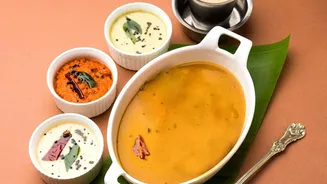
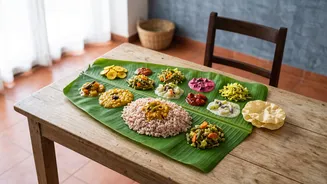
Often considered a cornerstone of the Sadhya, Kalan is a thick, sour curry that beautifully demonstrates Kerala's mastery of flavour balance. It's typically made with a hearty vegetable like elephant foot yam or raw plantain, which is cooked and then
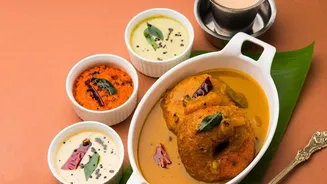
simmered in a rich blend of sour curd (yogurt) and a ground coconut paste. What makes Kalan special is its pronounced tanginess, which cuts through the richness of other dishes. Spiced with black pepper rather than an abundance of chillies, it has a warming, complex flavour profile. Its thick consistency, achieved by reducing the yogurt, sets it apart from thinner yogurt-based curries. A final tempering of mustard seeds, fenugreek, and curry leaves in coconut oil makes it truly unforgettable. Don't mistake its simple appearance; Kalan is a royal dish that takes time and care to perfect.
Olan: A Study in Subtle Elegance
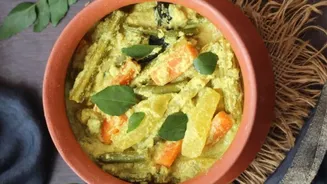
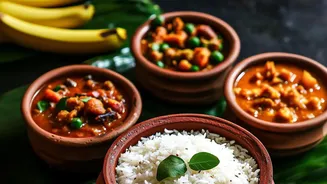
In a feast celebrated for its vibrant and often spicy flavours, Olan offers a moment of soothing calm. It is a deceptively simple and mild stew, celebrated for its clean, delicate taste. The primary ingredients are ash gourd (kumbalanga) and cowpeas (vanpayar), gently simmered in thin coconut milk until tender. A final addition of thick coconut milk gives it a creamy finish without being heavy. What’s notably absent are turmeric and chilli powder, allowing the natural sweetness of the gourd and the fragrance of the coconut to shine. The only spice comes from a few slit green chillies, and it's finished with a drizzle of raw coconut oil and fresh curry leaves, which perfume the dish. Olan serves as a perfect palate cleanser, providing a gentle counterpoint to the spicier elements on the leaf.
Erissery: A Sweet and Savoury Delight
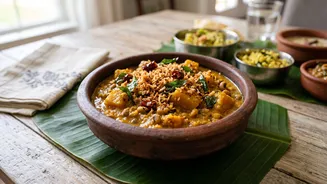
Erissery, also known as Mathanga Erissery, is a comforting and mildly sweet curry that often features pumpkin and cowpeas or black-eyed peas. It strikes a beautiful balance between sweet, savoury, and nutty flavours. The pumpkin is cooked until soft and mashed slightly, creating a creamy base along with the cooked legumes. A paste of grated coconut, cumin, and green chillies is added to thicken the dish and provide a gentle layer of spice. However, the true magic of Erissery lies in its final garnish. Grated coconut is roasted in coconut oil until it turns a deep, fragrant brown, and this is sprinkled over the curry along with tempered mustard seeds and curry leaves. This roasted coconut topping adds a delightful crunch and a toasted, nutty aroma that elevates the entire dish.
Pachadi vs. Kichadi: The Yogurt Twins
Often confusing for the uninitiated, Pachadi and Kichadi are two distinct yogurt-based relishes that are essential to the Sadhya. While both are similar to a North Indian raita, they have key differences. Pachadi is often sweeter and can be made with fruits like pineapple or vegetables like beetroot. A key differentiator is that the coconut paste for pachadi is often ground with mustard seeds, giving it a unique pungent kick. Kichadi, on the other hand, is typically more sour and savoury, often made with vegetables like cucumber or bitter gourd in a simple yogurt base, sometimes without coconut. Kichadi acts as a cooling counterpoint on the plate. So, if you taste a sweet, fruity tang with a hint of mustard, it's likely a Pineapple Pachadi; if it's a cooler, more savoury cucumber and yogurt mix, you're enjoying Kichadi.
Ada Pradhaman: The King of Payasams
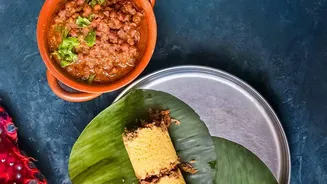
No Sadhya is complete without dessert, and while many varieties of payasam (kheer) exist, Ada Pradhaman holds a special place. It is considered one of the most traditional and richest desserts in the feast. This is not your typical milk-based payasam. Instead, its richness comes from a heavenly combination of coconut milk and jaggery. The 'ada' are small, flat flakes or noodles made from rice flour, which are cooked until soft and chewy. These are then simmered in a luscious sauce of melted jaggery and freshly extracted coconut milk, a process that gives the dessert its deep, caramel-like flavour and beautiful brown hue. Flavoured with cardamom and often garnished with fried cashews, raisins, and bits of coconut fried in ghee, Ada Pradhaman is a decadent, dairy-free dessert that is the perfect sweet ending to the grand meal.